
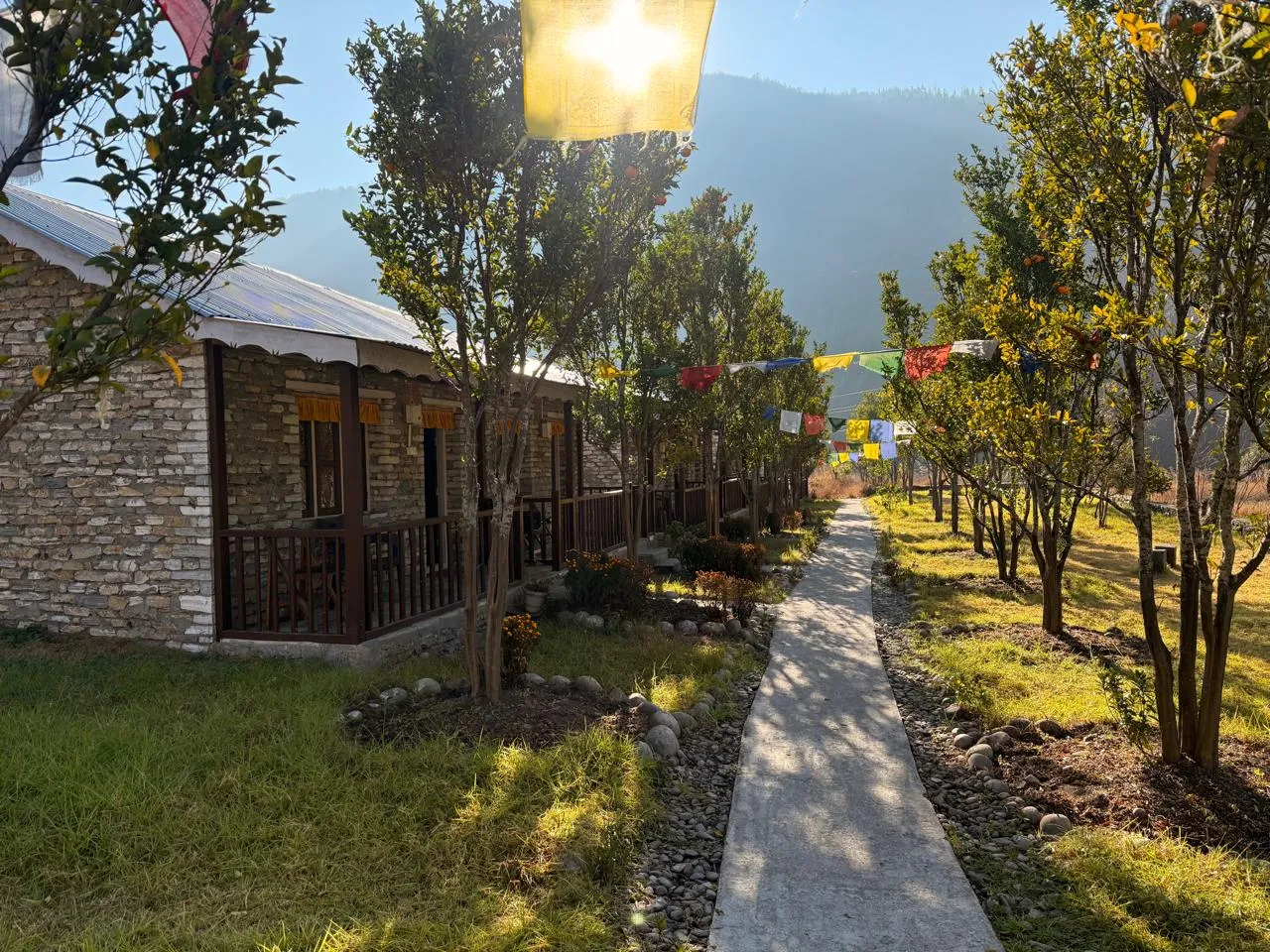
Why Tawang Deserves More Than a Long Weekend
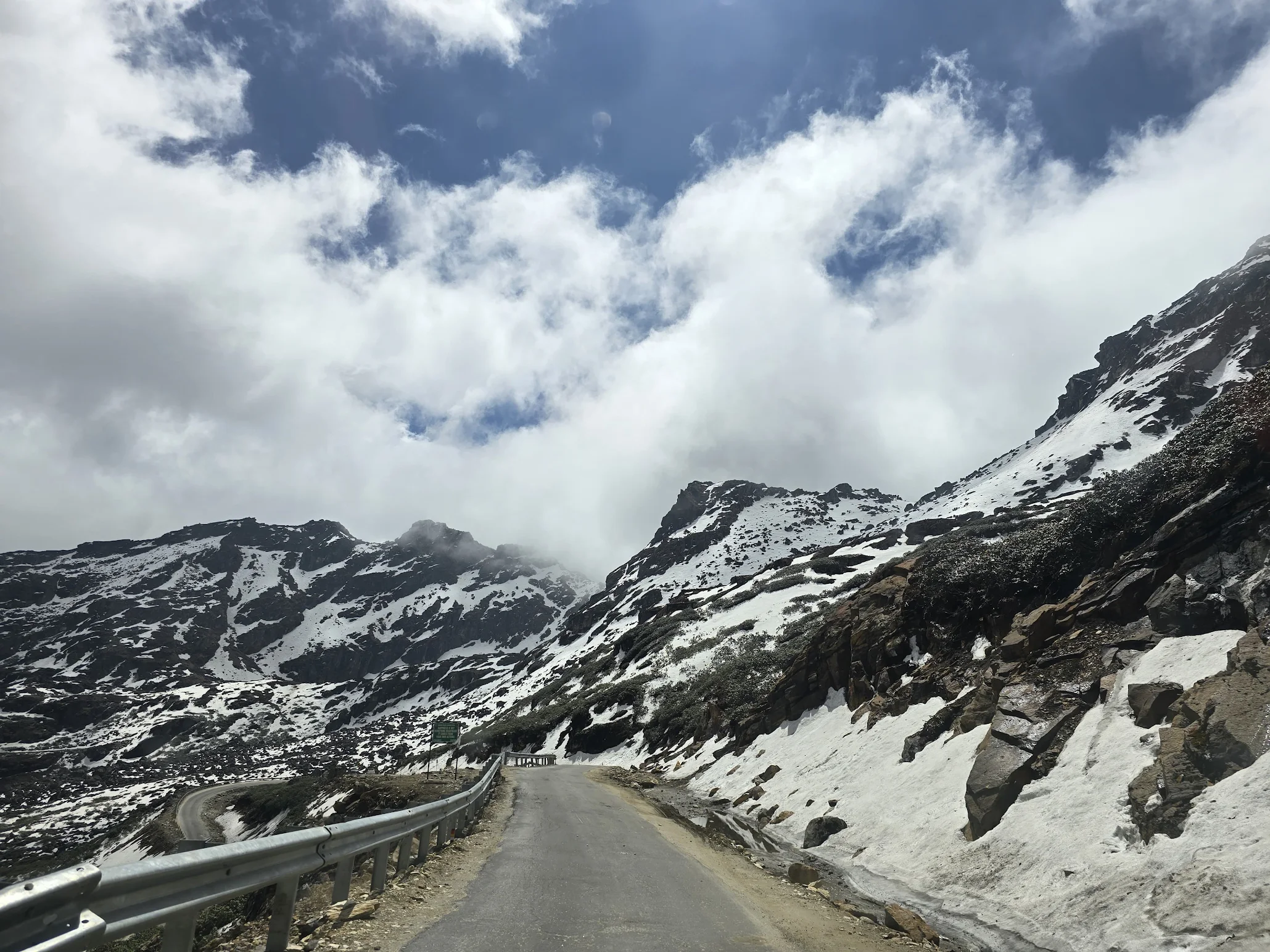
The journey itself is part of the story. From Kolkata, you fly or take the train into Guwahati, then the road climbs steadily out of Assam's tea gardens and crosses into Arunachal Pradesh at a checkpoint in Bhalukpong, long before the mountains proper even begin. Two more unhurried days of driving — through the orchid country around Dirang and over the high, often snow-dusted Sela Pass — bring you into Tawang town, strung with prayer flags at just over 10,000 feet. This isn't a hill station you reach in an afternoon; it's a place you arrive at gradually, the way its winters arrive.
What sets Tawang apart from a typical Himalayan getaway is threefold. First, its culture: this is Monpa country, following the Gelug school of Tibetan Buddhism, and the region's spiritual centre of gravity — Tawang Monastery — is the second-largest Buddhist monastery on the continent. Second, its paperwork: unlike Meghalaya or Assam, Arunachal Pradesh requires every Indian visitor to carry an Inner Line Permit, a detail that surprises a lot of first-time travellers from Kolkata. And third, its proximity to history that's still being written — the road to Bumla Pass runs to within sight of the actual India-China border, past a war memorial that commemorates the 1962 conflict fought on these very slopes.
This guide lays out exactly how to plan a complete Tawang tour package from Kolkata — the route through Bhalukpong, Dirang and Sela Pass to Tawang, Bumla Pass and Madhuri Lake, alongside shorter and longer alternatives, a plain-language breakdown of the Inner Line Permit (there's more paperwork here than in most of Northeast India, and it's worth sorting out early), a packing list built for genuine high-altitude cold, and the practical details that separate a good Tawang trip from a great one.
Tawang Tour Package Options from Kolkata, at a Glance
Unlike a compact circuit such as Meghalaya's, Tawang genuinely asks for time. The Kolkata-to-Guwahati leg is quick — a little over an hour in the air — but from Guwahati's outskirts, the road to Tawang covers roughly 450 to 500 km of mountain highway, gaining altitude in stages through Bhalukpong, Dirang and the 13,700-foot Sela Pass. That distance is best broken into two unhurried driving days rather than one exhausting one, and that's before you've spent a single hour actually exploring Tawang itself.
Could you compress the trip into 5 or 6 days? Yes, and plenty of travellers do. But ask anyone who has done both the rushed version and the full one, and they'll tell you the same thing: a week gives your body a real chance to acclimatise before the passes, gives the Bumla Pass excursion the spare day it often needs when weather or military clearance causes a delay, and leaves you an evening in Tawang to do nothing more than sit near the monastery as the evening prayer horns sound across the valley. Here's how the different durations stack up.
- Day 1: Kolkata → Guwahati → Bhalukpong
- Day 2: Bhalukpong → Dirang
- Day 3: Dirang → Tawang (via Sela Pass)
- Day 4: Tawang local sightseeing
- Day 5: Tawang → Bomdila
- Day 6: Bomdila → Guwahati
- Day 7: Guwahati → Kolkata
- Day 1: Kolkata → Guwahati → Bhalukpong
- Day 2: Bhalukpong → Dirang
- Day 3: Dirang → Tawang
- Day 4: Tawang full sightseeing
- Day 5: PTso & Madhuri Lake excursion
- Day 6: Tawang → Bomdila
- Day 7: Bomdila → Guwahati
- Day 8: Guwahati → Kolkata
- Day 1: Kolkata → Guwahati → Bhalukpong
- Day 2: Bhalukpong → Dirang
- Day 3: Dirang → Tawang (via Sela Pass)
- Day 4: Tawang — Monastery & old town
- Day 5: Bumla Pass & Madhuri Lake
- Day 6: Tawang → Bomdila
- Day 7: Bomdila → Guwahati
- Day 8: Guwahati — Kamakhya & Brahmaputra
- Day 9: Guwahati → Kolkata
- Day 1: Kolkata → Guwahati → Bhalukpong
- Day 2: Bhalukpong → Dirang
- Day 3: Dirang → Tawang
- Day 4: Tawang Monastery & old town
- Day 5: Bumla Pass & Madhuri Lake
- Day 6: Zemithang & Gorsam Chorten day trip
- Day 7: Tawang → Dirang
- Day 8: Dirang → Guwahati
- Day 9: Guwahati sightseeing
- Day 10: Guwahati → Kolkata
- Day 1–9: Full Tawang circuit (all zones)
- Day 10: Transfer to Kaziranga (Assam)
- Day 11: Morning jeep safari → Guwahati → Kolkata
If you can only manage 6 or 7 days, you can still have a genuinely memorable trip — Tawang Monastery, Sela Pass and the drive itself are worth it on their own. But the Bumla Pass and Madhuri Lake day is usually the first thing a rushed itinerary drops, since it needs its own dedicated day, an additional border permit, and a spare day of buffer in case the army convoy is cancelled for weather or security reasons. If standing on an active international border at 15,200 feet is the reason you're considering Tawang in the first place — and for a lot of travellers, it is — build your trip around the 8 or 9 day plan below.
Day-by-Day: Your Tawang Itinerary from Kolkata
Below is the full day-by-day breakdown of our recommended 8 nights / 9 days Tawang tour from Kolkata — the itinerary that gives the drive itself, the monastery, and the border excursion each the room they need, including the one day that shorter packages usually drop: Bumla Pass and Madhuri Lake.
The Fast Track: 6 Nights / 7 Days Tawang Tour Package
If a full nine days genuinely isn't possible, the 6N7D version keeps the essentials — Bhalukpong, Dirang, the Sela Pass crossing, and a full day in Tawang itself — while dropping the dedicated Bumla Pass and Madhuri Lake excursion, which needs its own permit and its own weather buffer. You'll still see the monastery, the war memorials, and the high pass; you just won't stand at the actual border. It's the right call for travellers on a tighter schedule who'd rather see the core of Tawang properly than rush the border add-on.
Going Further: 9N10D and the Kaziranga Extension
With an extra day, the 9N10D itinerary adds a detour to Zemithang, a remote valley near the Bhutan border best known for the striking white Gorsam Chorten stupa — one of the largest of its kind in the region and rarely crowded, since most standard packages don't go that far west. For travellers with even more time to spare, extending the trip with two days at Kaziranga National Park back in Assam trades high-altitude monasteries for grasslands and Indian one-horned rhinos — a completely different ecosystem just a few hours from Guwahati, and a genuinely striking contrast to close out a Tawang trip on.
Top Places to Visit in and Around Tawang
Tawang rewards travellers who treat the journey as part of the destination rather than an obstacle to it. Here are the places that anchor any well-planned Tawang tour from Kolkata, arranged roughly in the order you'll encounter them on the route.
Bhalukpong
Arunachal Pradesh's gateway checkpost on the Kameng River, where your Inner Line Permit is verified for the first time. A quiet border town surrounded by forest, and a natural first-night stop close to Nameri National Park.
Gateway CheckpostDirang Valley
A quieter mid-altitude valley between Bhalukpong and Sela Pass, dotted with orchid nurseries, apple orchards and a historic Dzong. The natural place to spend a night acclimatising before the climb to Tawang.
Acclimatisation StopSela Pass & Tunnel
One of the highest motorable passes on the route to Tawang, at over 13,700 ft, ringed by prayer flags and a still lake. The Sela Tunnel, opened in 2024, now keeps the route below it open through most of the winter.
High-Altitude PassTawang Monastery
Galden Namgyal Lhatse — the largest monastery in India and the second-largest in Asia. Founded in 1680-81, it holds a centuries-old scripture library and a towering gilded Buddha statue at its heart.
Signature ExperienceNuranang Falls
Also called Jang Falls, a roughly 100-metre cascade near the town of Jang, en route between Sela Pass and Tawang. Named after Nura, a local Monpa woman remembered for her role in the 1962 war.
Scenic WaterfallMadhuri Lake
Officially Sangetsar Tso, a high-altitude lake around 30-35 km from Tawang at roughly 12,000 ft, reshaped long ago by an earthquake-triggered landslide and popularly renamed after a Bollywood film shoot.
High-Altitude LakeBumla Pass
A restricted military border post roughly 37 km from Tawang, sitting at around 15,200 ft on the actual India-China frontier. Requires a separate permit and army-escorted convoy access, on top of your standard ILP.
Indo-China BorderJaswant Garh War Memorial
A memorial near Sela Pass honouring Rifleman Jaswant Singh Rawat, who held off Chinese forces here for 72 hours during the 1962 war. One of the most moving stops on the entire Tawang route.
War MemorialDon't Skip These — The Underrated Places on Any Tawang Tour
Most packages cover the main circuit above. These spots take a little extra effort but are consistently rated as highlights by travellers who make the detour:
- Zemithang & Gorsam Chorten — A remote valley near the Bhutan border, home to one of the largest chortens (stupas) in the region. Far fewer visitors than the main Tawang circuit, and a genuinely peaceful detour.
- Urgelling Monastery — Traditionally regarded as the birthplace of the 6th Dalai Lama, Tsangyang Gyatso, this quieter monastery sits about 5 km from Tawang town and is often skipped in favour of the main gompa.
- PTso (Pankang Teng Tso) Lake — A quieter, less-photographed lake roughly 20 km from Tawang, popular with locals as a picnic spot and usually visited on the same day as Madhuri Lake.
- Sangti Valley — A peaceful valley near Dirang that hosts migratory black-necked cranes in winter, a genuinely rare sighting for birdwatchers passing through the region.
- Nameri National Park — Near Bhalukpong, a good add-on for river rafting on the Jia Bhoroli and birdwatching before or after the Arunachal leg of the trip.
Best Time to Visit Tawang
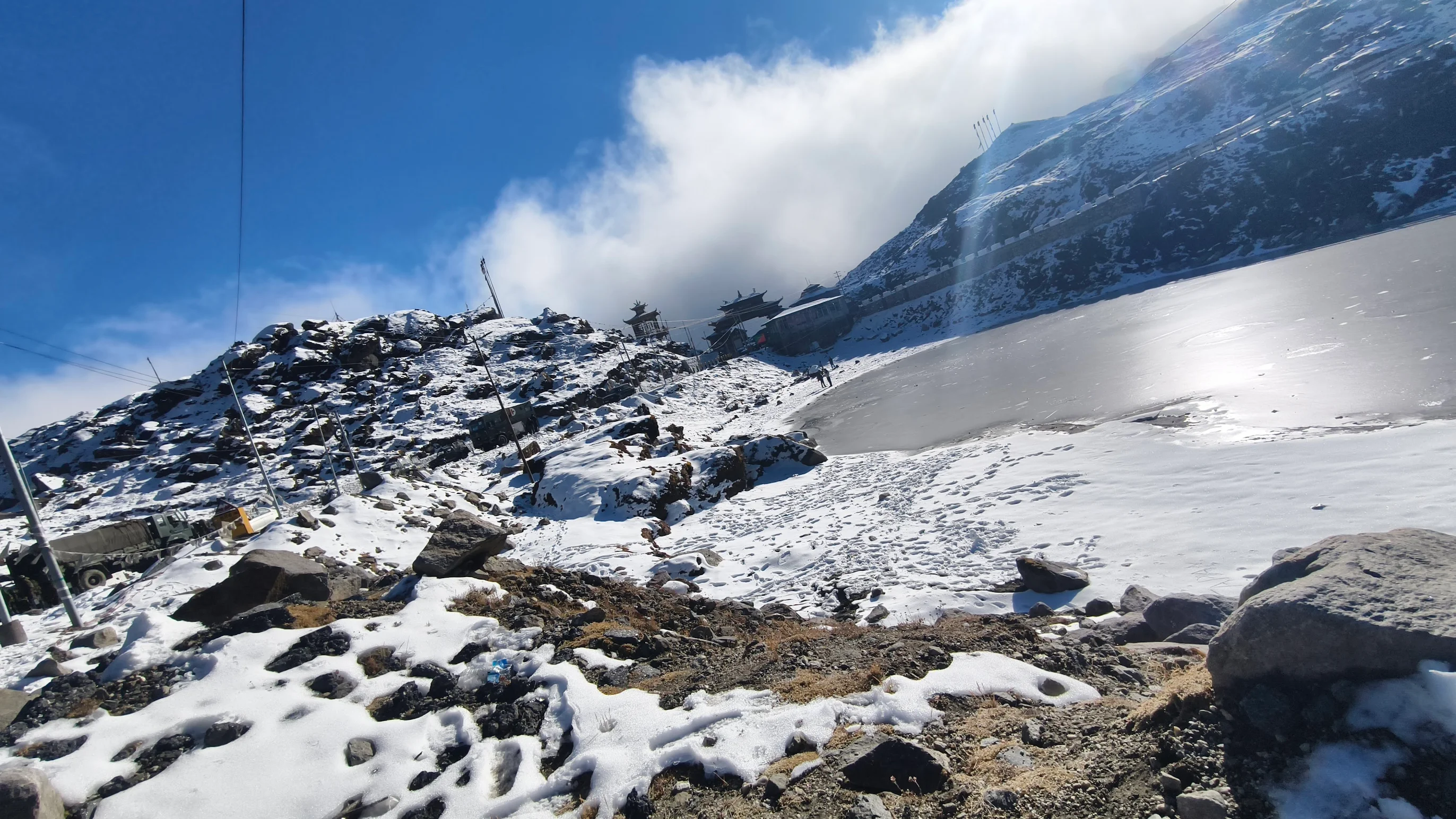
Tawang's weather shapes a Kolkata-based trip more than most Northeast India destinations, mainly because of altitude rather than rainfall alone. Sela Pass and Bumla sit high enough that winter genuinely means snow, not just cooler days, and the Sela Tunnel — while it has made the main road far more reliable — hasn't eliminated every risk of a temporary closure during the heaviest storms.
| Month | Season | Weather | Roads & Passes | Verdict |
|---|---|---|---|---|
| Mar – Jun | Spring / Pre-summer | 10–20°C, mostly clear, rhododendrons in bloom | All passes typically open | Best Time |
| Jul – Aug | Peak Monsoon | Heavy, sustained rain across the region | Landslide risk on mountain roads | Avoid |
| Sep – Oct | Post-monsoon / Autumn | 10–20°C, crisp and reliably clear | Best visibility of the year | Best Time |
| Nov – Feb | Winter | Below freezing at night, possible heavy snow | Sela Tunnel keeps main road open; Bumla often snow-shut | Good for snow |
March to June and September to October are the two strongest windows for a Tawang tour from Kolkata. Spring brings blooming rhododendrons and generally clear conditions for the monastery and the passes, while post-monsoon autumn offers the crispest skies of the year and the best odds of Bumla Pass and Madhuri Lake actually being open and accessible. Winter (November–February) is dramatic in its own right — genuine snowfall at Tawang town and heavier snow at Sela and Bumla — and the Sela Tunnel has made the core Dirang-Tawang road far more dependable through these months than it used to be, but the Bumla excursion itself can still be cancelled on short notice when the border road is snowed in.
Peak monsoon (July–August) is the one stretch worth avoiding outright. The heavy, sustained rain that defines the season brings a real risk of landslides on the winding mountain highway between Bhalukpong and Tawang, and even where the road stays open, the drive becomes considerably slower and less comfortable. Unless you have no other window to travel, it's worth shifting your dates rather than risking a monsoon-season Tawang trip.
How to Reach Tawang from Kolkata
By Air — The Fastest Start
There's no airport in Tawang itself, so every route from Kolkata begins with a flight to Guwahati's Lokpriya Gopinath Bordoloi International Airport (LGBI). Nonstop flights between Kolkata and Guwahati take a little over an hour, with multiple daily departures on carriers including IndiGo and Air India, making this comfortably the fastest way to begin the trip. From Guwahati, the rest of the journey to Tawang is entirely by road. Some travellers shorten the drive slightly by flying on to Tezpur's small Salonibari Airport when seats are available, though flight frequency there is limited, so it's worth treating Guwahati as your primary gateway.
By Rail
Direct trains such as the Kamrup Express connect Kolkata's Howrah and Sealdah stations to Guwahati in around 17 to 18 hours — a reasonable option if you'd rather not fly, though it adds the better part of a day to your itinerary compared with flying. As with air travel, the onward journey from Guwahati to Tawang is completed entirely by road, since there is no railway line into Arunachal Pradesh.
By Road — The Mountain Leg
The self-drive route from Kolkata all the way to Tawang covers roughly 1,500 km and isn't something most travellers attempt in one go; the standard approach is to fly or take the train to Guwahati and start the road journey from there. From Guwahati, the route runs Guwahati → Bhalukpong → Dirang → Tawang, gaining altitude steadily over roughly 450 to 500 km and two full driving days, before the same route (or a slight variation via Bomdila) carries you back down. The roads are well maintained by the Border Roads Organisation, but they're genuine mountain roads — narrow in stretches, with hairpin turns near Sela Pass — so budget more time than the distance alone would suggest.
Kolkata → Guwahati: ~500 km (air) | ~1h 15m by flight, ~17–18 hrs by direct train
Guwahati → Bhalukpong: ~260 km | ~6–7 hours
Bhalukpong → Dirang: ~140 km | ~5–6 hours
Dirang → Tawang (via Sela Pass): ~140 km | ~5–6 hours
Tawang → Bumla Pass: ~37 km | ~1.5–2 hours (army-escorted convoy)
Inner Line Permit (ILP) — What You Actually Need for Tawang
This is the section where a Tawang trip genuinely differs from a Meghalaya or Assam itinerary. Arunachal Pradesh requires an Inner Line Permit (ILP) for every Indian citizen who isn't a native resident of the state, and Tawang is no exception. It isn't difficult to obtain, and it isn't expensive, but it does need to be sorted out before you travel — without one, you will not get past the first checkpost at Bhalukpong, regardless of your hotel bookings or driver arrangements.
For Indian Nationals
- Apply online in advance: The Tourist eILP is issued through Arunachal Pradesh's official portal, arunachalilp.com. You'll need a valid photo ID — Aadhaar is the most reliably accepted, alongside voter ID or passport — and a recent photograph. Processing can take anywhere from a couple of hours to a day or two, so apply at least 5 to 7 days before you travel to leave a comfortable buffer.
- Select the correct entry gate and districts: Choose Bhalukpong as your entry gate for the Tawang circuit, and list West Kameng and Tawang among your districts — a mismatch between your chosen gate and your actual route can cause problems at the checkpost.
- Validity and extensions: A standard Tourist ILP is typically valid for around 14 days from your date of entry into Arunachal Pradesh, which comfortably covers most Tawang itineraries. If you need longer, extensions are possible through the local Deputy Commissioner's office — apply a few days before your permit expires rather than at the last minute.
- Keep both digital and printed copies: Mobile connectivity is patchy in stretches of West Kameng and Tawang district, so save your approved permit as a photo on your phone rather than relying on being able to reload it online, and carry a printed copy as backup.
For Foreign Nationals
- Foreign nationals cannot apply for an ILP. Instead, you'll need a Protected Area Permit (PAP), processed through the Ministry of Home Affairs or an FRRO office, in addition to your Indian visa.
- PAP processing generally takes considerably longer than an ILP — often several weeks — so it's worth starting this process well before you finalise flights, and a registered tour operator can usually streamline the paperwork.
- Carry your passport, visa, and PAP together at all times once inside Arunachal Pradesh, particularly near the multiple checkposts along the Tawang route.
The Extra Step: Bumla Pass & Madhuri Lake
Your standard ILP covers Tawang town, the monastery, Sela Pass, and Nuranang Falls without any further paperwork. Bumla Pass is different — it sits inside a restricted military zone right on the India-China border, so it requires a separate local permit on top of your ILP, arranged through the Deputy Commissioner's office in Tawang along with clearance from the Indian Army.
Visit the DC office in Tawang town the evening before you plan to go, ideally by 4 to 5 PM, with your original ILP, ID proof, and vehicle details. Final clearance is confirmed through the Army's local office, and the permit is usually ready by around 9 AM the next morning. Most hotels and drivers in Tawang know this process well. Bumla runs as an army-escorted convoy, and departure is weather- and security-dependent — even a valid permit doesn't guarantee the convoy runs that day, so build a spare day into your schedule if this is a must-see for you. PTso Lake is typically covered under the same permit.
What to Pack for Your Tawang Tour
Clothing — Plan for Genuine Cold, Not Just Chilly Evenings
- A proper down jacket or heavy woollen coat is essential year-round in Tawang, and non-negotiable if you're travelling between November and February, when night temperatures regularly fall below freezing.
- Thermal base layers under a fleece and a windproof outer shell — the temperature swing between a sunny midday and an exposed pass like Sela or Bumla can be dramatic, and layers let you adjust quickly.
- A woollen cap, gloves, a scarf or muffler, and thick socks — extremities are usually the first thing to suffer at altitude, and they're easy to forget when packing from Kolkata's warmth.
Footwear & High-Altitude Essentials
- Sturdy, closed-toe shoes with good grip — ideally water-resistant — for walking around Sela Pass, Bumla, and Madhuri Lake, where snow, ice, and wet stone are all genuine possibilities depending on season.
- Sunglasses and a high-SPF sunscreen — sunlight at 13,000 to 15,000 feet is far more intense than it feels, especially with snow reflecting it back at you, and it's a common cause of avoidable sunburn and headaches on the pass days.
- A good lip balm and moisturiser — the dry, cold air at altitude cracks skin and lips faster than most travellers expect.
Practical Essentials
- Cash — carry more than you think you'll need. ATMs are reliable in Guwahati and reasonably so in Dirang and Bomdila, but become sparse and unreliable in Tawang and virtually nonexistent beyond it. Digital payments can also be patchy without consistent network coverage.
- A power bank — electricity in Tawang and Dirang can be unpredictable during heavy snow or storms.
- Printed and digital copies of your ILP, photo ID, and (if you're going to Bumla) your border permit — checkpoints along the route ask for these repeatedly, and connectivity to redownload documents can't be relied on.
- A flashlight or headlamp — Tawang town's streets are quiet and dimly lit after dark, and most shops close early.
- Any personal medication you take regularly, plus a conversation with your doctor beforehand about altitude sickness if you have a heart, lung, or blood-pressure condition.
Monpa Food, Festivals & Culture
Tawang is Monpa country — a Buddhist community following the Gelug (Yellow Hat) school of Tibetan Buddhism, with a culture, language, and cuisine shaped as much by the high Himalayas and Tibet as by the rest of Arunachal Pradesh. Prayer flags, prayer wheels, and small roadside chortens are a constant presence on the drive in, and the rhythm of daily life in Tawang town still visibly follows the monastery's routines.
What to Eat in Tawang
- Thukpa — A hearty Tibetan-style noodle soup, usually with vegetables or meat, and easily the most common comfort food you'll be handed on a cold Tawang evening.
- Momos — Steamed or fried dumplings, filled with vegetables, pork, or yak meat, sold everywhere from proper restaurants to roadside stalls near the monastery.
- Zan — A thick, savoury porridge made from millet or buckwheat flour, a genuine Monpa staple that predates the momos and thukpa more commonly served to visitors.
- Butter tea (Po Cha) — Salted tea churned with yak butter, an acquired taste for many first-time visitors but a genuine window into daily Monpa hospitality, especially in colder months.
- Chhurpi — A firm, tangy local cheese made from yak or cow milk, often chewed slowly like a hard candy, and a common accompaniment to a meal or a long drive.
Festivals Worth Timing Your Trip Around
If your travel dates line up, Tawang's Buddhist festival calendar adds real cultural depth to a standard sightseeing circuit. Torgya, usually held in early January, is a three-day festival at Tawang Monastery featuring elaborately masked Cham dances performed by monks to drive away the previous year's misfortune ahead of the new one. Losar, the Tibetan New Year, typically falls in February or March depending on the lunar calendar and is celebrated with prayers, family gatherings, and festive food across Monpa households. Every third year, Torgya is paired with Dungyur, when an enormous embroidered thangka depicting the Buddha is publicly unveiled at the monastery — a genuinely rare sight worth planning a trip around if the timing works out.
Tawang Monastery — More Than a Photo Stop
It's worth understanding a little of what you're looking at when you reach Galden Namgyal Lhatse. Founded in 1680-81 by Merak Lama Lodre Gyatso at the direction of the 5th Dalai Lama, the monastery has stood through the 1962 war — during which Chinese forces occupied the town for months without desecrating it — and briefly sheltered the 14th Dalai Lama in 1959 as he crossed into India from Tibet. Its library still holds centuries-old Kangyur and Tengyur scriptures, and the monastery's own history is closely tied to the 6th Dalai Lama, Tsangyang Gyatso, who was born at nearby Urgelling Monastery. Adventure travellers have taken to calling Tawang the "new Ladakh" of the east, and standing in the monastery's stone courtyard with the valley dropping away below, it's easy to see why the comparison keeps coming up.
Insider Travel Tips & Common Mistakes to Avoid on a Tawang Tour
-
Apply for your ILP at least a week before you travel. The online process is usually quick, but leaving it to the last minute removes your buffer for any document issues, and without it you will not clear the Bhalukpong checkpost, regardless of your other bookings.
-
Break your ascent — don't drive Guwahati to Tawang in one push. Overnighting in Bhalukpong and Dirang gives your body a real chance to acclimatise before Sela Pass, and meaningfully reduces the odds of altitude sickness spoiling your first day in Tawang.
-
Keep a spare day for Bumla Pass. The excursion runs as an army convoy and depends on weather and security clearance on the day — even with a valid permit, it can be cancelled. Don't schedule it as your very last activity with no room to reschedule.
-
Avoid travelling in July and August. Peak monsoon brings a genuine risk of landslides on the mountain highway between Bhalukpong and Tawang, and even a clear road can mean a much slower, less comfortable drive.
-
Fill your fuel tank before Bomdila. Petrol pumps become genuinely scarce beyond that point, and running low on a remote stretch near Sela Pass is a real inconvenience rather than a minor one.
-
Carry cash once you're past Dirang. ATMs and reliable digital payment coverage both thin out quickly beyond Bomdila, and Tawang town itself can't be counted on for either.
-
Book Tawang and Dirang hotels well in advance. Room inventory is genuinely limited in both towns, especially during the September-October peak season and around Losar, and last-minute options can be slim.
-
Respect military and border protocol near Bumla. Avoid photographing installations or personnel directly, stay within the areas your escort indicates, and always keep your ILP and border permit on hand for checkpoints.
Ready to Plan Your Tawang Tour from Kolkata?
Our Northeast India travel experts handle the ILP paperwork, know exactly how to pace the climb to Sela Pass, and can time your Bumla Pass excursion for the best odds of clear weather. Tell us your dates and we'll put together a custom Tawang itinerary — completely free, in 24 hours.
Frequently Asked Questions About Tawang Tours from Kolkata
A Final Word on Tawang
Tawang rewards travellers who let the journey take its time. The road from Guwahati climbs for two full days before the monastery's gold roof even comes into view, and that slow ascent is precisely what makes the arrival feel earned rather than incidental. Sela Pass is at its most striking when you've spent the morning gaining altitude toward it, not flown over it. And Bumla Pass, when the convoy runs and the weather holds, puts you somewhere very few travellers from Kolkata ever stand — within sight of a border that history is still actively shaping. Give this trip the full eight or nine days if you possibly can. The mountains, much like the winters that shape them, are in no particular hurry, and neither should you be.