
Why Tawang Is Worth the Distance from Mumbai
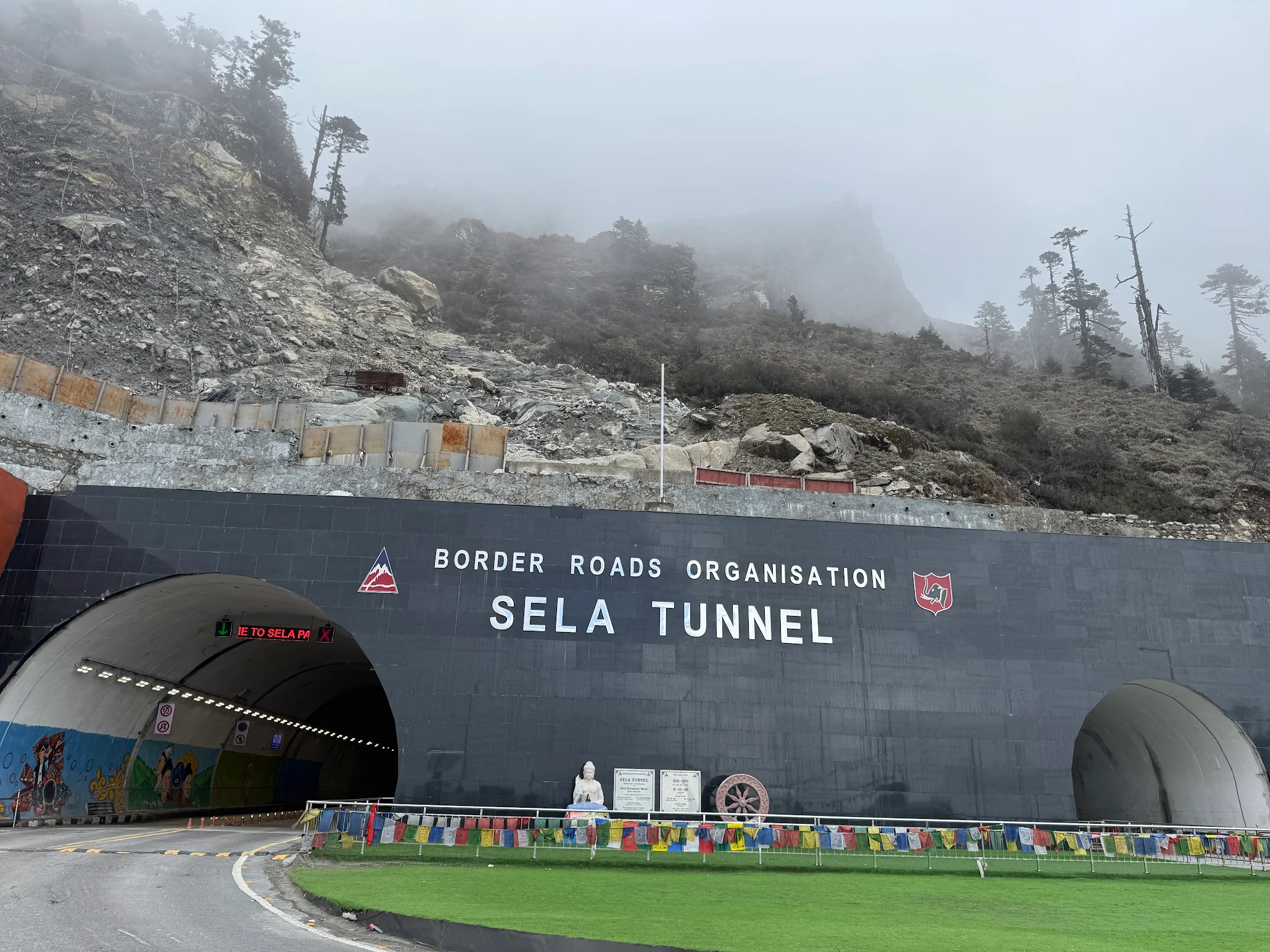
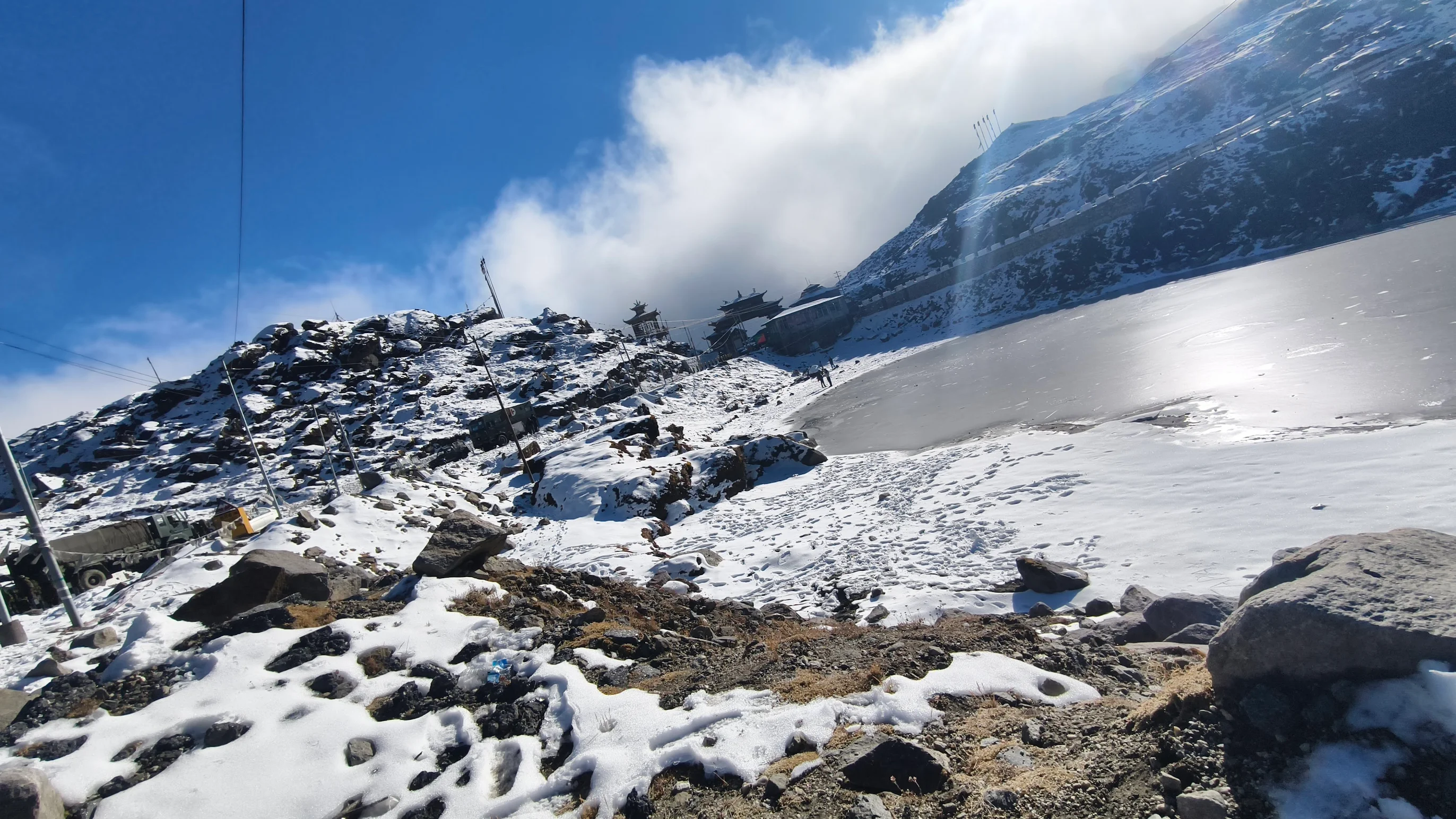
What sets Tawang apart from most Himalayan hill stations is that nothing about it feels curated for tourism. Tawang Monastery, founded in 1680–81, is the largest Buddhist monastery in India and the second-largest in the world after the great monastic complexes of Lhasa — it is still a working seat of Gelugpa Buddhism, home to hundreds of monks, not a museum piece. The road in crosses Sela Pass at 4,170 metres, a pass that stays snow-touched through most of the year and only got reliable winter access with the opening of the Sela Tunnel in March 2024. And on a clear day near the border, you can stand at Bumla Pass, the same crossing the 14th Dalai Lama used to enter India in 1959, with a view straight into Tibet.
None of this is a rushed weekend trip. The honest version of a Tawang tour from Mumbai involves a flight, two full days of mountain driving each way, and real elevation gain that your body needs time to adjust to. This guide lays out exactly how that journey works — the flight and road route from Mumbai, a realistic day-by-day plan, what the Inner Line Permit process actually involves, how altitude affects the trip, and the practical details that separate a well-planned Tawang tour from one that leaves you gasping for breath on day three.
This is also, without question, the more regulated of the two major Northeast Indian circuits. Unlike a trip to Assam or Meghalaya, every Indian traveller needs an Inner Line Permit simply to cross into Arunachal Pradesh, and a further special permit is required if Bumla Pass is on your list. None of it is difficult once you know the order to do things in — and this guide covers that in full further down.
Mumbai to Tawang — The Journey at a Glance
Before the day-by-day detail, here's the shape of the whole trip in one view: a short flight followed by a genuine climb through the Eastern Himalaya. Six distinct stages, each with its own character.
Total road distance from Guwahati works out to roughly 450–520 km depending on the exact route and detours, and it genuinely takes 14–16 hours of driving — nobody sane does that in one sitting. Almost every well-planned itinerary splits it across two days, usually with a halt at Bhalukpong or Dirang, which also happens to be the smartest thing you can do for your body before the altitude climbs further. More on that in the acclimatisation section below.
Tawang Tour Duration Options Compared
Because the road journey alone eats up two full days each way, Tawang tour packages from Mumbai tend to run longer than a typical Northeast India trip. Here's how the common durations stack up, so you can pick based on what you're actually willing to trade off.
| Duration | Best For | What It Covers | Honest Trade-off |
|---|---|---|---|
| 4N / 5D | Absolute minimum, not ideal | Guwahati → Bomdila/Dirang → Tawang (1 night) → return | Skips Bumla Pass entirely and pushes the whole altitude gain into a single long day — genuinely tough, and not something we'd recommend for a first visit. |
| 5N / 6D | Travellers short on leave | Proper Dirang halt on the way up, one night in Tawang, a rushed half-day for Bumla | A workable compromise if the border excursion isn't your top priority. |
| 6N / 7D Recommended | First-time visitors | Two nights in Tawang, a dedicated Bumla Pass & Madhuri Lake day, acclimatisation built in at Dirang | The itinerary detailed in full below — the one we'd actually book. |
| 7N / 8D | Travellers who love remote valleys | Everything above, plus a full day out to Zemithang and the 12th-century Gorsam Chorten stupa | Worth it if you want to see a corner of Tawang district that most itineraries never reach. |
| 8N / 9D | Combining with Assam | Everything above, plus a stop at Nameri National Park near Tezpur on the way back for wildlife and river rafting | Good if you want two genuinely different Northeast ecosystems — Himalayan monastery town and Assam grassland — in a single trip. |
Unlike a Meghalaya or Shillong trip, where a shorter itinerary mostly just means seeing fewer waterfalls, compressing a Tawang trip has a real physical cost — you're gaining several thousand metres of altitude on a route that already involves a full day of flying. If your dates allow it, build in the Dirang halt on the way up rather than pushing straight through to Tawang in one long day. Your legs, and your head, will thank you at Sela Pass.
Day-by-Day: Your Tawang Itinerary from Mumbai
Below is the full 6 nights / 7 days plan — the version we'd recommend for a first Tawang trip, giving both the road journey and the altitude gain the time they genuinely need.
1
Mumbai → Guwahati (flight) → Bhalukpong
Catch an early direct flight from Mumbai to Guwahati — the fastest nonstop options take around 3 hours, landing at Lokpriya Gopinath Bordoloi International Airport by mid-morning. From there, the road journey begins immediately: cross the Brahmaputra and drive via Tezpur toward Bhalukpong, roughly 250–300 km and 6–7 hours in total. Bhalukpong marks the official gateway into Arunachal Pradesh, and it's where your Inner Line Permit gets checked for the first time. Overnight here, on the banks of the Kameng River.
2
Bhalukpong → Bomdila → Dirang
Climb steadily into West Kameng district today, from Bhalukpong's 213-metre elevation up to Bomdila at around 2,415 metres — worth a stop for its monastery, craft centre, and on a clear day, distant views of Kangto and Gorichen, Arunachal Pradesh's highest peaks. Continue roughly 40–45 km further to Dirang, which actually sits lower again, at about 1,620 metres, in a wide valley known for apple orchards, hot springs, and the old Dirang Dzong fort. This dip back down before tomorrow's climb over Sela Pass is deliberate altitude pacing, not a detour — spend the evening at Dirang's hot springs and let your body settle in.
3
Dirang → Tawang, via Sela Pass, Jaswant Garh & Nuranang Falls
The big mountain day. From Dirang, the road climbs hard toward Sela Pass at 4,170 metres — since March 2024 most vehicles now pass just beneath the summit through the Sela Tunnel, which keeps the route open through winter snow and shaves roughly an hour off the crossing, though the short detour up to the pass itself is worth it for the frozen Sela Lake and prayer-flag viewpoint. On the far side, stop at Jaswant Garh, the memorial to Rifleman Jaswant Singh Rawat, who held this post alone for 72 hours during the 1962 war, and at nearby Nuranang (Jang) Falls, a roughly 100-metre cascade a short walk from the road. Roll into Tawang, at 3,048 metres, by evening for two nights.
4
Tawang — Monastery, War Memorial & Urgelling
Dedicate today entirely to Tawang town. Start at Tawang Monastery, founded in 1680–81 by Merak Lama Lodre Gyatso on the wishes of the 5th Dalai Lama — its three-storey assembly hall houses an 8-metre gilded Buddha and a genuinely significant library of Kangyur and Tengyur scriptures. Arrive early, when monks gather for morning prayers, if you can. From there, visit the Tawang War Memorial, a pagoda-style structure honouring soldiers of the 1962 war, and Urgelling Monastery, a smaller 17th-century monastery close by, believed to be the birthplace of the 6th Dalai Lama, Tsangyang Gyatso. Close the day browsing Tawang's compact central market for local handicrafts.
5
Excursion — Bumla Pass & Madhuri Lake
An early start for the highest point of the trip. Bumla Pass sits about 37 km from Tawang at roughly 4,633 metres on the Indo-China border — this leg is restricted to Indian nationals only and needs a separate special permit, arranged through the Deputy Commissioner's office in Tawang and countersigned by the Indian Army, on top of your ILP; most travellers sort this out through their hotel or driver a day ahead. En route, stop at Sangetsar Tso, popularly known as Madhuri Lake, a striking glacial lake at about 3,708 metres formed by an earthquake-triggered landslide. Layer up regardless of season — it stays close to freezing at Bumla even in summer. Return to Tawang for the night.
6
Tawang → Dirang / Bomdila — Return Begins
Begin the journey back, retracing the route over Sela Pass toward Dirang or Bomdila for your final overnight in the hills. With the big climbs behind you, this is a gentler day — a good chance to stop properly at any viewpoint, waterfall or monastery you rushed past on the way in, and to pick up apples, kiwis or local handicrafts before heading toward the plains tomorrow.
7
Dirang/Bomdila → Guwahati → Mumbai
Depart early for the long final drive back to Guwahati, around 250–300 km depending on your overnight stop, retracing the route via Bhalukpong and Tezpur. Time this against your evening flight; with Guwahati to Mumbai taking around 3 hours nonstop, you can realistically be home the same night — six days after you left, with a phone full of Himalayan photographs and a much clearer sense of how far "remote" actually stretches in India.
Top Places to Visit in Tawang
Tawang rewards travellers who treat it as a district, not just a town. Here's the featured monastery first, followed by the rest of the places that anchor a well-planned Tawang tour from Mumbai.
Tawang Monastery (Galden Namgyal Lhatse)
Perched on a ridge above Tawang town at around 3,000 metres, this is the largest Buddhist monastery in India and the second-largest in the world after the great monastic complexes of Lhasa, Tibet. It was founded in 1680–81 by Merak Lama Lodre Gyatso, in accordance with the wishes of the 5th Dalai Lama, and belongs to the Gelug school of Tibetan Buddhism. The three-storey assembly hall, enclosed by a compound wall roughly 280 metres long, houses an 8-metre gilded statue of the Buddha and a library holding the Kangyur and Tengyur — core Tibetan Buddhist scriptures. Several hundred monks still live and study here today; arrive for early-morning prayers if your schedule allows it.
Sela Pass
A high-altitude pass at 4,170 m connecting Dirang to Tawang, with the small, often part-frozen Sela Lake near its summit. The Sela Tunnel, opened in March 2024, now runs just beneath it for year-round access.
13,700 ftJaswant Garh War Memorial
A memorial near Nuranang honouring Rifleman Jaswant Singh Rawat, who single-handedly held off advancing Chinese forces for 72 hours during the 1962 war before being martyred at just 21.
1962 War HistoryNuranang (Jang) Falls
A roughly 100-metre waterfall a short walk from the Dirang–Tawang road, close to Jaswant Garh — one of the most photographed stops on the entire route.
Roadside WaterfallBumla Pass
The Indo-China border crossing at roughly 4,633 m, 37 km from Tawang, where the 14th Dalai Lama entered India in 1959. Indian nationals only, with a special permit arranged locally.
15,200 ft · RestrictedSangetsar Tso (Madhuri Lake)
A glacial lake at about 3,708 m on the way to Bumla, formed by an earthquake-triggered landslide and popularly nicknamed after a Bollywood film shot on its shores.
On the Bumla RouteUrgelling Monastery
A smaller, roughly 17th-century monastery close to Tawang town, believed to be the birthplace of the 6th Dalai Lama, Tsangyang Gyatso — an easy, worthwhile half-hour stop.
Historic BirthplaceDirang
A gentler valley town at 1,620 m known for apple and kiwi orchards, natural hot springs, and the old Dirang Dzong — the smartest overnight halt on the way up or down.
Acclimatisation StopBomdila
West Kameng's headquarter town at around 2,415 m, with its own monastery, a craft centre for Monpa weaving and carving, and clear-day views of Kangto and Gorichen peaks.
Hill Town StopoverWorth the Extra Detour — Underrated Additions
These take an extra day or a genuine detour, but consistently reward the travellers who make time for them:
- Gorsam Chorten, Zemithang — A roughly 93-foot stupa on the banks of the Namjang Chu, believed to date to the 12th or 13th century and built by the Monpa monk Lama Sangye Pradhar — older than Tawang Monastery itself, and modelled after the Boudhanath stupa in Nepal. It sits about 90 km from Tawang in the Zemithang valley, another spot on the Dalai Lama's 1959 route into India.
- PT Tso Lake — A quieter alpine lake near Madhuri Lake, often added to the Bumla excursion for travellers who want one more high-altitude viewpoint without a separate trip.
- Eaglenest Wildlife Sanctuary — A birding destination in West Kameng district near Bhalukpong and Bomdila, known among serious birders for rare Himalayan species; worth flagging in advance if wildlife is part of your interest.
- Dirang Dzong & Kalachakra Gompa — The old fort structure above Dirang town and a nearby monastery, both easy additions to your acclimatisation halt without extending the trip.
Altitude & Acclimatisation — What to Actually Expect
This is the section a Meghalaya or Shillong guide simply wouldn't need, and it's genuinely important here. Between Guwahati and Tawang, you gain over 3,000 metres of elevation, and the route pushes past 4,000 metres twice — at Sela Pass and, if you go, at Bumla. Here's how the climb actually looks stop by stop:
Notice that Dirang actually sits lower than Bomdila before you — this is exactly why the recommended itinerary halts there rather than pushing straight on. Sleeping at a slightly lower altitude before your final climb over Sela Pass is one of the simplest, most effective things you can do to reduce the risk of altitude-related discomfort, and it costs you nothing but one extra overnight stop.
- Ascend gradually where you can. The Bhalukpong → Dirang → Tawang split, rather than a single long push, gives your body two intermediate nights instead of one hard jump.
- Stay hydrated and go easy on your first evening. Drink more water than usual and skip alcohol on your first night in Tawang or before the Bumla excursion.
- Know the early warning signs. Headache, nausea, dizziness or unusual breathlessness are your body's signal to rest, not push through — if symptoms don't ease, moving to a lower altitude is the most reliable fix.
- Talk to your doctor beforehand if you have any heart or lung condition, particularly before including the Bumla Pass excursion, which climbs higher than Sela Pass itself.
- Children, older travellers and anyone with prior altitude issues should build in extra buffer days rather than following a compressed itinerary.
Best Time to Visit Tawang
Tawang's high altitude means the seasons behave quite differently here than they do in the Assam plains or the hills of Meghalaya. Snow, not rain, is the main factor to plan around, and it can affect road access as much as scenery.
Spring
Melting snow reveals blooming rhododendrons and green valleys. Days are mild (roughly 8–15°C), roads are largely clear, and the Losar festival usually falls in this window.
Monsoon
Heavy rain brings real landslide risk on the hill roads between Bhalukpong, Bomdila and Dirang. Waterfalls run full, but travel becomes genuinely unpredictable — most operators recommend steering clear.
Autumn
The monsoon has fully cleared, leaving the sharpest mountain views of the year. Comfortable daytime temperatures, cool nights, and generally reliable road conditions make this the strongest window overall.
Winter
Genuinely sub-zero nights and heavy snowfall around Sela and Bumla, which can close temporarily. Spectacular if you're properly prepared, and this is when the Torgya and Losar festivals bring real colour to Tawang Monastery — but not the easiest season for a first visit.
How to Reach Tawang from Mumbai
By Air — Mumbai to Guwahati, Then the Road
There's no realistic way to fly directly into Tawang — the town has no commercial airport, and even the nearest airstrip, Tezpur's Salonibari Airport, has limited connections mainly to Kolkata, with nothing direct from Mumbai. The practical route for Mumbai travellers is a direct flight to Lokpriya Gopinath Bordoloi International Airport, Guwahati, operated nonstop by IndiGo, Air India and Akasa Air, taking roughly 3 hours across a distance of about 2,070 km. From Guwahati, the rest of the journey — around 450–520 km — is entirely by road. A weather-dependent helicopter service between Guwahati and Tawang also exists for travellers short on time, though seating is limited and schedules shift with conditions.
By Road — The Mountain Leg
The standard route runs Guwahati → Tezpur → Bhalukpong → Bomdila → Dirang → Sela Pass → Tawang, almost entirely on hill roads that most travellers split across two driving days. Bhalukpong is where your Inner Line Permit gets its first check, marking the actual entry into Arunachal Pradesh.
By Rail
Tawang has no railway station of its own. Rangapara North, near Tezpur, is technically the nearest railhead at roughly 300–380 km away, though connectivity is limited. Guwahati Railway Station, about 480 km from Tawang, is far better connected to the rest of India but still requires the same full road journey onward. For a Mumbai-based traveller, flying into Guwahati remains the far more practical choice.
Mumbai → Guwahati (flight): ~2,070 km | ~3 hours nonstop
Guwahati → Bhalukpong: ~250–300 km | ~6–7 hours
Bhalukpong → Bomdila: ~97–109 km | ~4–5 hours
Bomdila → Dirang: ~40–43 km | ~1.5–2 hours
Dirang → Tawang (via Sela Pass): ~130–138 km | ~5–6 hours
ILP & Permits — What You Actually Need for Tawang
Here's the one part of this trip that genuinely needs advance planning. Unlike Assam, Meghalaya or Tripura, Arunachal Pradesh requires an Inner Line Permit (ILP) for every Indian traveller who isn't a permanent resident of the state — including anyone flying in from Mumbai. It's a straightforward process once you know the order, so here's how it actually breaks down.
Check who needs what
Indian nationals need an ILP. Foreign nationals need a Protected Area Permit (PAP) instead — an entirely separate process, usually arranged through a registered tour operator.
Apply online in advance
Indian travellers apply through the official Arunachal Pradesh ILP portal, uploading a photo ID and passport-style photo, and selecting the districts you'll visit — Tawang and West Kameng, for this route.
Get your approval
Processing is typically quick, often within a day or two outside peak season. Download and print your e-ILP, and keep a few photocopies separate from the original.
Carry it through checkpoints
Bhalukpong is the main entry checkpoint where your ILP is verified first; expect it to be checked again at further points along the route into Tawang district.
Foreign Nationals
- A Protected Area Permit (PAP) is required instead of an ILP, applied for through an FRRO office — including the one in Mumbai — or an Indian mission abroad, well ahead of travel.
- The PAP process generally takes longer than the ILP and is usually arranged through a registered tour operator running an approved circuit that includes Tawang.
- Bumla Pass is off-limits to foreign nationals entirely, regardless of permit type, given its location directly on the Indo-China border.
Your ILP alone doesn't cover Bumla Pass. Reaching it requires a separate special permit, issued by the Deputy Commissioner's office in Tawang and countersigned by the Indian Army, on top of your existing ILP — open to Indian nationals only. Most hotels and local drivers in Tawang can arrange this for you a day in advance, and it's checked at several military posts along the road to the border.
What to Pack for Tawang
This is a cold-weather, high-altitude packing list, not a rain-forest one — plan for genuine chill at Sela and Bumla regardless of what season it is down in Mumbai.
Clothing — Layer for Genuine Cold
- A proper down or insulated jacket is non-negotiable — even in the milder months, Sela Pass and Bumla Pass sit well below freezing overnight and often stay cold through the day.
- Thermal base layers, a fleece mid-layer, and a windproof outer shell cover almost every temperature you'll encounter between Guwahati's plains and Bumla's summit.
- Woollen gloves, a warm beanie, and thick socks — wind chill at Sela and Bumla makes exposed skin uncomfortable fast, in any month.
- If travelling December–February, add heavier thermal wear and be ready for snow underfoot around Tawang town itself.
Footwear & High-Altitude Essentials
- Closed, sturdy walking shoes with good grip — you'll be on uneven monastery courtyards, rough paths near Bumla, and occasionally icy or snowy ground.
- Sunglasses with real UV protection and a strong sunscreen — high-altitude sun is far more intense than it feels, especially with snow reflecting it back at you.
- Lip balm and a basic moisturiser — the dry mountain air is harder on skin than most travellers expect.
- Any personal medication, plus a basic first-aid kit — pharmacies thin out considerably past Bomdila.
Practical Essentials
- Multiple photocopies of your ILP and photo ID — it's checked at several points along the route, not just once at Bhalukpong.
- Cash, more than you'd normally carry. ATMs become unreliable beyond Bomdila and Dirang, and while Tawang town has a couple of bank branches, they're not something to depend on.
- A power bank — mountain homestays and hotels are generally reliable but not immune to the odd outage.
- Offline maps downloaded before leaving Guwahati — mobile network coverage gets patchy on the mountain stretches, and drops out completely at Bumla.
- Motion sickness tablets if you're prone to it — the road past Bomdila winds constantly.
Monpa Food, Faith & Culture
Tawang district is home to the Monpa community, whose lives are woven tightly around Tibetan Buddhism — prayer flags line nearly every ridge and rooftop, small chortens (stupas) mark village entrances, and the rhythm of daily life still bends around the monastery calendar. Craft traditions run deep too: Thangka painting, wood carving, and carpet weaving are skills passed down through generations and still practised in Tawang's craft centres today.
What to Eat in Tawang
- Zan — A millet-based porridge or flatbread and the true staple of Monpa cooking, usually served alongside a meat or vegetable stew. Simple, warming, and everywhere.
- Gyapa Khazi — A Monpa take on pulao, mixing rice with fermented cheese, dried fish, chilli, ginger and butter — a distinctive, savoury dish worth actively seeking out.
- Thukpa & Puta — A hearty noodle soup with minced meat and chillies, and its buckwheat-noodle cousin, puta, usually served with a fermented-cheese and chilli stew. Both are cold-weather comfort food done right.
- Chamin — A sharp, everyday chutney made by grinding chillies with fermented cheese, found on nearly every Monpa table.
- Butter tea — Salted, buttery and an acquired taste for most first-timers, but a genuine window into how the Monpa community stays warm through Himalayan winters. Momos, unsurprisingly, are everywhere too.
Festivals Worth Timing a Trip Around
Tawang's calendar centres on three major festivals. Torgya, usually held at Tawang Monastery in January or February, features dramatic masked Cham dances performed by monks, symbolising the expulsion of negative forces before the new year. Losar, the Monpa and Tibetan New Year, generally falls in February or March and turns the whole town into a riot of colour, dance, and communal feasting. A third, quieter harvest festival rounds out the year at the community level. Exact dates shift annually with the lunar calendar, so it's worth confirming before you book around them.
Urgelling Monastery — A Quiet but Significant Stop
Easy to rush past, Urgelling Monastery deserves a proper pause. Believed to be the birthplace of the 6th Dalai Lama, Tsangyang Gyatso — a figure remembered as much for his poetry as his spiritual role — it's a smaller, calmer counterpoint to the scale of Tawang Monastery itself, and a reminder of just how deep this region's Buddhist history actually runs.
Insider Travel Tips & Common Mistakes to Avoid
-
Don't skip the Dirang halt just to save a day. It's the single easiest thing you can do to arrive at Sela Pass and Tawang feeling human rather than wrecked.
-
Arrange the Bumla Pass permit as soon as you reach Tawang, not on the morning you want to go. The Deputy Commissioner's office and Army coordination need at least a day's lead time.
-
Start early for Sela Pass and Bumla Pass alike. Weather at this altitude turns quickly — clear mornings often give way to cloud, wind or light snow by early afternoon.
-
Carry more cash than usual. Reliable ATMs thin out past Bomdila, and card payments are far from universal once you're in Tawang district.
-
Dress modestly and ask before photographing inside monasteries — Tawang Monastery is a living place of worship, not a static monument, and monks are generally welcoming to travellers who show basic respect.
-
Hire a local driver who knows the Sela and Bumla roads well. Beyond the obvious safety benefit, drivers from this region tend to know exactly which viewpoints and monasteries are worth the extra ten minutes.
-
Apply for your ILP well before your travel dates, not the week of. Processing is usually quick, but leaving a buffer protects you against any unexpected delay.
-
Check road status before locking your dates, especially in winter — Sela Pass and Bumla Pass can both see temporary closures after heavy snow, and a flexible itinerary handles that far better than a rigid one.
Ready to Plan Your Tawang Tour from Mumbai?
Our Northeast India travel experts handle the ILP paperwork, the Bumla Pass permit, and the pacing that keeps altitude sickness off your itinerary. Tell us your dates and we'll put together a custom Tawang itinerary from Mumbai — completely free, in 24 hours.
Frequently Asked Questions About Tawang Tours from Mumbai
A Final Word on Tawang
Tawang isn't a place that meets you halfway. It asks for a flight across the country, two days of mountain driving, a permit application, and a body willing to adjust to thin air — and it gives back a monastery that has stood since before most modern nations existed, a mountain pass higher than many trekking summits, and a border crossing with more history in it than most museums. Give the journey the time it actually needs, and Tawang will feel less like a destination you reached and more like a place that was worth becoming difficult to get to.