
Why Meghalaya Should Be Your Next Trip
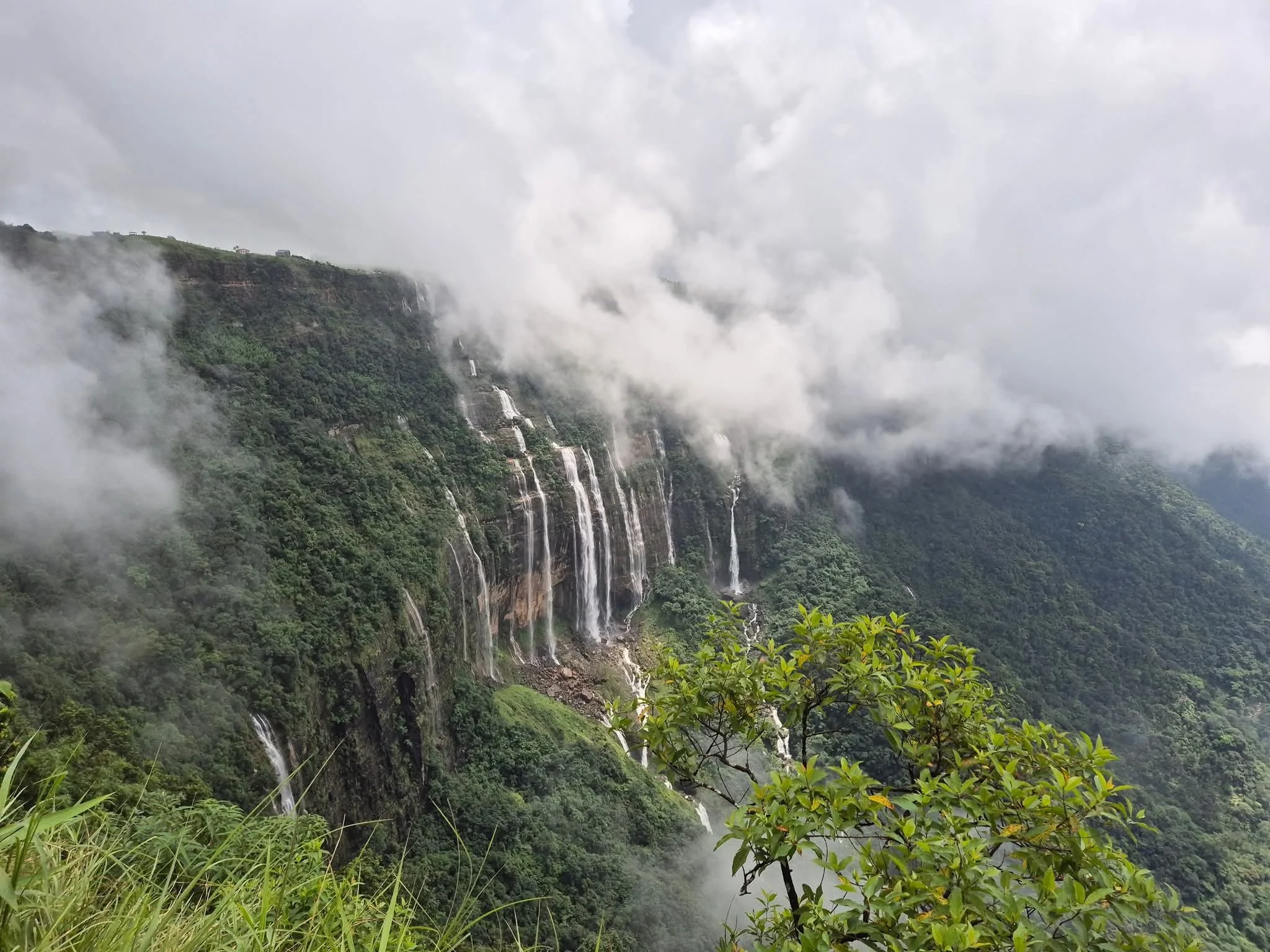
I've been helping people plan Meghalaya tour packages for over a decade, and every single time someone returns from this state, they say the same thing: "I had no idea India could look like this." And they're right. The landscapes of Meghalaya — the green moss-covered gorges, the sudden eruptions of waterfalls from cliff-faces, the highland villages balanced precariously on ridgelines — look nothing like the rest of the country.
Meghalaya means "Abode of Clouds" in Sanskrit, and the name couldn't be more accurate. Located in the northeastern corner of India, this small state borders Assam to the north and Bangladesh to the south. It sits on a plateau roughly 1,500 metres above sea level, and when the monsoon hits — which it does with tremendous enthusiasm, given that Mawsynram in Meghalaya holds the record for the world's highest annual rainfall — the state transforms into a roaring, dripping, extraordinarily beautiful cathedral of water.
But Meghalaya isn't just about rain. Outside the peak monsoon, it is a destination of extraordinary variety: you can trek down to hidden root bridges in the morning, boat across a glass-like river at noon, explore the cleanest village in Asia in the afternoon, and sleep under a sky so full of stars it looks like a mistake. It is, without qualification, one of the most beautiful places in India.
In this guide, we're going to cover everything you need to know to plan a great Meghalaya tour package — whether you have 5 days or 8 days, whether you're travelling as a couple, a family with kids, a group of friends, or solo. We'll walk you through the best itineraries, the places you absolutely cannot miss, the places most tourists skip (but shouldn't), the best time to visit, and the practical details that make the difference between a good trip and a great one.
Meghalaya Tour Package Options at a Glance
Before we go deep into day-by-day planning, let's look at the broad shape of a Meghalaya tour package and what each duration can realistically cover. The honest truth is that Meghalaya has more to offer than most people realise when they first start planning, and the biggest mistake is underestimating travel time between locations.
The state's terrain is varied — high plateaus, deep gorges, winding mountain roads — and distances that look short on a map can take significantly longer than expected. A "3-hour drive" in Meghalaya can easily become 4.5 hours on narrow switchback roads. Budget accordingly, and you'll have a much more relaxed and satisfying experience.
- Day 1: Arrive Shillong, explore city
- Day 2: Laitlum Canyons, Umiam Lake
- Day 3: Cherrapunji — Nohkalikai, Mawsmai Cave
- Day 4: Dawki river boat ride, Mawlynnong village
- Day 5: Return to Guwahati / Shillong airport
- Day 1–2: Shillong, Ward's Lake, Police Bazaar
- Day 3: Cherrapunji full day
- Day 4: Seven Sisters Falls, Double-Decker hike (easy)
- Day 5: Dawki → Shnongpdeng camping
- Day 6: Mawlynnong → depart
- Day 1–2: Shillong, city & surroundings
- Day 3: Cherrapunji, waterfalls & caves
- Day 4: Nongriat — Double-Decker trek full day
- Day 5: Dawki river + Shnongpdeng
- Day 6: Mawlynnong + Mawphlang Sacred Grove
- Day 7: Depart
- Day 1–2: Shillong — deep city exploration
- Day 3: Mawsynram (world's wettest place)
- Day 4: Cherrapunji & Arwah Cave
- Day 5: Nongriat trek overnight stay
- Day 6: Dawki & Shnongpdeng
- Day 7: Garo Hills day visit or Balpakram
- Day 8: Depart
- Day 1–2: Shillong city exploration
- Day 3: Cherrapunji waterfalls & caves
- Day 4: Nongriat Double-Decker trek
- Day 5: Dawki & Shnongpdeng camp
- Day 6: Mawlynnong + Mawphlang Grove
- Day 7: Garo Hills / Balpakram
- Day 8: Transfer to Guwahati, Brahmaputra cruise
- Day 9: Return from Guwahati
- Day 1–7: Meghalaya (all major routes)
- Day 8–9: Kaziranga or Majuli add-on (Assam)
- Day 10: Return from Guwahati
If you only have 4 nights, focus on the classic Shillong–Cherrapunji–Dawki triangle and don't try to add more. Rushed travel in Meghalaya steals the magic. The roads are scenic but slow, and the real joy of this state comes from pausing, breathing the cool mountain air, and letting each place settle in before you move on.
Detailed Itineraries: Day-by-Day Plans for Every Duration
The Classic: 4 Nights / 5 Days Meghalaya Tour Package
This is the most popular Meghalaya tour duration and it works well — but it requires good planning and an early start on most days. Here's what a great 4N5D Meghalaya itinerary looks like:
The Comprehensive: 6 Nights / 7 Days Meghalaya Tour Package
This is the itinerary we most often recommend, because it adds the two experiences that can't be rushed: the Nongriat Double-Decker Living Root Bridge trek and an overnight stay at Shnongpdeng by the Umngot river. Both deserve their own full day.
For the Dedicated: 7N8D & Longer Meghalaya Tour Packages
With 8 days, you unlock the western side of Meghalaya: the Garo Hills, home to Nokrek National Park (a UNESCO World Heritage site), the extraordinary Balpakram National Park known as "the Land of Perpetual Wind", and the Tura and Baghmara areas. The Garo Hills have a completely different character from the Khasi Hills — flatter, greener, with a different tribal culture (the Garo people are matrilineal like the Khasi, but have distinct customs, music, and festivals). Most Meghalaya tour packages ignore this area entirely, which means you'll have it mostly to yourself.
Alternatively, an 8–10 day Meghalaya package can be combined with 2 days in Kaziranga (Assam) for a complete Northeast India experience — rhinos in the morning, root bridges in the afternoon, as it were.
Top Places to Visit on Your Meghalaya Tour Package
Meghalaya's main tourist circuit runs through three zones: the Khasi Hills (Shillong–Cherrapunji belt), the Jaintia Hills (east of Shillong), and the Garo Hills (far west). Most tour packages focus on the Khasi Hills, which is where the highest concentration of major sights is. Here are the must-see places:
Shillong
The state capital sits at 1,496 m. A charming hill town with colonial architecture, a famous live music scene, excellent Khasi cuisine, and easy access to viewpoints, lakes, and markets.
Base CampCherrapunji (Sohra)
The wettest land on Earth: massive waterfalls, deep gorges, limestone caves, and views into the Bangladesh plains. Nohkalikai Falls here is India's tallest at 340 metres.
Essential StopNongriat & Root Bridges
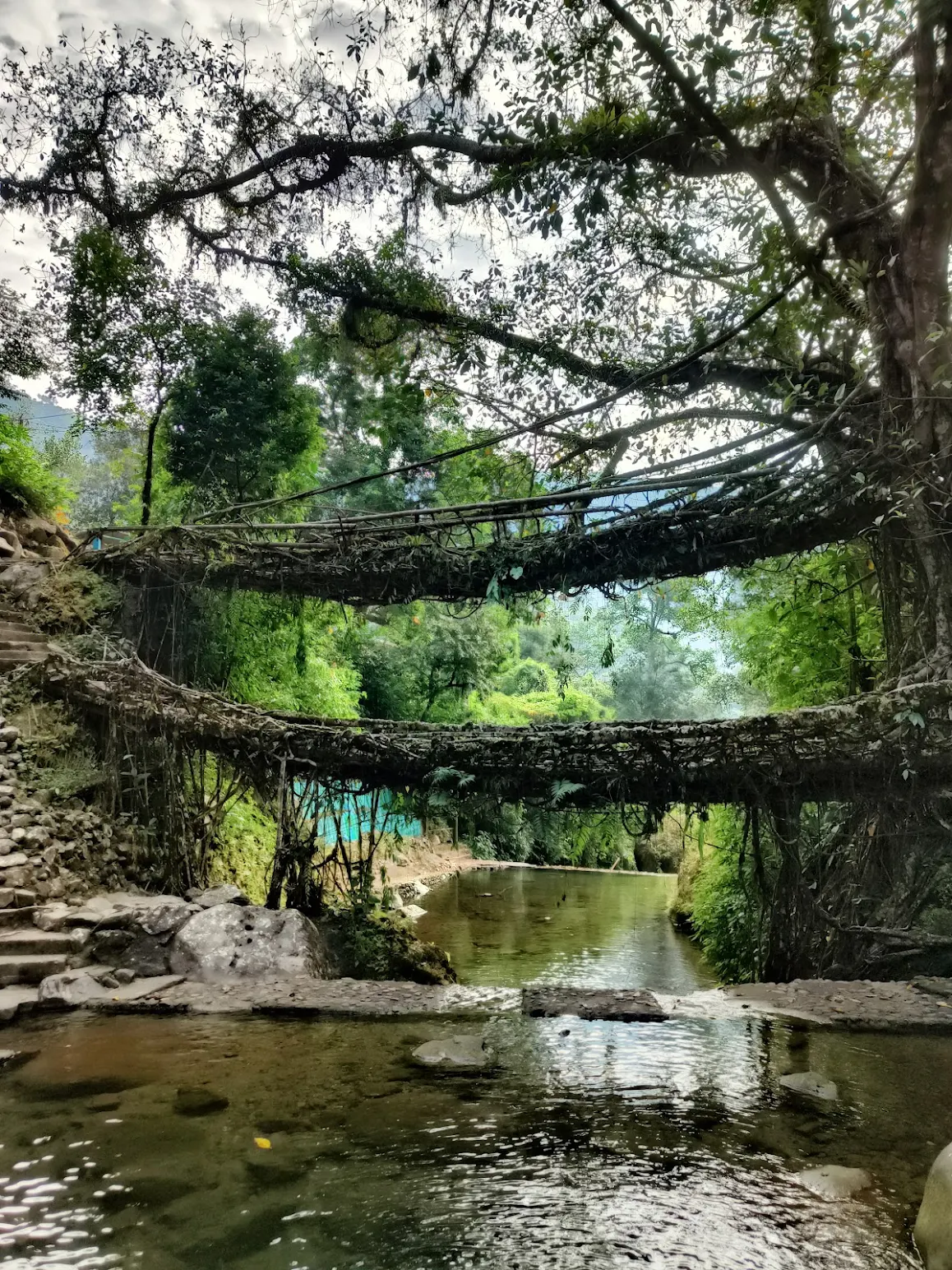
Trek 3,500 steps into a jungle valley to reach the world-famous Double-Decker Living Root Bridge — two bridges grown by the Khasi people across generations. Also accessible: single-root bridges at Mawshyieng and Ritymmen.
UNESCO NominationDawki & Umngot River
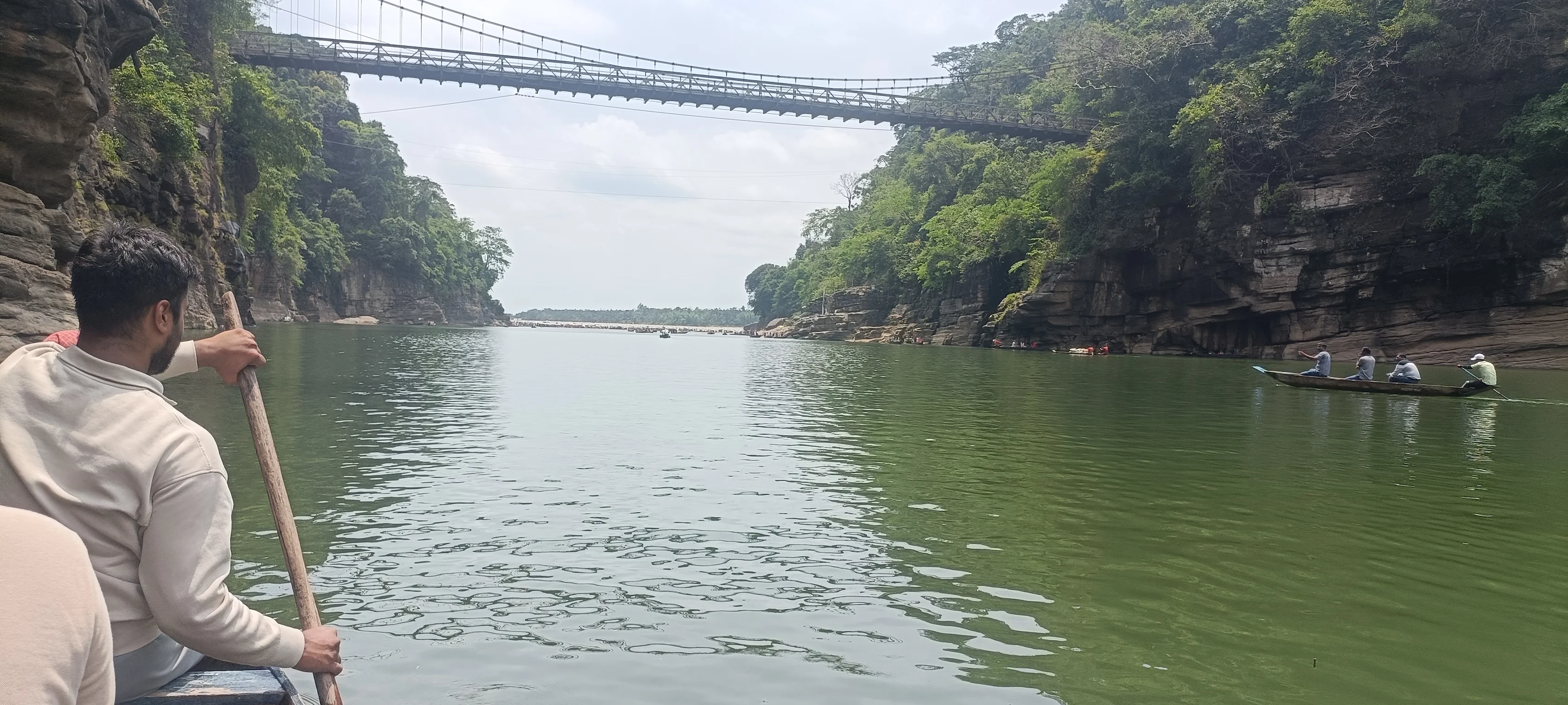
One of India's most photographed places. The Umngot River is so transparent that boats appear to hover in mid-air. A short boat ride here is utterly surreal and completely unforgettable.
Most PhotographedLaitlum Canyons
The "Grand Canyon of Meghalaya." These deep gorges near Shillong offer sunrise views of cloud-filled valleys that look like something from a fantasy novel. Best experienced at 5am.
Sunrise SpecialMawlynnong Village
Voted "Asia's Cleanest Village" — immaculate lanes, bamboo dustbins, flowering homes, and a Sky Walk platform that peers into Bangladesh. Community-run and genuinely impressive.
Cultural GemMawphlang Sacred Grove
An ancient forest preserved for centuries by Khasi sacred law. Extraordinarily biodiverse, with trees thousands of years old. One of the most genuinely spiritual natural spaces in India.
Hidden GemShnongpdeng
Just 1 km upstream from Dawki, this quieter stretch of the Umngot offers camping, kayaking, cliff jumping, and some of the best stargazing anywhere in Northeast India.
Adventure CampDon't Skip These — The Underrated Places in Meghalaya
Most tour itineraries focus on the same circuit. These places are slightly off the beaten path but consistently rate as highlights among people who visit them:
- Arwah Cave — An extraordinary limestone cave near Cherrapunji with fossilised shells of ancient sea creatures embedded in the rock. Far less crowded than Mawsmai and far more interesting.
- Wei Sawdong Falls — Three tiers of waterfalls accessible via a short but steep trail near Cherrapunji. Almost nobody goes here, and it is stunning.
- Krang Suri Falls — A turquoise pool at the base of a slender waterfall near Jowai (Jaintia Hills). The colour of the water is genuinely unreal.
- Jakrem Hot Springs — Natural sulfur springs in a forested valley, believed by locals to have medicinal properties. A uniquely relaxing detour.
- Don Bosco Museum, Shillong — Seven floors of immersive displays on the cultural heritage of Northeast India's tribes. If you only visit one museum in Northeast India, this should be it.
Best Time to Visit Meghalaya for Your Tour Package
This is the question we get asked most often, and the answer is genuinely nuanced. Meghalaya is a different kind of destination at every time of year, and the "best" time depends entirely on what you want to experience.
| Month | Season | Weather | Crowd Level | Verdict |
|---|---|---|---|---|
| Oct – Nov | Post-monsoon | Cool, clear skies, waterfalls full | Moderate | Best Time |
| Dec – Feb | Winter | Cold (5–15°C), crisp, very clear | Peak season | Best Time |
| Mar – May | Spring | Warm, flowering, orchids in bloom, comfortable | Moderate | Best Time |
| Jun | Pre-monsoon | Warm, first rains arriving, waterfalls building | Low | Decent |
| Jul – Sep | Peak Monsoon | Extremely heavy rain, waterfalls at full roar | Very Low | For rain-lovers only |
October to April is the prime window for a Meghalaya tour package. In these months, the weather is clear and comfortable, the roads are safe, trekking conditions are excellent, and all attractions are fully accessible. Waterfalls are still impressively full in October–November from the tail end of monsoon, and the skies are incredibly clear.
The monsoon period (June to September) is a completely different kind of visit. If you want to see Meghalaya at its most dramatically beautiful — waterfalls roaring off every cliff, rivers surging, the entire state draped in mist — then June to September is genuinely extraordinary. But roads can be dangerous, some treks (especially Nongriat) become very slippery, and Dawki loses much of its famous clarity due to silt. This is an adventurous choice that we recommend only for experienced travellers who don't mind unpredictable conditions.
How to Reach Meghalaya
By Air
The nearest major airport is Lokpriya Gopinath Bordoloi International Airport (LGBI), Guwahati in Assam. Almost all Meghalaya tour packages start and end in Guwahati. From Guwahati airport, Shillong is approximately 100 km (2.5–3 hours by road). Guwahati is connected to all major Indian cities including Delhi, Mumbai, Bengaluru, Kolkata, Chennai, and Hyderabad.
Shillong also has its own small airport (SHL) with limited connectivity — currently operating flights to Kolkata on select days. For most travellers, Guwahati remains the more reliable entry point.
By Train
Meghalaya itself has no railway connectivity. The nearest railway stations are Guwahati (100 km from Shillong) and Mendipathar in North Garo Hills (for Garo Hills visitors). Trains to Guwahati run from all major Indian cities, including the popular Rajdhani Express from New Delhi.
By Road
Self-drive is an option for experienced drivers who enjoy mountain roads — the Guwahati–Shillong highway (NH-6) is well maintained. Within Meghalaya, hiring a local driver/cab is strongly recommended. Taxis with local drivers who know the roads are not just more convenient — they're safer, and the driver often becomes one of the best parts of the trip.
Indian citizens: No permit required for Meghalaya. Just carry a valid government ID.
Foreign nationals: A Protected Area Permit (PAP) is required for some border areas. For most standard tourist circuits, a valid passport and India tourist visa are sufficient. Carry your passport at all times.
What to Pack for Your Meghalaya Tour Package
Clothing
- Warm layers for evenings and early mornings — even in summer, temperatures drop significantly after sunset. In winter, pack a good jacket, thermals, and gloves.
- Quick-dry trekking clothes — you will sweat on the Nongriat trek, and if it's monsoon season, you will get wet.
- A light waterproof jacket or poncho — even in dry season, Meghalaya can produce sudden showers.
Footwear & Gear
- Good trekking shoes with strong grip — the Nongriat steps are slippery even in dry weather. Do not attempt this trek in sandals or flat sneakers.
- Water shoes or sandals for Dawki and Shnongpdeng river activities.
- Trekking poles are optional but genuinely helpful for the Nongriat trek (can also be rented in Tyrna village).
Essentials
- Sunscreen, lip balm, and sunglasses — the high-altitude sun is deceptively strong even when it doesn't feel hot.
- A reusable water bottle — Meghalaya has excellent spring water at many locations, and going plastic-free is strongly encouraged.
- Power bank — many remote areas have unreliable electricity, especially at campsites.
- Cash — ATMs are available in Shillong and Cherrapunji but very limited elsewhere. Carry sufficient cash before heading to Dawki, Nongriat, or Shnongpdeng.
Meghalaya Food, Culture & Customs
One of the most fascinating aspects of any Meghalaya tour package is the cultural immersion. The Khasi, Jaintia, and Garo tribes each have distinct languages, traditions, and cuisines that bear almost no resemblance to the rest of India. Understanding a few things before you arrive makes the experience significantly richer.
Meghalaya's Matrilineal Society
Meghalaya is one of the few places in the world where society is structured around the mother's line. Among the Khasi and Garo people, children take the mother's surname. Property passes through daughters, not sons. The youngest daughter (called Ka Khadduh in Khasi) inherits the ancestral home and is responsible for caring for the parents. This doesn't mean women simply "rule" — it's a nuanced social structure — but it does mean that women in Meghalaya often hold positions of cultural and economic authority that is unusual by Indian standards. Travellers frequently comment on how confident and self-possessed Khasi women seem.
What to Eat in Meghalaya
- Jadoh — Rice cooked with pork blood and spices. Sounds confronting; tastes extraordinary. The defining dish of Khasi cuisine.
- Doh Jem — Pork cooked with black sesame paste. Rich, smoky, and deeply flavourful.
- Nakham Bitchi — A pungent soup made from dried fish. Definitely an acquired taste, but authentically Khasi.
- Tungrymbai — Fermented soybean dish, used as a seasoning. Very different from anything you'll find elsewhere in India.
- Kwai — Betel nut chewed with leaves and lime paste. This is the local social ritual; you'll be offered it and it's polite to at least acknowledge the gesture.
Cultural Customs to Keep in Mind
The Khasi people are warm and genuinely welcoming of travellers, but a few things are worth keeping in mind: dress modestly when visiting villages (covered shoulders and knees are appreciated). Ask before photographing people — especially women and elders. In Mawphlang Sacred Grove, follow the guide's instructions strictly — removing anything from the grove, including a leaf, is considered deeply disrespectful. Generally, the more respect you show for local customs, the more you will receive in return, and Meghalaya's warmth toward travellers who engage genuinely is one of the state's greatest assets.
Insider Travel Tips & Common Mistakes to Avoid
-
Start the Nongriat trek by 7am at the latest. The trek takes 5–7 hours with stops. Starting late means finishing in heat (or darkness), and missing the best light at the bridge itself.
-
Visit Dawki early morning (before 9am) for the clearest, calmest water and the best photographs. By 10am, boats from Shillong arrive en masse and the river gets crowded.
-
Don't plan Laitlum Canyons for the afternoon. The view is at its most dramatic at sunrise, when the valley fills with cloud and the light is golden. Plan to arrive by 5:30–6am.
-
Carry enough cash before leaving Shillong. Post Shillong, ATM access becomes unreliable. Dawki, Shnongpdeng, Mawlynnong, and the trek to Nongriat are all cash-only zones.
-
Book accommodations in advance. Especially in peak season (October–April), good properties in Cherrapunji and Dawki get booked out weeks in advance. Don't leave this to the last minute.
-
Don't skip the sacred grove guide. Mawphlang Sacred Grove without a knowledgeable local guide is just a pretty forest walk. With a guide who can explain the sacred ecology and the oral history embedded in the trees, it becomes one of the most profound experiences in Meghalaya.
-
Network coverage is patchy. Airtel has the best coverage across Meghalaya. BSNL is useful in some remote border areas. Jio and Vi coverage degrades quickly outside Shillong. Download offline maps before you travel.
-
Travel with a reusable bag. Meghalaya is making genuine efforts at sustainable tourism. Single-use plastics are increasingly restricted and communities actively support travellers who bring their own bottles and bags.
Ready to Plan Your Meghalaya Tour Package?
Our Northeast India travel experts have personally explored every trail, village, and viewpoint in this guide. Tell us your dates and we'll craft a custom Meghalaya itinerary — completely free, in 24 hours.
Frequently Asked Questions About Meghalaya Tour Packages
A Final Word on Meghalaya
Meghalaya is not a destination for people in a hurry. It rewards those who slow down, who wake up early to catch the morning mist, who let a conversation with a Khasi elder go on longer than planned, who sit by the Umngot river for an extra hour just because the light is doing something extraordinary. The best Meghalaya tour package is the one that leaves gaps — time for discovery, for unexpected detours, for the kind of travel that changes you slightly but permanently. We hope this guide helps you plan exactly that kind of trip.