
Why Assam and Arunachal Belong on the Same Itinerary
The practical case for combining them is straightforward: Tezpur, roughly three hours from Guwahati, is the last town before the routes genuinely diverge — carry on east and you reach Kaziranga; turn north through Bhalukpong and you're on the road to Bomdila, Dirang and eventually Tawang. Treating Tezpur as a working junction rather than a place you simply pass through means this itinerary never needs to return all the way to Guwahati between the wildlife leg and the mountain leg, which is where a lot of self-planned Assam-Arunachal trips lose an entire day they didn't need to.
The other thing worth knowing before you build an itinerary for Assam and Arunachal Pradesh is that the two halves move at genuinely different speeds. Assam's roads are flat and fast — Guwahati to Kaziranga is a single comfortable drive. Arunachal's roads are not, and shouldn't be planned as if they were; a mountain kilometre through the Tenga Valley or over Sela takes several times as long as a plains kilometre, and rushing it is usually where trips go wrong.
This guide lays out a complete, workable itinerary for Assam and Arunachal Pradesh built around that Tezpur junction — a recommended 9-day, 8-night version with shorter and longer alternatives, an honest breakdown of the Inner Line Permit process that catches a lot of first-time Arunachal travellers off guard, and the packing and pacing advice that actually matters once the road starts climbing.
How the Route Works — The Tezpur Hub
Unlike a Meghalaya loop, where every stop sits within a couple of hours of Shillong, Assam and Arunachal Pradesh don't share a single hub — they share a fork. Guwahati to Tezpur is common ground for both halves of the trip. From there, the route genuinely splits, and understanding that split is what makes the rest of this itinerary make sense.
The Arunachal Spur — North from TezpurIn practice, that means the most efficient shape for this trip isn't a loop in the geographic sense — it's a fork with Tezpur at the base. You head north up the Arunachal spur first, since it's the longer, slower, permit-gated half of the trip and benefits from being tackled with full energy at the start. Coming back down, instead of returning to Guwahati, you peel off at Tezpur onto the Assam spur toward Kaziranga, and only head back to Guwahati once both halves are done. Compared with itineraries that treat Assam and Arunachal as two separate trips bolted together through Guwahati, routing through Tezpur both ways typically saves the better part of a day of driving.
Doing Arunachal first, while everyone's freshest, isn't just about energy — it's about buffer. Mountain roads through Bhalukpong, Bomdila and Sela occasionally lose a few hours to weather, roadwork, or a slow convoy day, and it's far easier to absorb that delay early in a 9-day trip than on the last leg before a flight home. Kaziranga's roads, by contrast, are flat, fast and predictable, which makes it the safer half to schedule last.
Choosing Your Itinerary Length
Because Arunachal's roads are so much slower than Assam's, duration options for this trip don't scale in tidy one-day steps the way a Meghalaya itinerary does — adding Tawang to the plan adds several days at once, not one. Here's how the realistic options stack up.
| Duration | Days in Assam | Days in Arunachal | What You Get | Best For |
|---|---|---|---|---|
| 6D / 5N | ~3 (Kaziranga) | ~2 (Bomdila & Dirang only) | Foothill Arunachal — monasteries, apple orchards, mountain air — without the push to Tawang. | Short leave, altitude-cautious travellers, first Northeast trip |
| 8D / 7N | ~2 | ~5 (Tawang, 1 night) | The full circuit, but Tawang gets only one night — little buffer for weather or altitude. | Travellers on a tighter deadline who still want Tawang |
| 9D / 8NRecommended | ~2 (two safaris) | ~6 (Tawang, 2 nights) | Proper acclimatisation, a full day in Tawang itself, and one comfortable buffer day built in. | First-time & thorough Assam-Arunachal explorers |
| 11D / 10N | ~3 (two safaris) | ~7 (+ Nameri near Tezpur) | Adds a river-rafting/birding stop at Nameri National Park near Tezpur and a second Kaziranga safari day. | Slower-paced trips, wildlife-and-birding travellers |
| 13D / 12N | ~3 | ~9 (+ Ziro Valley) | Adds the Ziro Valley and its Apatani tribal culture — reached via a separate spur through North Lakhimpur. | Travellers who want the complete Assam-Arunachal picture |
If Tawang is the reason you're planning this trip at all, don't compress it into a single overnight. Between the altitude, the length of the drive up, and how much there is to see once you arrive — the monastery, the lakes, the war memorial — one night in Tawang means you're turning around almost as soon as you've acclimatised. The 9D8N plan is really the shortest version that gives Tawang two nights, which is what actually makes the climb worth it. If Ziro Valley's Apatani villages are non-negotiable for you, budget the extra days for the 13D12N version rather than trying to squeeze a second Arunachal district into a 9-day trip — it genuinely sits in a different part of the state, reached by its own road.
Day-by-Day: The Recommended 9D8N Assam-Arunachal Itinerary
Below is the full day-by-day plan for the 9-day, 8-night version — the one that gives Tawang enough time to be worth the climb, without turning Kaziranga into an afterthought at the end.
The Compact Version: 6 Days / 5 Nights
If Tawang's altitude or the extra travel days aren't workable right now, the 6D5N version keeps the Arunachal experience genuinely real — Bhalukpong, Bomdila and Dirang, with their monasteries, dzongs and orchard-covered hillsides — while stopping short of the push to Sela and Tawang. It still needs an Inner Line Permit, since Bomdila and Dirang are just as much inside Arunachal Pradesh as Tawang is, but it trades the highest, slowest section of road for two extra relaxed days at Kaziranga.
Going Further: 11D10N and 13D12N Options
With two extra days, the 11D10N itinerary adds a stop at Nameri National Park, a quiet eco-tourism reserve just outside Tezpur known for river rafting on the Jia Bhoreli and excellent birdwatching — an easy, low-effort add given how directly it sits on the route — plus a second full safari day at Kaziranga. With four extra days, the 13D12N version reaches further into Arunachal for Ziro Valley, home of the Apatani tribe's UNESCO-tentative-listed paddy-cum-fish farming landscape. Worth knowing before you commit to it: Ziro sits in a completely different district, reached via its own spur road through North Lakhimpur in Assam, not as a direct continuation of the Tawang route — which is exactly why it needs the extra days rather than being tacked onto the 9D8N plan.
Places This Itinerary Covers
Because this route crosses a plain and climbs a mountain range in the same week, the places on it look almost nothing alike from one day to the next. Here's what anchors a well-built itinerary for Assam and Arunachal Pradesh, roughly in the order you'll reach them.
Tezpur
The junction town this whole itinerary is built around. Agnigarh Hill's Brahmaputra views and the 9th-10th century Bamuni Hills ruins are worth the stopover on their own, quite apart from Tezpur's role as the route's fork.
The Junction TownBomdila
The first proper hill town on the Arunachal spur, ringed by apple orchards and home to a monastery with sweeping views back down toward the plains you've just climbed out of.
First Himalayan FootholdDirang & the Sangti Valley
A centuries-old dzong, natural hot springs, and — in winter — a real chance of spotting the black-necked crane wintering in the Sangti Valley just outside town.
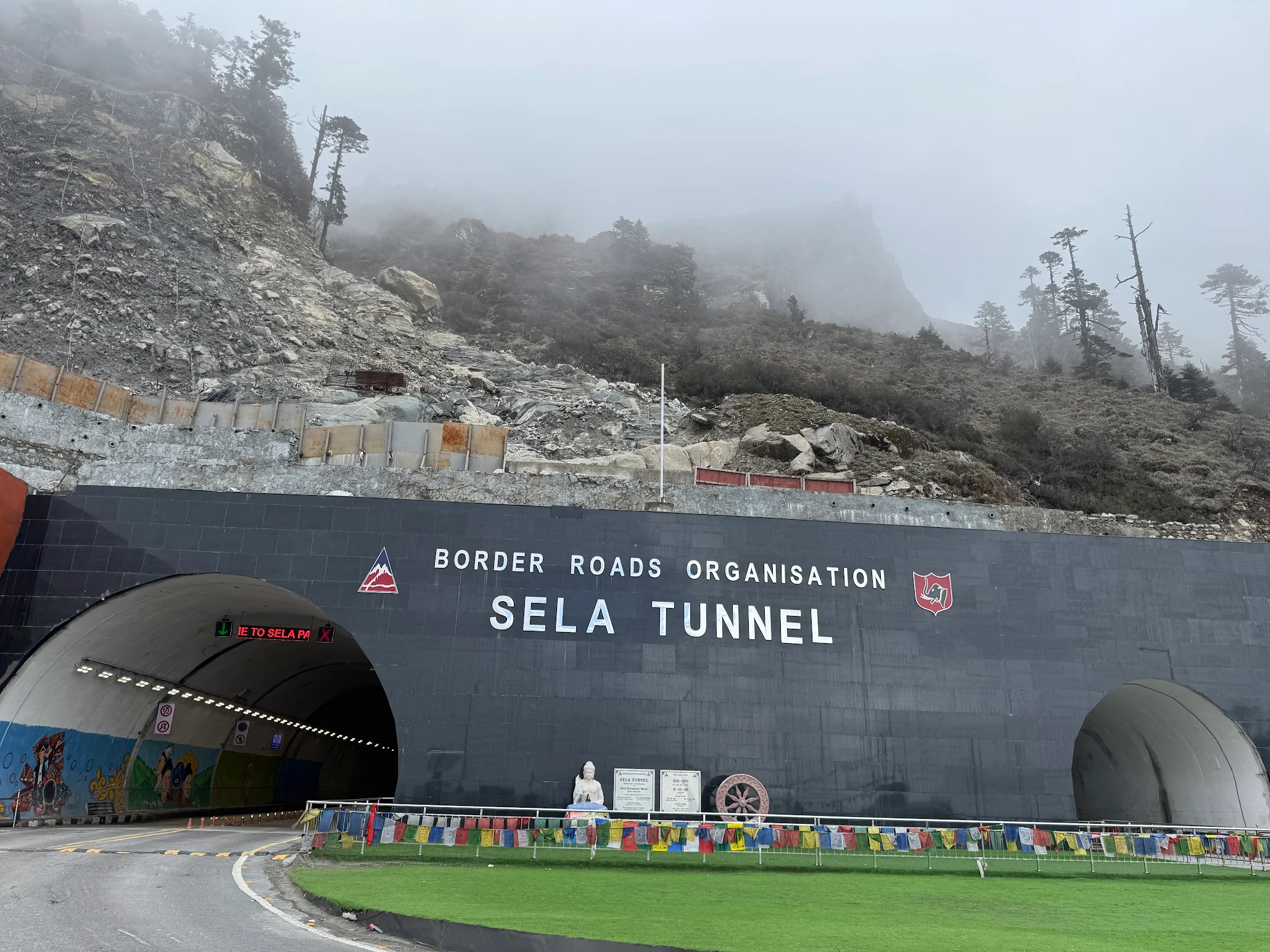
Dzongs & Hot SpringsSela Pass & Sela Tunnel
The trip's high point, literally — 13,700 feet at the pass itself, now bypassed for much of the year by a 2024-built tunnel that has made Tawang genuinely reachable in far more weather than before.
13,700 ftTawang Monastery
India's largest Buddhist monastery and the second-largest in the world, founded in 1680-81 and still home to several hundred monks — the reason most people build an itinerary for Assam and Arunachal Pradesh in the first place.
Gaden Namgyal LhatseSangetsar (Madhuri) Lake & PT Tso
Earthquake-formed lakes near Tawang, high enough to be genuinely weather-dependent, but among the most photographed detours in the whole state when the road cooperates.
High-Altitude LakesKaziranga National Park
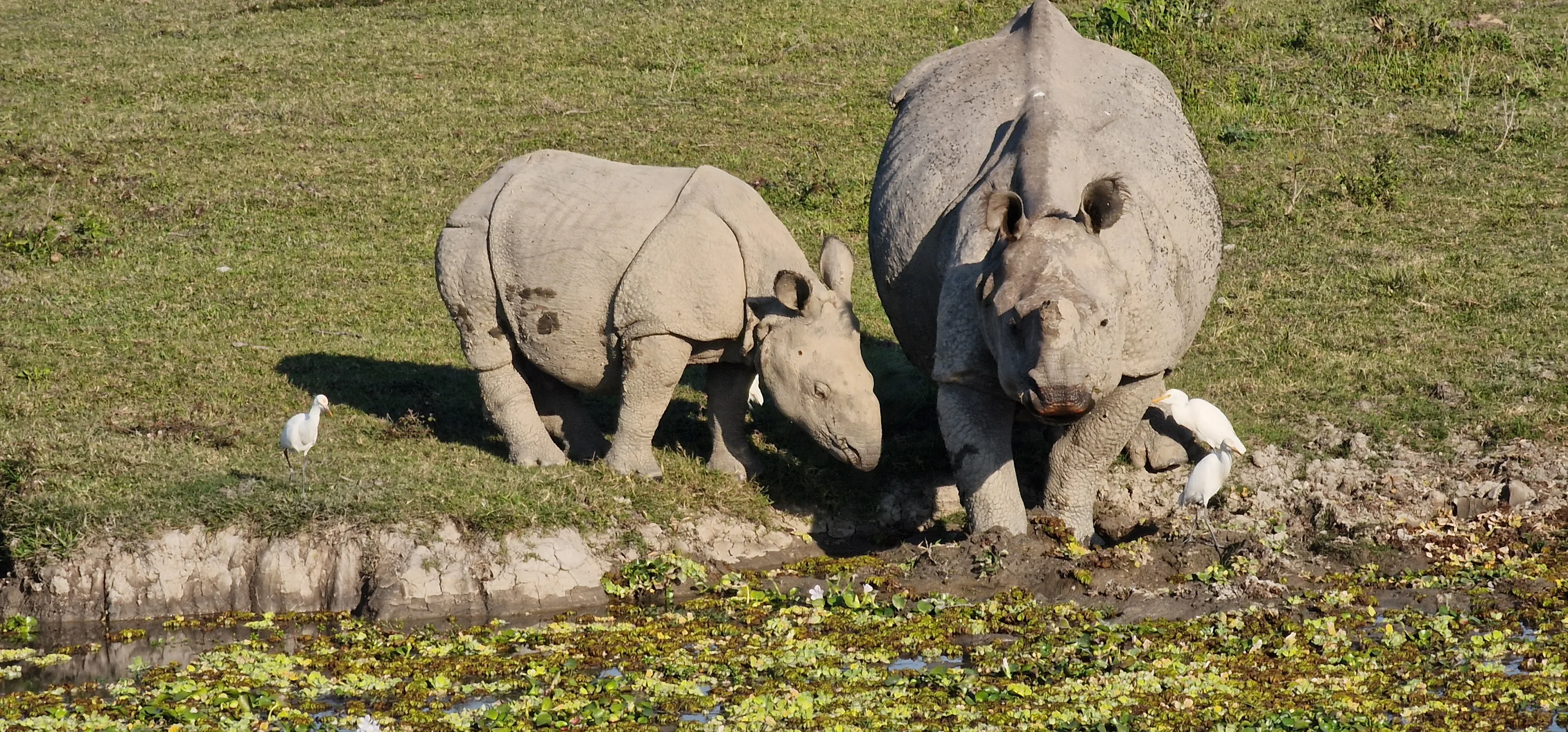
A UNESCO World Heritage Site on the Brahmaputra floodplain, and the Assam side of this trip's payoff — home to roughly two-thirds of the world's greater one-horned rhinos, with wild elephants, water buffalo and one of India's densest tiger populations besides.
Rhino CountryKamakhya Temple, Guwahati
One of the fifty-one Shakti Peethas of Hindu tradition, set on Nilachal Hill above the Brahmaputra — a fitting bookend for a trip that begins and ends in the same city.
Departure-Day StopWorth the Extra Days — Add-Ons for Longer Trips
- Nameri National Park — A quiet reserve just outside Tezpur, known for rafting the Jia Bhoreli river and for birdwatching that draws serious birders from well beyond Assam; a natural stop given how directly it sits on the route.
- Ziro Valley — Home to the Apatani tribe's paddy-cum-fish cultivation system, on UNESCO's tentative World Heritage list; reached via a separate spur through North Lakhimpur, best kept for 13-day or longer itineraries.
- Bumla Pass — Right on the Indo-China border near Tawang, occasionally open to Indian nationals with additional army clearance; never guaranteed, so treat it as a bonus rather than a plan.
- Pobitora Wildlife Sanctuary — A smaller, far less crowded rhino sanctuary between Guwahati and Tezpur, with one of the highest rhino densities per square kilometre anywhere in India.
Best Time to Visit Assam and Arunachal Pradesh Together
The two halves of this trip don't agree on a calendar any more than they agree on a pace. Kaziranga's safaris run roughly November through April and are at their best in the cool, dry heart of winter. Arunachal's mountain roads are shut down by monsoon landslides for much the same months Kaziranga is closed, but unlike Kaziranga, they don't necessarily improve in deep winter — that's when Tawang gets genuinely cold and the highest side trips near Sela and the border lakes become weather-dependent.
Spring
Arunachal's rhododendrons bloom and mountain roads are at their clearest; Kaziranga's safari season is winding down toward its close, so this is really your last comfortable window for both halves together.
Best Overall BalanceMonsoon
Kaziranga's safaris are suspended entirely as the Brahmaputra floods the park, and Arunachal's mountain roads carry a real landslide risk during this window — neither half of this itinerary is realistic now.
Not SuitablePost-Monsoon
Arunachal's skies clear beautifully and mountain visibility is often at its best; Kaziranga reopens in November with tall, still-uncut grass, so wildlife sightings improve steadily through the month.
Excellent for ArunachalWinter
Kaziranga is at its absolute best — cut grass, cool weather, animals visible near water sources. Tawang, meanwhile, turns genuinely cold, and snowfall can close the highest side trips near Sela and the border lakes for days at a time.
Best for Kaziranga, Toughest for TawangIf you have to pick one window that treats both halves fairly, October to November is usually the strongest choice — Arunachal gets its clearest mountain views of the year just as Kaziranga's season is getting underway. March to early April is the close runner-up, particularly if the rhododendrons matter to you. December to February genuinely is the best possible month for Kaziranga's wildlife, but only take it if you're prepared with serious cold-weather gear and a flexible schedule around Tawang, since a snow-closed road near Sela or the high lakes is a real possibility rather than a remote one.
Permits — ILP, PAP and What's Genuinely Different Between the Two States
This is the one part of the trip where Assam and Arunachal Pradesh could not be more different, and it's worth understanding before you book anything else. Assam needs no special permit at all for Indian citizens. Arunachal Pradesh, on the other hand, is a restricted-entry state under the Bengal Eastern Frontier Regulation, and every non-resident Indian citizen needs an Inner Line Permit before crossing in — no exceptions, and no on-arrival option at the gate.
Assam — No Permit Needed
Arunachal Pradesh — ILP Mandatory
The ILP Process for Indian Citizens
- Apply online in advance: The Inner Line Permit is issued through the Arunachal Pradesh government's official e-ILP portal. Upload a valid photo ID (Aadhaar, voter ID, driving licence or passport) and a recent photograph — this cannot be arranged at the gate itself.
- Processing time: Often approved within a day or two, but delays do happen around peak season, so apply at least four to five days before you plan to enter the state rather than the night before.
- Checked at Bhalukpong: Carry both a printed copy and a digital copy on your phone — this is the checkpoint every traveller on this itinerary passes through, even if you're only going as far as Bomdila or Dirang.
- Validity: Tourist ILPs typically run for around two weeks from entry, which comfortably covers a 9-day loop — but validity windows and extension rules are revised periodically, so confirm the current terms when you apply rather than relying on last year's figures.
For Foreign Nationals
- Foreign travellers need a Protected Area Permit (PAP) rather than an ILP — a different document altogether, arranged through a registered tour operator rather than filed independently.
- PAP applications typically involve travelling as part of a small group and take noticeably longer to process than the Indian ILP, so foreign nationals should lock in Arunachal dates several weeks ahead rather than planning it last-minute.
- Assam itself needs no PAP or ILP for foreign visitors, though most travellers are still expected to register with a Foreigners' Registration Office soon after arriving in the Northeast — confirm the current requirement before you travel, since rules are updated from time to time.
How to Reach — Road, Air and Rail
By Road — The Only Way Into the Mountains
Tawang has no operational commercial airport and no railway station, so road is genuinely the only way to complete this itinerary — a private vehicle with an experienced hill driver isn't a luxury here, it's close to essential. Kaziranga and the lower Arunachal towns are more flexible, but even there, a single vehicle for the whole loop makes the permit checks, the long transfer days and the pace of the trip far easier to manage.
Approximate Distances on This RouteBy Air
The nearest major airport for this entire itinerary is Lokpriya Gopinath Bordoloi International Airport (LGBI), Guwahati, connected to Delhi, Mumbai, Kolkata, Bengaluru and other major Indian cities. Almost every road-based Assam-Arunachal itinerary begins and ends here — Tawang's small airstrip exists but isn't in regular civilian service, so flying anywhere close to the mountain leg isn't currently a realistic option.
By Rail
Guwahati Railway Station is the practical railhead for the whole trip; there's no railway line into Arunachal Pradesh's hill districts at all, and even Kaziranga's nearest station, Furkating, is usually skipped in favour of continuing by road directly from Guwahati or Tezpur.
What to Pack — From the Plains to High Passes
Few Indian itineraries ask you to pack for two climates as different as this one. Kaziranga can feel genuinely warm even in December; Tawang, at the same time of year, sits well below freezing after dark. Pack for both extremes, not the average between them.
Cold-Weather Layering
- Heavy thermal layers, a down jacket and gloves for Tawang and Dirang, especially December to February — night temperatures regularly drop well below freezing.
- A warm hat and scarf for early starts near Sela Pass and the high lakes, where wind chill is often sharper than the thermometer suggests.
- Lighter layers for Bomdila and lower Dirang, which are noticeably milder than Tawang itself but still cool after sunset.
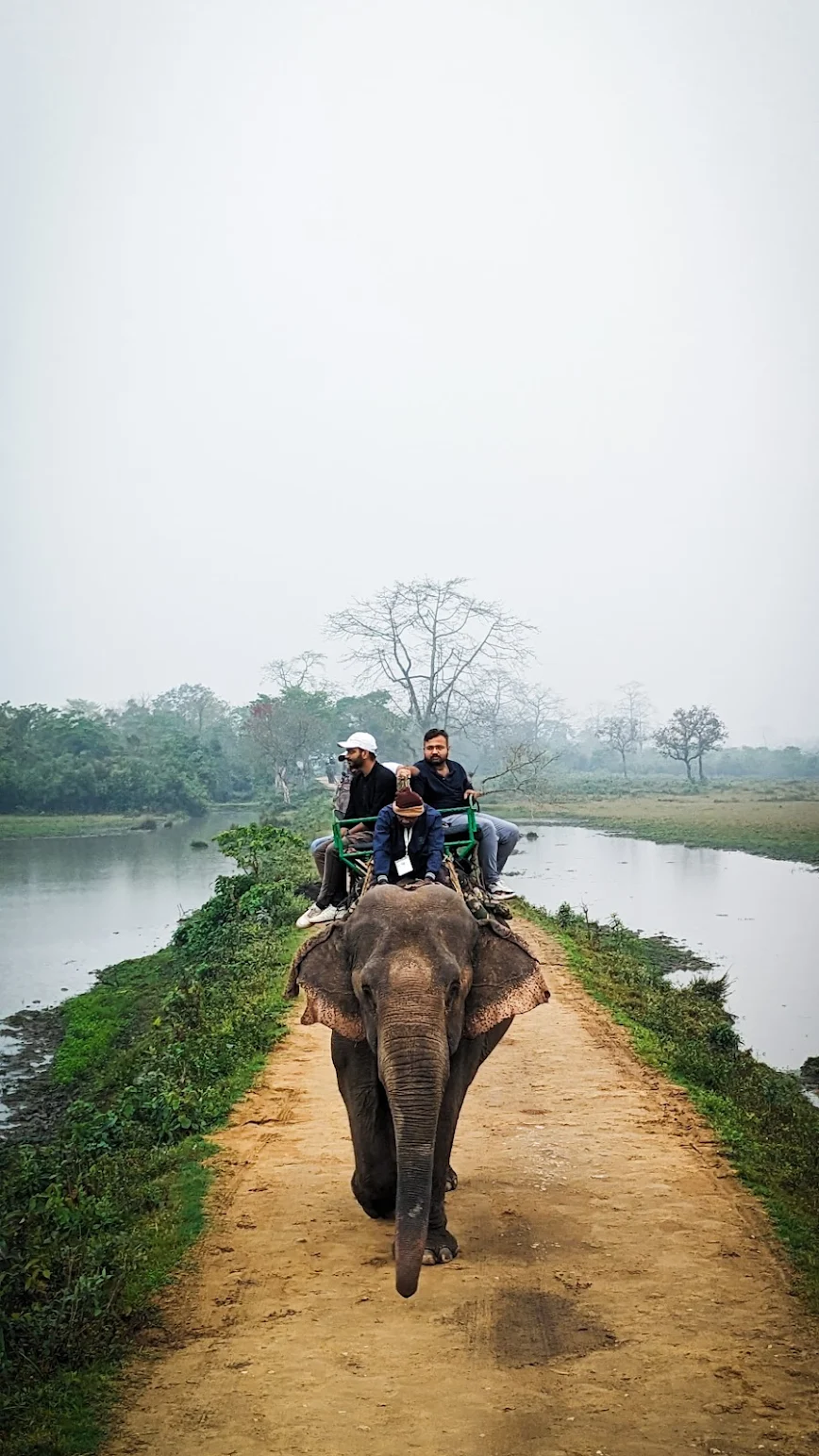
- Muted, practical colours for Kaziranga's jeep and elephant safaris — bright reds and neons are discouraged inside the park.
Altitude & Health Essentials
- Build in a proper acclimatisation night at Dirang or Bomdila before pushing on to Tawang — mild altitude effects like headaches or breathlessness are common on a rushed ascent.
- Stay well hydrated on the climbing days and go easy on alcohol until you've spent at least a night above 8,000 feet.
- If anyone in your group has a heart or lung condition, check with a doctor before the trip — this isn't a route to improvise around at altitude.
- Motion-sickness tablets are genuinely useful for the switchback stretches between Bhalukpong and Sela.
Documents & Practical Backup
- Printed and digital copies of your Inner Line Permit and photo ID — Bhalukpong isn't the only place they're checked; expect occasional checks further along the route as well.
- Carry more cash than feels necessary. ATMs thin out fast past Bomdila, and Tawang town has limited, sometimes unreliable options.
- A power bank — mobile networks get patchy beyond Bomdila, and homestays in the higher valleys don't always have consistent power.
- Binoculars for both halves of the trip — distant rhinos at Kaziranga and distant peaks near Sela both reward a closer look.
Food and Culture Across Two Very Different Worlds
This itinerary crosses more than a state border — it crosses a genuine cultural line. Assam's Brahmaputra Valley carries a riverine, tea-growing, Vaishnavite-influenced culture typical of the wider Northeast plains. Arunachal's Monpa communities around Tawang, by contrast, practise Tibetan Buddhism of the Gelug school — the same lineage as the Dalai Lamas themselves — and their food, festivals and daily rhythm feel considerably closer to the Tibetan plateau than to Guwahati, just a day's drive away.
What to Eat in Assam
- Khar — An alkaline dish made with filtered ash-water, often considered the defining flavour of Assamese cooking and usually eaten at the start of a meal.
- Masor tenga — A light, tangy fish curry, soured with tomato or elephant apple, a staple of the fish-forward Brahmaputra Valley diet.
- Assam tea — The state produces roughly half of India's tea, and the drive between Guwahati and Tezpur passes through working tea gardens where roadside stalls pour it strong and sweet.
What to Eat Around Tawang
- Thukpa — Hand-pulled Tibetan-style noodle soup with vegetables and often yak or chicken, the standard comfort food at this altitude.
- Momos — Steamed or fried dumplings, sold everywhere in Tawang town, often alongside a fiery sesame-chilli chutney.
- Butter tea (suja) — Salted, buttery tea rather than sweet — an acquired taste for many first-time visitors, but a genuinely warming one on a cold Tawang morning.
Monastery Etiquette Worth Knowing
Tawang Monastery and the smaller gompas along the route are living places of worship, not museum pieces. Remove your shoes before entering prayer halls, walk clockwise around chortens and prayer wheels, keep your voice down near monks in meditation, and always ask before photographing anyone inside. If your dates line up with Losar (Tibetan New Year) or Torgya, the masked Cham dances are among the most vivid cultural experiences this itinerary can offer — though winter festival dates come with the same snow-related road caveats as the rest of a deep-winter Tawang trip.
Insider Tips & Common Mistakes to Avoid
-
Apply for your ILP before you finalise flights. It's the one document on this entire trip that can't be arranged on arrival, and delays are more common around peak season than most first-time travellers expect.
-
Build in a genuine buffer day. Between border-adjacent permit checks, occasional roadwork near Bhalukpong, and weather near Sela, this route has more variables than a flat Assam-only trip — a 9-day plan with no slack at all is more fragile than it needs to be.
-
Don't chase Sangetsar Lake and Bumla Pass on the same day you arrive in Tawang. Both climb higher still, and doing them before you've acclimatised at all is the single most common regret travellers report from this route.
-
Book your Kaziranga elephant safari in advance, not on arrival. Seats are limited to two zones and two morning shifts, and December-to-February demand routinely fills up days ahead.
-
Hire one driver for the entire loop if you can. A driver who has already handled the Bhalukpong-to-Sela stretch knows how to pace it, which viewpoints deserve a stop, and how to read the weather near the pass — that experience is worth more here than almost anywhere else in Northeast India.
-
Download offline maps before you leave Tezpur. Mobile coverage becomes genuinely unreliable past Bomdila, and it's worth letting family or friends know your rough day-by-day schedule before you lose signal.
Ready to Plan Your Assam-Arunachal Pradesh Trip?
Our Northeast India travel experts know the ILP process inside out, which Sela-season quirks actually matter, and exactly how to pace the climb up to Tawang. Tell us your dates and we'll put together a custom itinerary — completely free, in 24 hours.
Frequently Asked Questions About This Assam-Arunachal Pradesh Itinerary
A Final Word on This Itinerary
Very few trips in India ask you to watch monks chant at 10,000 feet on one morning and a rhino graze fifty metres away on another, all inside the same week. That contrast is the entire point of a well-built itinerary for Assam and Arunachal Pradesh — not two holidays stitched together, but one road that genuinely earns the distance between a Himalayan monastery and a Brahmaputra floodplain. Give the climb to Tawang the days it actually needs. The mountain isn't going anywhere, but the weather window to see it clearly might.