
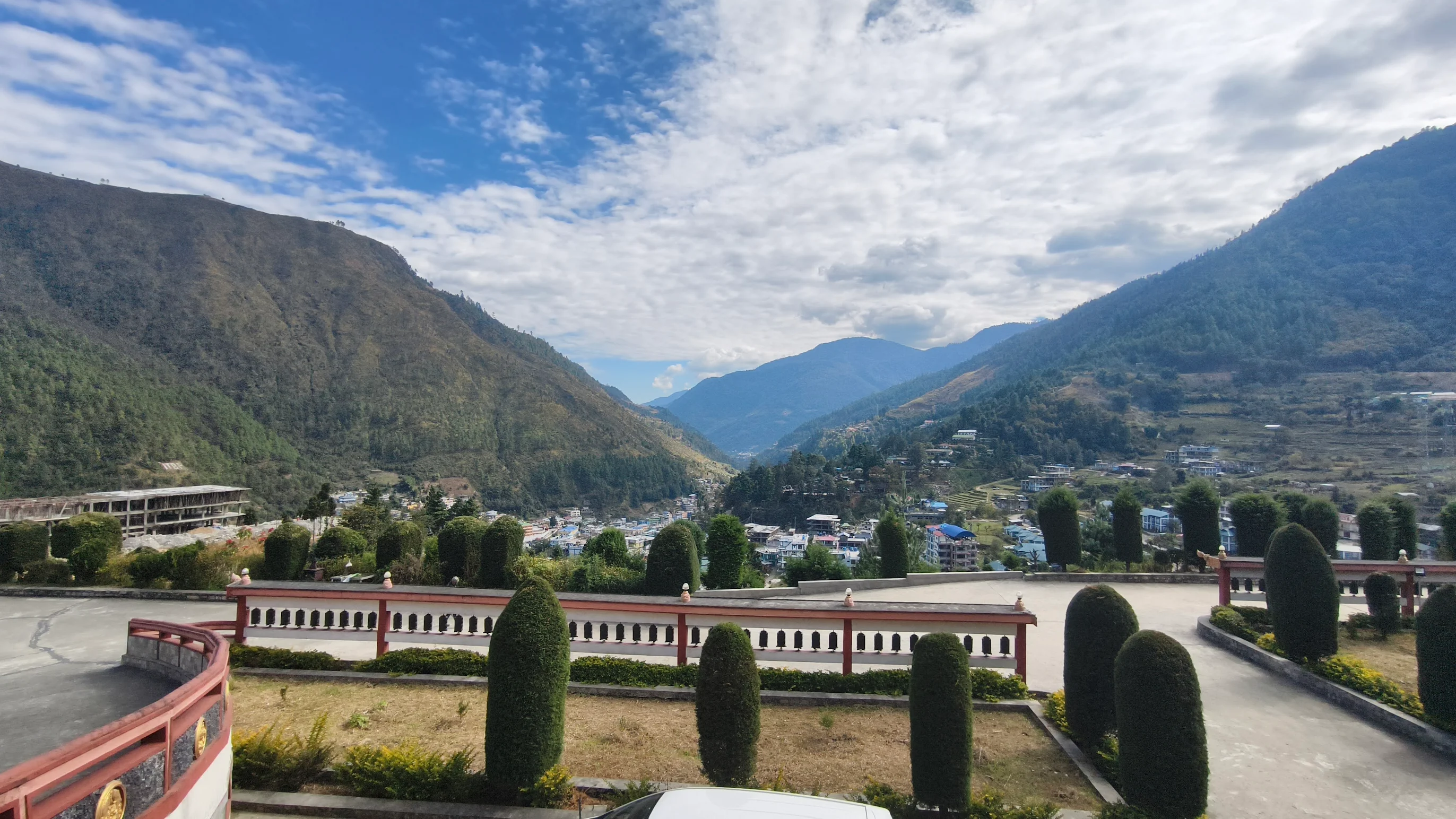
Why Tawang Deserves a Full 7 Days
What sets a Tawang trip apart from almost anywhere else in Northeast India is the journey itself. Guwahati to Tawang is roughly 450 to 500 km, but because the road climbs from the Brahmaputra plains through Bhalukpong, Bomdila, and Dirang before crossing Sela Pass, it typically takes 12 to 16 hours of actual driving — not something any sensible traveller attempts in a single day. That's precisely why the classic Tawang circuit is built around overnight stops: a night in Bhalukpong or Dirang on the way up, two or three nights in Tawang itself, and another overnight on the way back. It's less a sightseeing trip and more a slow climb through changing worlds — Assamese plains give way to Sherdukpen and Monpa hill villages, then to high-altitude Buddhist Arunachal, each stage with its own landscape, language, and rhythm.
Unlike Meghalaya or Sikkim's more accessible circuits, Tawang asks a little more of you before you even set off — every Indian traveller needs an Inner Line Permit, the roads above Dirang are narrow and occasionally landslide-prone, and the altitude at Tawang town (around 3,048 metres) and Sela Pass (4,170 metres) is genuinely high enough to notice. None of this should put you off; it's simply routine mountain-travel planning, and thousands of travellers complete this circuit every season. What it does mean is that Tawang rewards travellers who give it proper time, rather than those trying to squeeze it into a rushed long weekend.
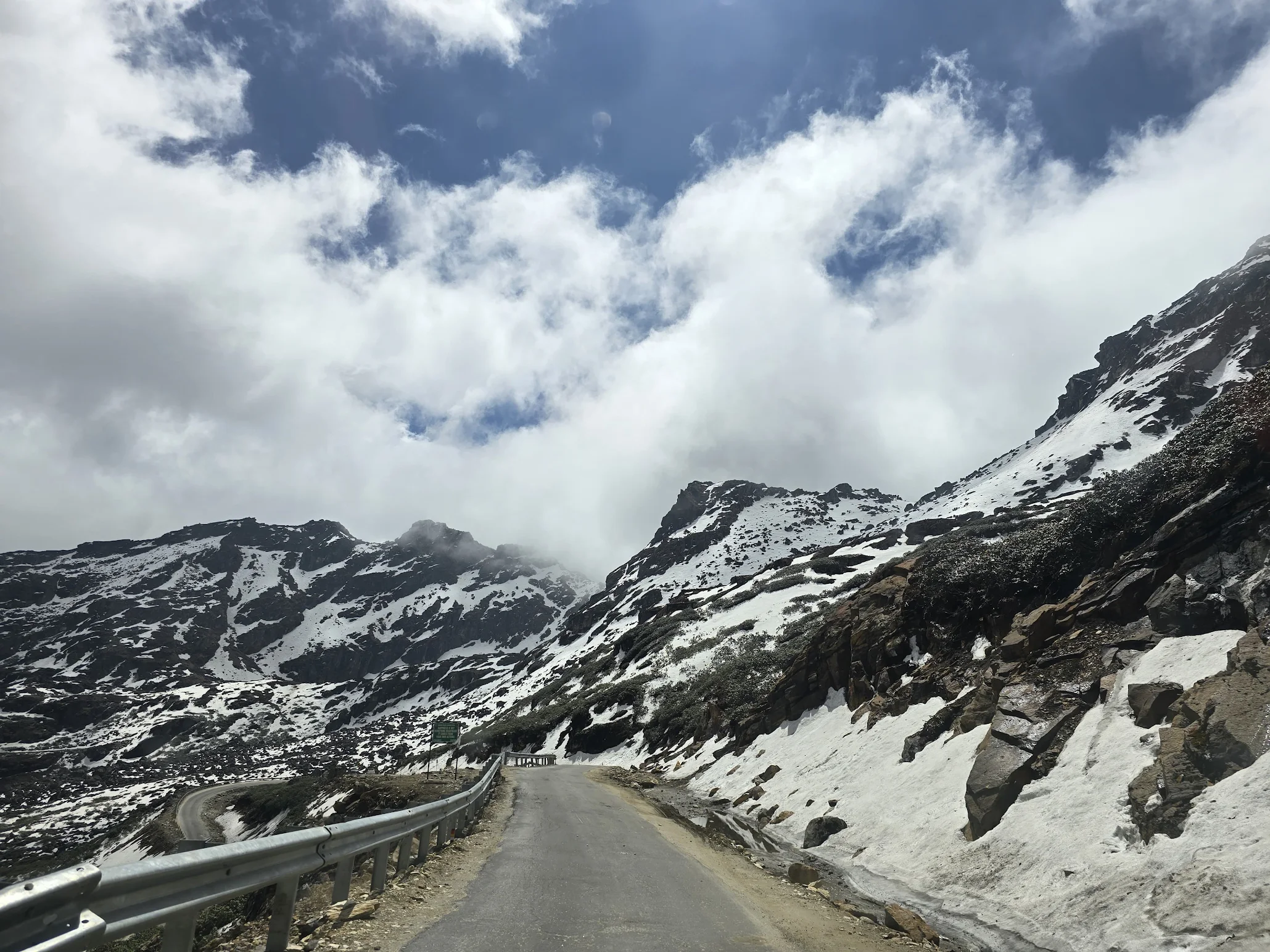
This guide lays out exactly how to spend a complete 7 day Tawang tour from Guwahati — the route that covers Bhalukpong, Bomdila, Dirang, Sela Pass, Tawang Monastery, and the Bumla Pass–Madhuri Lake excursion to the India-China border without rushing the drive, alongside shorter and longer alternatives, honest permit information (this is one trip where the paperwork genuinely matters), cold-weather packing advice, and the practical details that make the difference between a stressful mountain dash and a trip you'll talk about for years.
Tawang Tour Package Options at a Glance
Tawang is not a destination you can compress the way you might a shorter hill-station trip — the geography simply won't allow it. Guwahati to Bhalukpong alone is around 300 km, Bhalukpong to Tawang is a further 250-odd km climbing through three mountain towns and a 4,170-metre pass, and the return trip retraces the same ground. That's roughly 900 to 1,000 km of mountain driving over the course of the week, which is exactly why most experienced Northeast India operators consider 6 nights the realistic minimum for doing this circuit without feeling like the whole trip happened through a car window.
Could you attempt it in fewer days? It's possible, but the trade-offs are real in a way they aren't in gentler destinations — a rushed Tawang trip usually means arriving exhausted, having no buffer if the Bumla Pass convoy gets delayed by weather, and spending a disproportionate share of your week in transit rather than in Tawang itself. Travellers who give themselves the full 7 days get to actually rest before the Sela Pass crossing, explore Tawang Monastery without watching the clock, and build in the flexibility that a border-area excursion like Bumla genuinely needs. Here's how the different durations stack up.
- Day 1: Guwahati → Dirang (via Bhalukpong, Bomdila)
- Day 2: Dirang → Tawang (via Sela Pass)
- Day 3: Tawang sightseeing + Bumla Pass & Madhuri Lake
- Day 4: Tawang → Bhalukpong (return)
- Day 5: Bhalukpong → Guwahati
- Day 1: Guwahati → Bhalukpong
- Day 2: Bhalukpong → Dirang (via Bomdila)
- Day 3: Dirang → Tawang (via Sela Pass)
- Day 4: Bumla Pass, Madhuri Lake + Tawang Monastery
- Day 5: Tawang → Dirang/Bomdila (return)
- Day 6: Dirang/Bomdila → Guwahati
- Day 1: Guwahati → Bhalukpong
- Day 2: Bhalukpong → Dirang (via Bomdila)
- Day 3: Dirang → Tawang (via Sela Pass)
- Day 4: Tawang Monastery, War Memorial & Old Town
- Day 5: Bumla Pass & Madhuri Lake (India-China border)
- Day 6: Tawang → Dirang/Bomdila (return)
- Day 7: Dirang/Bomdila → Guwahati
- Day 1: Guwahati → Bhalukpong
- Day 2: Bhalukpong → Dirang (via Bomdila)
- Day 3: Dirang → Tawang (via Sela Pass)
- Day 4: Tawang Monastery, War Memorial & Old Town
- Day 5: Bumla Pass & Madhuri Lake
- Day 6: Zemithang & Gorsam Chorten day trip
- Day 7: Tawang → Dirang/Bomdila (return)
- Day 8: Dirang/Bomdila → Guwahati
- Day 1–7: Full Tawang circuit (all zones)
- Day 8: Bomdila → Nameri National Park
- Day 9: Morning at Nameri (rafting/nature walk) → Guwahati
Tawang isn't Meghalaya — the sheer driving distance means there's no truly "quick" version of this trip. Even our 4N5D option is a genuine dash that only suits travellers comfortable with long mountain driving days. The Bumla Pass excursion in particular needs breathing room, since the local permit is arranged the evening before and the actual convoy departure depends on Army clearance and weather on the day. If reaching the India-China border is a real priority for your trip — and for most travellers heading to Tawang, it is — build in the full 7 days so a single delayed convoy doesn't cost you the whole experience.
Day-by-Day: Your 7 Day Tawang Itinerary from Guwahati
Below is the full day-by-day breakdown of our recommended 6 nights / 7 days Tawang tour from Guwahati — the itinerary that gives the long drive proper time to breathe and sets aside a dedicated day each for Tawang's monasteries and the Bumla Pass border excursion, rather than cramming both into one exhausting day.
The Quick Version: 5 Nights / 6 Days Tawang Tour Package
If a full week genuinely isn't possible, the 5N6D version compresses the trip by combining the Tawang Monastery visit and the Bumla Pass/Madhuri Lake excursion into a single long day in Tawang, and cutting the return journey down to one overnight stop instead of a relaxed final evening in Dirang or Bomdila. You'll still reach Tawang, cross Sela Pass, and stand at Bumla — you'll just have less buffer if the border excursion gets delayed by weather, so it's worth going in with some flexibility built into your expectations.
Going Further: 7N8D and 8N9D Options
With an extra day, the 7N8D itinerary adds a day trip to Zemithang, a quiet valley near the Bhutan border home to Gorsam Chorten, a large stupa modelled on the one at Bodh Gaya and one of the most striking offbeat sights in the entire district — most standard packages skip it simply because it needs a dedicated day. With 9 days or more, you can extend the trip with a stop at Nameri National Park in Assam on the return leg — trading high-altitude monasteries and mountain passes for river rafting on the Jia Bhoroli and a very different, lowland forest ecosystem just a short detour from the main route back to Guwahati. The contrast between the two halves of that trip is one of the more memorable things a longer Northeast India itinerary can offer.
Top Places to Visit on Your Tawang Tour
Tawang rewards travellers who understand that the journey itself is part of the destination. Here are the places that anchor any well-planned 7 day Tawang tour from Guwahati, arranged roughly in the order you'll encounter them on the route.
Bhalukpong & Tipi
The official gateway into Arunachal Pradesh on the banks of the Kameng River, with the archaeological remains of an old regional fort and, a short drive on, the Tipi Orchidarium's several hundred orchid species. Your first ILP checkpoint.
Entry PointBomdila
The West Kameng district headquarters at around 2,217 metres, with a working Buddhist monastery, craft centres, and sweeping Himalayan views. A common overnight stop on both the way up and the way back.
Hill TownDirang
A valley town known for its hot springs, apple and kiwi orchards, the historic Dirang Dzong, and the pastoral Sangti Valley nearby — winter home to migratory black-necked cranes. A relaxed, scenic base before the Sela Pass climb.
Valley & Hot SpringsSela Pass
A high-altitude pass at 4,170 metres connecting Dirang to Tawang, surrounded by dozens of small glacial lakes including the picturesque Sela Lake. Snow-covered for much of the year and considered sacred in local Buddhist tradition.
Himalayan PassTawang Monastery
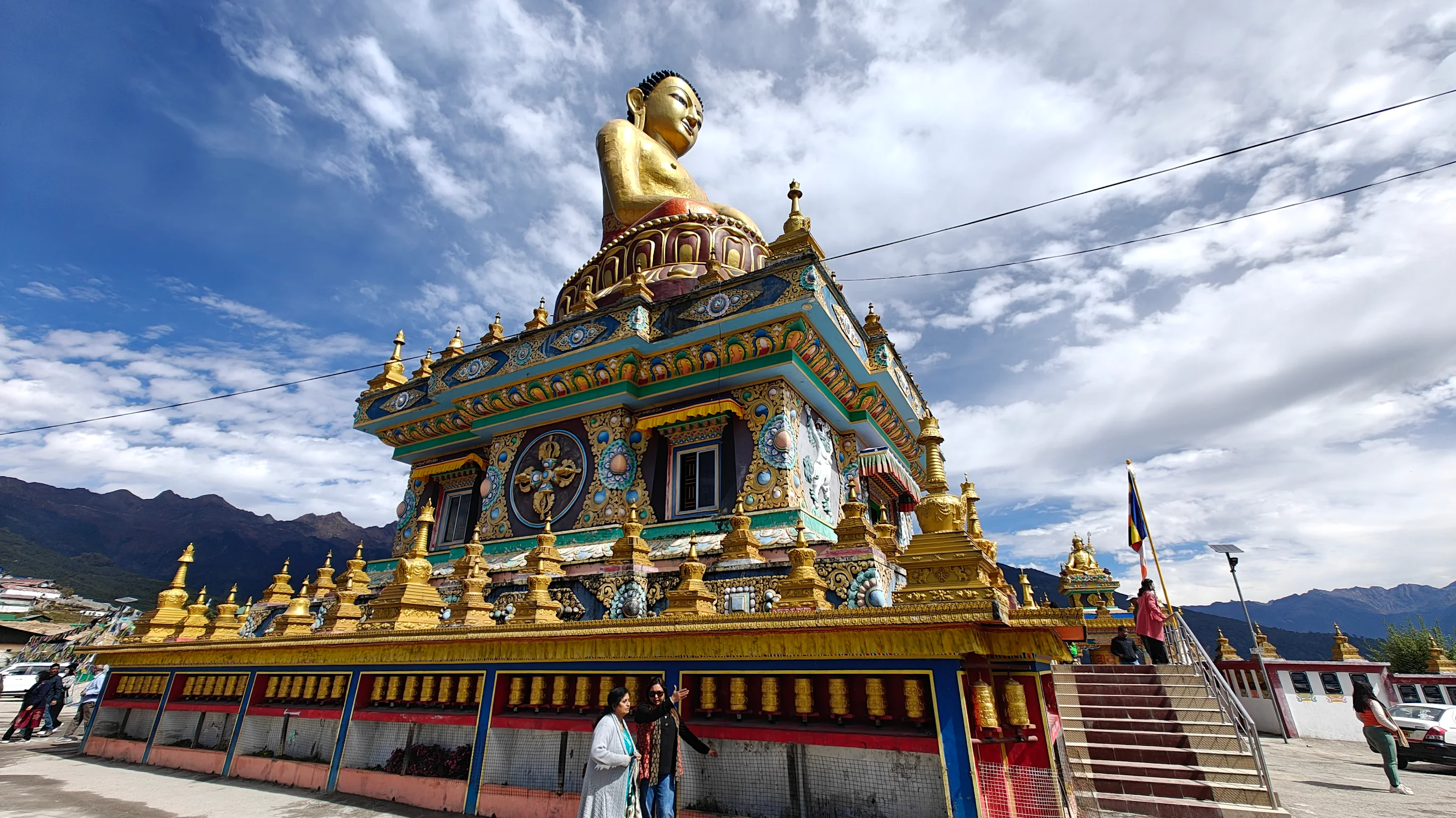
Galden Namgyal Lhatse, founded in 1680–81, is the largest monastery in India and among the largest in the world. A three-storey complex enclosing a golden Buddha statue and a centuries-old library of Buddhist scripture.
Signature ExperienceBumla Pass
Sitting at roughly 4,633 metres directly on the India-China border, Bumla is an official Border Personnel Meeting point between the two armies. A restricted-zone excursion for Indian nationals with a separate local permit.
Indo-China BorderMadhuri (Sangetsar) Lake
A striking glacial lake near Bumla formed by a landslide, popularly nicknamed after the Bollywood actress Madhuri Dixit, whose film Koyla shot scenes here. Its still surface mirrors the surrounding snow peaks on a clear day.
Glacial LakeNuranang Falls & Jaswantgarh
A dramatic roadside waterfall dropping about 100 metres, just a couple of kilometres from the Jaswantgarh War Memorial, which honours Rifleman Jaswant Singh Rawat's stand during the 1962 Indo-China war.
Waterfall & War MemorialDon't Skip These — The Underrated Places on Any Tawang Tour
Most packages cover the main circuit above. These spots take a little extra effort but are consistently rated as highlights by travellers who make the detour:
- Urgelling Monastery — The birthplace of Tsangyang Gyatso, the 6th Dalai Lama, a short drive from Tawang town and a quieter, more contemplative alternative to the main monastery on a busy sightseeing day.
- Sangti Valley — A wide, pastoral stretch near Dirang that becomes a winter refuge for migratory black-necked cranes, a species with deep cultural significance in the region. Best visited between November and February.
- Zemithang & Gorsam Chorten — A remote valley near the Bhutan border home to a large stupa modelled on Bodh Gaya. Far fewer visitors than the main Tawang circuit, and worth the extra day if you have it.
- Ani Gompa (Singsur) — A small nunnery a few kilometres from Tawang town, offering a quieter, more intimate glimpse of monastic life than the main monastery's busier halls.
- Nameri National Park — A lowland forest reserve near Bhalukpong offering river rafting on the Jia Bhoroli and gentle nature walks — a good add-on if your itinerary allows an extra day near the start or end of the trip.
Best Time to Visit Tawang
Altitude shapes everything about when to visit Tawang, in a way that's more pronounced than almost anywhere else in Northeast India. Sela Pass and Bumla stay near or below freezing for much of the year, the monsoon brings real landslide risk to the foothill roads near Bhalukpong, and winter snow can temporarily close stretches of the route — though the new Sela Tunnel, opened in 2024, has made winter access considerably more reliable than it used to be.
| Month | Season | Weather | Road & Pass Conditions | Verdict |
|---|---|---|---|---|
| Mar – Jun | Spring / Early Summer | 10–20°C daytime, cold nights, rhododendrons blooming | Roads clearing after winter snow | Good |
| Jul – Aug | Monsoon | Heavy rain, frequent mist and low visibility | Landslide risk near Bhalukpong & Dirang | Avoid |
| Sep – Nov | Post-monsoon | 10–18°C, clear skies, crisp mountain views | Best visibility of the year at Sela & Bumla | Best Time |
| Dec – Feb | Winter | Sub-zero nights, heavy snow at higher altitudes | Sela Tunnel keeps the route open; pass itself may still close briefly | Good (Snow) |
September to November is the strongest single window for a 7 day Tawang tour — the monsoon has cleared, mountain visibility is at its best, and both Sela Pass and Bumla are usually fully accessible with dramatic clear-sky views. March to June is the other reliable stretch, with the added appeal of rhododendrons blooming across the West Kameng hills and generally milder daytime temperatures, though nights remain cold at altitude throughout.
Winter (December–February) has its own quiet appeal for travellers who specifically want to see Sela Pass and the high passes under snow — the Sela Tunnel now provides reliable access to Tawang even when the pass itself sees heavy snowfall, though Bumla can close on short notice during severe weather. Peak monsoon (June–August), on the other hand, is best avoided altogether: the foothill roads between Bhalukpong and Dirang see real landslide risk, and low cloud cover routinely erases the mountain views that are much of the point of this trip.
How to Reach Tawang from Guwahati
By Road — The Main Route
Guwahati is the practical starting point for virtually every Tawang trip, and the road itself is the main event rather than a formality. The route runs Guwahati → Tezpur → Bhalukpong → Bomdila → Dirang → Sela Pass → Tawang, a distance of roughly 450 to 500 km that takes 12 to 16 hours of actual driving because of the winding mountain roads, sharp switchbacks, and altitude gain in the second half. Almost every experienced traveller and operator breaks this into two or three driving days each way, with overnight stops at Bhalukpong, Bomdila, or Dirang, rather than attempting it in one continuous push.
By Air
The nearest major airport is Lokpriya Gopinath Bordoloi International Airport (LGBI), Guwahati, well connected to Delhi, Mumbai, Kolkata, Bengaluru, and other major Indian cities. Almost all Tawang tour packages begin and end here. Tezpur (Salonibari) Airport, roughly 350 km from Tawang by road, has limited connectivity — mainly to Kolkata — and cuts a few hours off the drive but still leaves a long mountain journey ahead.
By Rail
There is no railway station within Tawang district. Guwahati Railway Station is the most practical railhead for most travellers, well connected to major cities across India, with the onward journey completed entirely by road. Naharlagun, near Itanagar, is closer on paper but adds its own separate road connection to reach the Tawang circuit.
Guwahati → Tezpur: ~180 km | ~4–5 hours
Tezpur → Bhalukpong: ~56 km | ~1.5–2 hours
Bhalukpong → Bomdila: ~109 km | ~4–5 hours
Bomdila → Dirang: ~42 km | ~1.5 hours
Dirang → Tawang (via Sela Pass): ~130 km | ~5 hours
ILP & PAP — The Permits You Actually Need for Tawang
This is where a Tawang trip genuinely differs from a Meghalaya or Sikkim circuit. Arunachal Pradesh is a protected state under the Bengal Eastern Frontier Regulation, and every Indian national who isn't a permanent resident of the state needs an Inner Line Permit (ILP) to enter — there's no on-arrival option, so this has to be sorted before you set off, not at the Bhalukpong gate.
For Indian Nationals
- ILP is mandatory: Every Indian citizen who is not a native of Arunachal Pradesh needs an ILP, applied for online through the state government's e-ILP portal, or arranged by a registered tour operator on your behalf.
- Select the correct entry gate: The ILP must match your actual physical entry point — Bhalukpong for the Tawang circuit. A standard Tawang-circuit ILP covers Bhalukpong, Bomdila, Dirang, and Tawang town without any extra paperwork.
- Apply a few days ahead: Online processing can be as quick as a few hours but can also take longer if documents need review, so applying at least 3 to 5 days before travel gives you a comfortable buffer. Tourist e-ILPs are typically valid for up to 14 days.
- Carry both digital and printed copies: Mobile connectivity is patchy for long stretches of this route, so save your approved ILP as a photo on your phone rather than relying on email or a browser tab, and carry a couple of printed copies for checkposts.
For Foreign Nationals
- Foreign nationals need a Protected Area Permit (PAP) instead of an ILP, generally arranged through a registered tour operator alongside the standard Indian visa requirements.
- Foreign travellers can generally still visit Madhuri Lake with a valid PAP, but Bumla Pass itself is restricted to Indian nationals only, given its location directly on the India-China border. Confirm current rules with your operator before finalising an itinerary built around Bumla.
- Carry your passport and visa at all times, and expect ID checks at multiple points along the route, not just at the Bhalukpong entry gate.
Your ILP does not automatically cover Bumla Pass or Madhuri Lake — these sit in a separate restricted military zone requiring an additional local permit, arranged in person at the Deputy Commissioner's office in Tawang, typically the evening before your planned visit. You'll need your original ILP, a government photo ID, and vehicle details; final clearance comes through the local Army administration, and the permit is usually ready by the following morning. The excursion itself runs as an Army-coordinated convoy, so departure timing and even whether the convoy runs at all on a given day depends on weather and security conditions — it's worth keeping some flexibility in your schedule around this day rather than locking it to one fixed slot.
What to Pack for Your Tawang Tour
Clothing — Plan for Genuine Cold, Not Just Cool Evenings
- Heavy layering is essential year-round — Tawang town sits around 3,048 metres and Sela Pass at 4,170 metres, both cold enough to catch travellers off guard even outside official winter. Thermal base layers, a proper down or insulated jacket, and a warm hat aren't optional here.
- Gloves and warm socks, particularly for the Sela Pass and Bumla Pass excursions, where wind chill makes the actual temperature feel considerably colder than the thermometer suggests.
- A rain shell or poncho for the Bhalukpong-to-Dirang stretch, especially if travelling close to monsoon shoulder months, when brief showers are still possible on the lower foothill roads.
Footwear & Cold-Weather Essentials
- Sturdy, closed-toe shoes with good grip for walking around Tawang Monastery's stone courtyards and for any snow underfoot at Sela Pass or Bumla during the colder months.
- Sunglasses and sunscreen — the sun at 4,000-plus metres is far stronger than it feels, especially with snow underfoot reflecting the glare.
- Lip balm and a basic moisturiser — the combination of cold, wind, and altitude dries out skin faster than most travellers expect.
Practical Essentials
- Cash — carry more than you think you'll need. Reliable ATMs and card acceptance drop off sharply beyond Bomdila and Dirang, and Tawang town itself has limited banking infrastructure.
- Motion sickness tablets if you're prone to car sickness — the roads from Bhalukpong onward involve near-continuous switchbacks for several hours at a stretch.
- A power bank — mobile connectivity and electricity supply both become less consistent past Dirang, particularly during bad weather.
- Printed and digital copies of your ILP (and PAP, for foreign nationals), plus a couple of extra passport-sized photographs in case they're needed at a checkpost.
- Any personal altitude-sickness medication your doctor has discussed with you, along with basic rehydration salts — sensible precautions given how much of this trip sits above 3,000 metres.
Monpa Culture & Food in Tawang
Tawang district is home to the Monpa community, whose culture, language, and daily rhythms are deeply woven into Tibetan Buddhism. Unlike much of the rest of Northeast India, the region's spiritual and social life still centres on its monasteries — young boys often begin monastic training as children, major festivals unfold around temple courtyards, and the Gelug (Yellow Hat) school of Vajrayana Buddhism shapes everything from local architecture to the calendar itself.
What to Eat in Tawang
- Momos — Steamed or fried dumplings filled with vegetables, yak meat, or pork, found at nearly every eatery in Tawang and easily the most recognisable dish of the region.
- Thukpa — A warming Tibetan-style noodle soup, often the first thing travellers reach for after a cold day at Sela Pass or Bumla.
- Butter tea (Po Cha) — Salted tea churned with yak butter, a staple across the Himalayan Buddhist world and an acquired taste that many travellers grow fond of after a cup or two.
- Zan — A simple buckwheat or millet porridge, traditionally eaten by Monpa farming households and still common in home-cooked meals across the district.
- Apong — A traditional fermented rice beer common across Arunachal Pradesh and Assam's hill districts, often shared as a gesture of hospitality in Dirang and Bomdila.
Festivals Worth Timing Your Trip Around
If your travel dates align, Tawang's festival calendar offers real cultural depth beyond the standard sightseeing circuit. Torgya, usually held in January at Tawang Monastery, is a three-day festival of masked Cham dances and fire rituals intended to ward off evil spirits for the year ahead — one of the most visually striking events in the entire Eastern Himalayas. Losar, the Tibetan New Year, typically falls in February or March and brings community feasting, prayer flag renewals, and family gatherings across Monpa households. The more contemporary Tawang Festival, usually held in October, blends traditional performances with adventure sports and is squarely aimed at showcasing the district's culture to visitors.
Tawang Monastery — More Than a Sightseeing Stop
It's worth understanding what you're actually looking at when you reach Tawang Monastery. Known formally as Galden Namgyal Lhatse, it was founded in 1680–81 by Merak Lama Lodre Gyatso at the direction of the 5th Dalai Lama, and today houses several hundred monks along with a library of centuries-old Buddhist scripture. It remains the largest monastery in India and is widely considered the second-largest in the world after Lhasa's Potala Palace — but for the Monpa community, it isn't primarily a monument. It's a functioning centre of worship, education, and daily life, and treating it with the same quiet respect you'd bring to any active place of worship goes a long way here.
Insider Travel Tips & Common Mistakes to Avoid on a Tawang Tour
-
Apply for your ILP well before departure and select the Bhalukpong entry gate. A permit issued for the wrong gate is invalid at your actual entry point, and there's no on-arrival option to fall back on.
-
Don't rush straight to Sela Pass or Bumla on your first day in the mountains. Giving yourself a night at Dirang before the altitude jump to Tawang makes a genuine difference to how you feel once you're there.
-
Arrange your Bumla local permit the evening before, and keep the following day flexible. Convoy departure depends on Army clearance and weather conditions on the day itself, so a rigid single-slot plan can mean missing it entirely if things shift.
-
Foreign travellers should arrange their PAP well in advance through a registered operator and plan around the fact that Bumla Pass itself is off-limits to non-Indian nationals, even with a valid permit for the rest of the circuit.
-
Fuel up in Bomdila or Dirang. Petrol stations are sparse beyond these towns, and running low on the winding stretch toward Sela Pass is not a situation you want to find yourself in.
-
Carry cash for the entire trip beyond Dirang. Card and UPI acceptance is unreliable once you're deep into the mountains, and this applies even in Tawang town itself.
-
Pack for real cold regardless of the season you're travelling in. Sela Pass and Bumla sit near or below freezing for most of the year, and travellers who pack only for Guwahati's climate are consistently caught off guard.
-
Hire an experienced driver who regularly runs the Tawang route. The roads from Dirang onward are narrow, occasionally landslide-prone, and demand real familiarity with mountain driving — this is one leg of Northeast India where local driving experience genuinely matters.
Ready to Plan Your 7 Day Tawang Tour from Guwahati?
Our Northeast India travel experts handle the ILP paperwork, know exactly how to pace the drive to Tawang, and can coordinate your Bumla Pass permit on the ground. Tell us your dates and we'll put together a custom Tawang itinerary — completely free, in 24 hours.
Frequently Asked Questions About 7 Day Tawang Tours from Guwahati
A Final Word on Tawang
Tawang rewards travellers who respect the distance rather than fight it. The road doesn't shorten no matter how early you start, the pass doesn't clear any faster because you're in a hurry, and the monastery bells keep the same rhythm they have for over three centuries whether you're rushed or not. Give this trip the full 7 days if you possibly can — spend the extra night in Dirang, let the altitude settle before Sela Pass, and keep the Bumla day flexible enough to actually happen. The mountains here have never been in a hurry, and a trip built at their pace tends to be the one you remember longest.