
Why Meghalaya Deserves a Full 7 Days
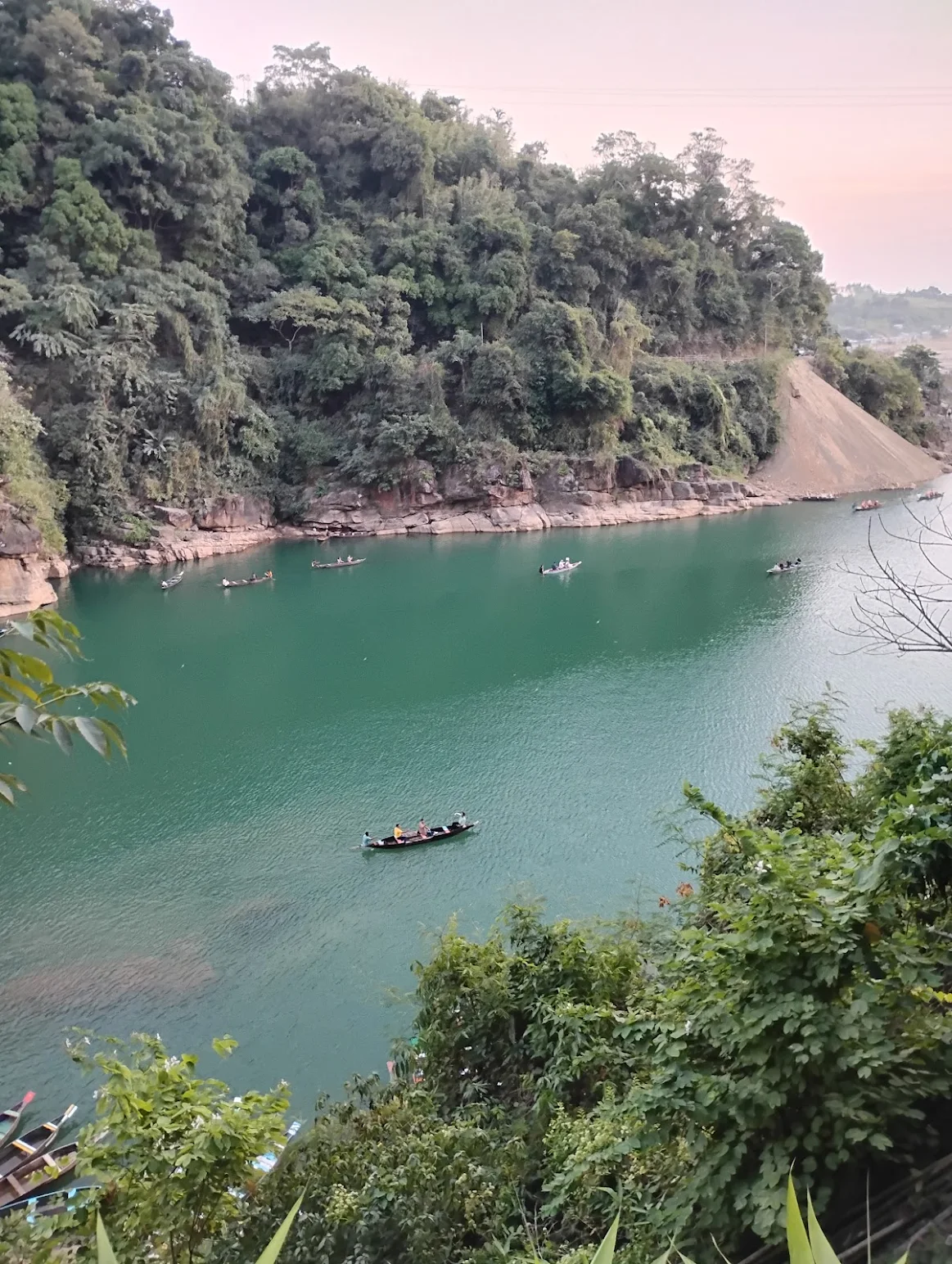
What makes Meghalaya different from almost anywhere else you've travelled in India is the sense of scale. You're never more than a few hours from your next stop, yet every stop feels like a different country. Shillong, the capital, has the pine-covered hills and weekend cafés of a place the British once nicknamed the "Scotland of the East." Two hours south, Cherrapunji — known locally as Sohra — sits draped over a plateau famous for receiving some of the highest rainfall recorded anywhere on Earth, its cliffs disappearing into cloud one moment and revealing waterfalls plunging hundreds of metres the next. Further south still, the Umngot River at Dawki runs so clear that it has become one of the most photographed stretches of water in the country, while at Mawlynnong, locals sweep their own village streets each morning to keep it among the cleanest in Asia.
Unlike many Himalayan tour circuits, there's no punishing altitude here and no permit paperwork to slow you down — Meghalaya tops out at around 1,960 metres at its highest point, and the roads, while winding, are generally well-surfaced. What the state asks of you instead is curiosity and a bit of stamina, particularly on the day you descend (and then climb back up) roughly 3,500 stone steps to stand beneath the world's most famous living root bridge.
This guide lays out exactly how to spend a complete 7 day Meghalaya tour from Guwahati — the route that covers Shillong, Cherrapunji, the Double Decker Living Root Bridge, Dawki, and Mawlynnong without rushing any of them, alongside shorter and longer alternatives, honest permit information (there's less paperwork here than you'd expect), packing advice for a state that takes its rain seriously, and the practical details that make the difference between a good trip and a great one.
Meghalaya Tour Package Options at a Glance
One of the genuine pleasures of planning a Meghalaya trip is how forgiving the geography is. Guwahati to Shillong is barely 100 km — about 2.5 to 3 hours on a good road — and every other major stop on the circuit (Cherrapunji, Dawki, Mawlynnong, Jowai) sits within a 60 to 90 km radius of Shillong. That compactness means you spend your days actually exploring rather than sitting in a vehicle, which is precisely what makes a full week here so rewarding.
Could you do a rushed version in 4 or 5 days? Yes, and we've outlined that below. But ask anyone who has done both, and they'll tell you the same thing: the travellers who give themselves 7 days are the ones who get to walk down to the Double Decker Root Bridge instead of just reading about it, who catch Dawki's river at its clearest in the early morning instead of the crowded afternoon, and who have a spare evening in Shillong to do nothing more than sit in a café with a cup of local tea and watch the clouds roll over the hills. Here's how the different durations stack up.
- Day 1: Guwahati → Shillong (Umiam Lake)
- Day 2: Shillong → Cherrapunji (waterfalls & caves)
- Day 3: Cherrapunji → Dawki → Mawlynnong
- Day 4: Mawlynnong → Shillong (Laitlum Canyons)
- Day 5: Shillong → Guwahati
- Day 1: Guwahati → Shillong
- Day 2: Shillong full-day sightseeing
- Day 3: Shillong → Cherrapunji
- Day 4: Cherrapunji → Dawki → Mawlynnong
- Day 5: Mawlynnong → Shillong (Laitlum Canyons)
- Day 6: Shillong → Guwahati
- Day 1: Guwahati → Shillong (Umiam Lake)
- Day 2: Shillong full-day sightseeing
- Day 3: Shillong → Cherrapunji
- Day 4: Double Decker Root Bridge trek (Nongriat)
- Day 5: Cherrapunji → Dawki → Mawlynnong
- Day 6: Mawlynnong → Jowai (Krang Suri Falls) → Shillong
- Day 7: Shillong → Guwahati
- Day 1: Guwahati → Shillong
- Day 2: Shillong + Mawphlang Sacred Forest
- Day 3: Shillong → Cherrapunji
- Day 4: Double Decker Root Bridge trek
- Day 5: Cherrapunji → Mawsynram → Dawki
- Day 6: Dawki → Mawlynnong (full day)
- Day 7: Mawlynnong → Jowai → Shillong
- Day 8: Shillong → Guwahati
- Day 1–7: Full Meghalaya circuit (all zones)
- Day 8: Transfer to Kaziranga (Assam), evening
- Day 9: Morning Kaziranga jeep safari → Guwahati
If you can only manage 4 or 5 days, you can absolutely have a great Meghalaya trip — Shillong, Cherrapunji, and Dawki alone are worth the journey. But the Double Decker Living Root Bridge trek is the one experience that a rushed itinerary almost always sacrifices, simply because it needs a dedicated day. If that bridge is the reason you're considering Meghalaya in the first place — and for a lot of travellers, it is — build your trip around the 7 day plan below.
Day-by-Day: Your 7 Day Meghalaya Itinerary from Guwahati
Below is the full day-by-day breakdown of our recommended 6 nights / 7 days Meghalaya tour from Guwahati — the itinerary that gives every major sight room to breathe, including the one day that most rushed packages quietly drop: the trek to the Double Decker Living Root Bridge.
The Quick Version: 5 Nights / 6 Days Meghalaya Tour Package
If a full week genuinely isn't possible, the 5N6D version compresses the trip by combining Cherrapunji's waterfalls and caves into a single efficient day and skipping the Nongriat trek (which needs a dedicated day to do properly). You'll still see Shillong, the major Cherrapunji waterfalls, Dawki's river, and Mawlynnong's root bridge and village — just without the descent to the Double Decker Bridge itself. It's the right call for travellers on a tighter schedule who'd rather see more places briefly than fewer places thoroughly.
Going Further: 7N8D and 8N9D Options
With an extra day, the 7N8D itinerary adds Mawsynram, the village that competes with Cherrapunji for the title of wettest place on Earth, along with extra time at Dawki and Mawlynnong rather than treating them as a single rushed day. With 9 days or more, you can extend the trip with two days at Kaziranga National Park in Assam — trading misty hills and root bridges for grasslands and Indian one-horned rhinos, a genuinely different ecosystem just a few hours' drive from Guwahati. The contrast between the two halves of that trip is one of the more memorable things Northeast India can offer a traveller with a little extra time to spare.
Top Places to Visit on Your Meghalaya Tour
Meghalaya rewards travellers who slow down at each stop rather than ticking off a checklist. Here are the places that anchor any well-planned 7 day Meghalaya tour from Guwahati, arranged roughly in the order you'll encounter them on the route.
Shillong
Meghalaya's hill-station capital, with pine-lined roads, a busy Police Bazaar, the peaceful Ward's Lake, and one of the best museums in Northeast India at the Don Bosco Centre for Indigenous Cultures. A relaxed base for your first two nights.
Capital CityUmiam Lake
A large reservoir on the Guwahati-Shillong road, ringed by pine forest and hills. The unofficial gateway to Meghalaya — an easy, scenic halfway stop with boating and lakeside cafés.
Scenic StopoverCherrapunji (Sohra)
One of the wettest places on Earth, draped over dramatic cliffs above the Bangladesh plains. Home to Nohkalikai Falls, Seven Sisters Falls, Mawsmai Cave, and the trailhead to the living root bridges.
Waterfall CapitalNohkalikai Falls
The tallest plunge waterfall in India, dropping over 340 metres from a sheer cliff edge near Cherrapunji. Named after a tragic local legend, and at its most dramatic shortly after the monsoon.
India's Tallest FallsDouble Decker Living Root Bridge
The most famous of Meghalaya's living root bridges — two tiers of intertwined Ficus elastica roots near Nongriat village, reached by a steep 3,500-step trek from Tyrna. A genuine living wonder, generations in the making.
Signature ExperienceDawki & the Umngot River
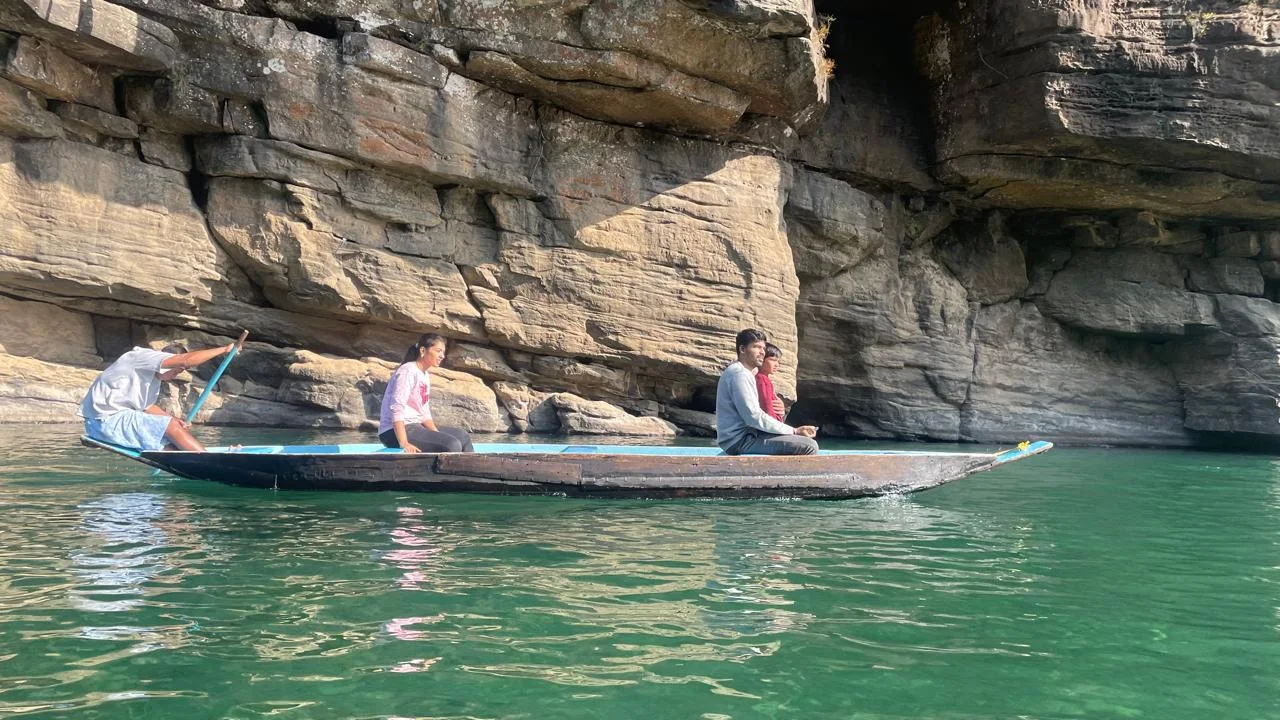
A small border town famous for the Umngot River's near-total transparency — boats appear to float on air over the riverbed. Sits right at the India-Bangladesh frontier, a short drive from Mawlynnong.
Crystal-Clear RiverMawlynnong
Repeatedly cited as one of Asia's cleanest villages, kept spotless through a decades-old community tradition. Home to the single-decker Riwai root bridge, a sky-view bamboo tower, and a balancing rock.
Cleanest VillageLaitlum Canyons
A vast grassy ridge about 25 km from Shillong where the land drops suddenly into a sweeping green gorge — sometimes compared to a miniature Grand Canyon. Best visited in clear late-afternoon light.
Sunset ViewpointDon't Skip These — The Underrated Places on Any Meghalaya Tour
Most packages cover the main circuit above. These spots take a little extra effort but are consistently rated as highlights by travellers who make the detour:
- Krang Suri Falls — A turquoise, multi-tiered waterfall near Jowai with a natural swimming pool at its base. Far fewer visitors than Cherrapunji's falls, and arguably more beautiful. Best avoided in heavy monsoon when currents are strong.
- Mawphlang Sacred Forest — A patch of dense, untouched forest near Shillong that local Khasi communities have protected as sacred for centuries, with traditional taboos against removing even a fallen leaf. A guided walk here is a fascinating window into indigenous belief systems.
- Mawsynram — A quiet village that disputes Cherrapunji's claim to being the wettest place on Earth, with its own caves, megaliths, and dramatic mist-shrouded hills. Worth the detour if you have a spare half-day near Cherrapunji.
- Nartiang Monoliths — Near Jowai, one of the largest collections of monolithic stones in the world, erected by the Jaintia kings centuries ago as memorials. A genuinely strange and impressive sight that almost no standard itinerary includes.
- Arwah Caves — Quieter and less commercialised than Mawsmai Cave, with fossil formations embedded in the limestone walls. A good alternative or addition if you have time for more than one cave near Cherrapunji.
Best Time to Visit Meghalaya
Meghalaya's relationship with rain shapes everything about when to visit, but not in the way you might expect — unlike a Himalayan destination where monsoon simply shuts the road down, here it shapes the experience itself. The waterfalls are at their most dramatic during and right after monsoon, while the Umngot River's famous transparency depends on the opposite: a long dry spell that lets silt settle.
| Month | Season | Weather | Umngot River Clarity | Verdict |
|---|---|---|---|---|
| Mar – May | Spring | 15–25°C, occasional showers, greenery returning | Good, improving | Good |
| Jun – Aug | Peak Monsoon | Intense, near-continuous rain, frequent mist | Poor (silty) | Waterfall chasers only |
| Sep – Nov | Post-monsoon | 15–24°C, clearing skies, falls still full | Excellent | Best Time |
| Dec – Feb | Winter | 4–18°C, dry, crisp, cold mornings | Best of the year | Best Time |
September to November and December to February are the two strongest windows for a 7 day Meghalaya tour. Post-monsoon (September–November) gives you the best of both worlds: waterfalls still running full from the rains, combined with clearing skies and noticeably improving river clarity at Dawki as the silt begins to settle. Winter (December–February) brings the clearest Umngot water of the entire year and crisp, photogenic skies, though mornings in Shillong and Cherrapunji can dip close to freezing, so pack accordingly.
Peak monsoon (June–August) is, somewhat counterintuitively, when Meghalaya is at its most photogenic in one specific sense — Cherrapunji and Mawsynram genuinely earn their "wettest place on Earth" reputation, and the waterfalls become thunderous, full-volume spectacles. The trade-off is real, though: visibility drops, the Nongriat trek's stone steps turn treacherously slippery, the Umngot River loses its signature clarity entirely, and landslide risk increases on hill roads. If your main goal is waterfalls at maximum power and you don't mind getting wet, this can still work — just build in flexibility.
How to Reach Meghalaya from Guwahati
By Road — The Main Route
Guwahati is the gateway to Meghalaya for virtually every traveller, and the good news is that the road network within the state is short, well-surfaced, and genuinely easy compared to most Northeast India circuits. There's no railway in Meghalaya itself, and Shillong's small Umroi Airport has limited flight connections, so a private car or shared taxi from Guwahati is by far the most common and practical option.
The route typically runs Guwahati → Shillong → Cherrapunji → Dawki → Mawlynnong → (via Jowai) → back to Shillong → Guwahati, a loop of roughly 400–450 km in total across the week, almost all of it on reasonable hill roads. Each leg is short enough that you're rarely in the car for more than 2.5 to 3 hours at a stretch — a refreshing contrast to longer Himalayan road trips.
By Air
The nearest major airport is Lokpriya Gopinath Bordoloi International Airport (LGBI), Guwahati, well connected to Delhi, Mumbai, Kolkata, Bengaluru, Hyderabad, and Chennai. Almost all Meghalaya tour packages begin and end here. Shillong's own Umroi Airport (SHL), about 35 km from the city, has limited connectivity — mainly to Kolkata — so most travellers still route through Guwahati for flexibility.
By Rail
There is no railway station within Meghalaya. Guwahati Railway Station is the nearest railhead, well connected to major cities across India, with the onward journey to Shillong and beyond completed entirely by road.
Guwahati → Shillong: ~100 km | ~2.5–3 hours
Shillong → Cherrapunji: ~54 km | ~1.5–2 hours
Cherrapunji → Dawki: ~84 km | ~2.5 hours
Dawki → Mawlynnong: ~30 km | ~1 hour
Mawlynnong → Shillong (via Jowai): ~110 km | ~3–3.5 hours
Permits & ID — What You Actually Need for Meghalaya
This is the section where a Meghalaya trip genuinely simplifies things compared to neighbouring states. Unlike Arunachal Pradesh, Nagaland, Mizoram, or Manipur, Meghalaya does not require an Inner Line Permit (ILP) for Indian nationals. There's no online form to fill out, no checkpoint queue to budget time for, and no district-by-district permission to track. You simply need a valid ID and a reasonable amount of common sense near the international border.
For Indian Nationals
- No ILP required: Indian citizens can enter and travel throughout Meghalaya freely, without any special permit, alongside Assam and Tripura — the only three Northeast Indian states with this status.
- Carry valid photo ID: Aadhaar, voter ID, driving licence, or passport — any one is sufficient. Carry it at all times, particularly near the Dawki border, where occasional spot checks happen.
- Keep photocopies: A couple of photocopies of your ID, separate from the original, are a sensible precaution for any Northeast India trip — particularly if you're crossing between districts frequently, as this itinerary does.
For Foreign Nationals
- Foreign nationals also do not require an ILP or Restricted Area Permit for general tourism in Meghalaya — this is one of the more accessible Northeast Indian states for international visitors.
- Most foreign travellers are required to register at a Foreigners' Registration Office (FRO), typically in Shillong, shortly after arrival — rules can be updated from time to time, so it's worth confirming the current requirement before you travel or checking with your tour operator.
- Carry your passport (and visa, if applicable) at all times, and keep it especially handy near Dawki, given its proximity to the Bangladesh border.
Dawki sits directly on the India-Bangladesh frontier, and the boating activity on the Umngot River stays well within Indian territory. Stick to the Indian side of the river, avoid photographing border security personnel or installations directly, and carry your ID — these are simple courtesies rather than bureaucratic hurdles, and they're the same precautions any sensible traveller would take near any international border.
What to Pack for Your Meghalaya Tour
Clothing — Plan for Rain, Not Cold
- A good rain jacket or poncho is non-negotiable, even outside the official monsoon months. Meghalaya gets brief, sudden showers year-round, and Cherrapunji in particular can produce a downpour with almost no warning.
- Light layers for daytime — Shillong and Cherrapunji sit at moderate altitude (around 1,500 m and 1,300 m respectively), so afternoons are pleasant rather than cold, but a light fleece is useful for cool evenings, especially December to February.
- Quick-dry fabrics over cotton, particularly if you're doing the Nongriat trek — you will sweat on the climb back up regardless of the season, and cotton stays damp for hours afterward.
- A swimsuit if you're including Krang Suri Falls or Dawki — both offer genuine, refreshing swimming opportunities that many travellers don't plan for in advance.
Footwear & Trekking Essentials
- Sturdy, closed-toe shoes with good grip are essential for the Double Decker Root Bridge trek — the 3,500 stone steps are often damp and can be slippery, and sandals are genuinely a bad idea here.
- A lightweight trekking pole or sturdy bamboo stick (often sold cheaply by local vendors right at the Tyrna trailhead) genuinely helps on both the descent and the long climb back up.
- A waterproof dry bag or zip-lock pouch for your phone and wallet — useful both on the Nongriat trek (river crossings) and during Umngot boating at Dawki.
Practical Essentials
- Cash — carry more than you think you'll need. ATMs are reliable in Shillong but become sparse in Cherrapunji, Mawlynnong, and Dawki. Treat cash as essential once you're outside Shillong.
- A power bank — homestays in smaller villages like Nongriat and Mawlynnong are reliable but not always consistent with power, especially during heavy rain.
- Offline maps downloaded before you leave Shillong — mobile connectivity is generally decent on main roads but drops out in valleys and during the Nongriat descent.
- Insect repellent, particularly for the lower-altitude, more humid stretches around Nongriat and Mawlynnong.
Khasi, Jaintia & Garo Food and Culture
Meghalaya is home to three major indigenous communities — the Khasi and Jaintia in the east and centre of the state, and the Garo in the west — each with their own language, customs, and cuisine. One of the most distinctive things about Khasi and Jaintia society in particular is that it's matrilineal: property and family lineage pass through the mother's line rather than the father's, and the youngest daughter traditionally inherits the ancestral home. It's a structure found in very few other societies worldwide, and it shapes everything from inheritance customs to how households are run.
What to Eat in Meghalaya
- Jadoh — A signature Khasi rice dish, traditionally cooked with pork and sometimes pig's blood, giving it a deep reddish colour and rich, savoury flavour. Often considered the closest thing Meghalaya has to a national dish.
- Dohneiiong — Pork cooked with black sesame seeds, giving the dish a distinctive nutty depth. A common feature at Khasi family meals and a good introduction to the local flavour palette.
- Tungrymbai — Fermented soybean cooked with pork fat and local spices, similar in concept to the fermented soybean dishes found across parts of the Northeast and Southeast Asia. An acquired taste for some, a revelation for others.
- Kyiad (rice beer) — A traditional fermented rice beverage central to Khasi hospitality, often offered at homestays and local gatherings. Mild, slightly sour, and worth trying if offered.
- Kwai (betel nut) — Chewing betel nut wrapped in betel leaf with lime is a deeply ingrained social custom across Khasi and Jaintia communities, offered as a gesture of welcome much the way tea or coffee might be elsewhere.
Festivals Worth Timing Your Trip Around
If your travel dates align, Meghalaya's festival calendar offers genuine cultural depth beyond the standard sightseeing circuit. Shad Suk Mynsiem, the Khasi "Dance of Joyful Hearts," usually falls in April and features elaborately dressed dancers giving thanks for a good harvest. Behdeinkhlam, a Jaintia festival typically held in July, involves dramatic processions and ritual driving away of evil spirits and disease — a striking, energetic event if your trip happens to coincide with it. In the Garo Hills further west, Wangala, the "Hundred Drums" harvest festival, takes place around November and is one of the most visually spectacular tribal festivals in the entire Northeast, though it's a longer detour from the standard Shillong-Cherrapunji-Dawki loop.
Living Root Bridges — A Living Tradition, Not a Tourist Trick
It's worth understanding what you're actually looking at when you reach the Double Decker Bridge. These structures aren't built in the conventional sense — Khasi villagers guide the aerial roots of rubber fig trees (Ficus elastica) across rivers using betel nut trunks as temporary scaffolding, a process that takes 10 to 15 years before the bridge can bear real weight, and decades more before it reaches full strength. Some of Meghalaya's root bridges are well over a century old and, unlike conventional bridges, actually grow stronger with time rather than deteriorating — a detail that tends to land differently once you've felt the bridge flex gently underfoot.
Insider Travel Tips & Common Mistakes to Avoid on a Meghalaya Tour
-
Start the Nongriat trek by 7 or 8am. The path gets noticeably busier through mid-morning, the climb back up is significantly harder in the heat of midday, and an early start gives you a comfortable buffer to reach Rainbow Falls and still climb back before dark.
-
Book Dawki boating for the morning, not the afternoon. Both the crowds and the wind pick up later in the day, and choppier water reduces the dramatic clarity effect the Umngot River is famous for. Early morning gives you the calmest, clearest conditions.
-
Don't attempt the Nongriat trek right after heavy rain. The stone steps become genuinely slippery, and the swaying iron bridges along the route are best crossed in dry conditions. If it has rained heavily overnight, check locally before committing to the descent.
-
Respect Mawlynnong's spotless-village reputation. Carry your own trash out, use the bamboo bins provided, and avoid smoking in the village — locals take real, collective pride in the place, and it shows the moment you arrive.
-
Hire a local driver who knows the Nongriat road and the Jowai detour. Drivers from Shillong and Cherrapunji know exactly which viewpoints are worth the five-minute stop and which waterfalls dry up outside monsoon — their knowledge turns a road trip into a guided experience.
-
Visit Krang Suri Falls on a clear-weather day, not during heavy monsoon. The pool's signature turquoise colour and safe swimming conditions depend on calm water — during peak monsoon the falls can be closed to swimmers entirely due to strong currents.
-
Cross-check waterfall water levels by season. Some of Meghalaya's smaller falls and viewpoints look spectacular in monsoon but reduce to a trickle by March-April. If a specific waterfall is the reason you're visiting, ask your operator about seasonal flow before locking in dates.
-
Don't skip Laitlum Canyons just because it's "not on the main road." It's a short detour from Shillong that consistently surprises travellers — the scale of the gorge is hard to appreciate from photos alone.
Ready to Plan Your 7 Day Meghalaya Tour from Guwahati?
Our Northeast India travel experts know every waterfall worth the detour, the best time to catch Dawki's river at its clearest, and exactly how to pace the Nongriat trek. Tell us your dates and we'll put together a custom Meghalaya itinerary — completely free, in 24 hours.
Frequently Asked Questions About 7 Day Meghalaya Tours from Guwahati
A Final Word on Meghalaya
Meghalaya rewards patience in a very particular way. The waterfalls are best a day or two after rain, not during it. The river at Dawki is clearest in the early morning, before the boats and the wind disturb it. And the root bridge at Nongriat only really lands once your legs have earned the view — when you remember that nobody built it, that it simply grew, guided gently over a hundred years by people who understood that some things are worth taking generations to make. Give this trip the full 7 days if you possibly can. The clouds, as it turns out, are in no hurry, and neither should you be.