
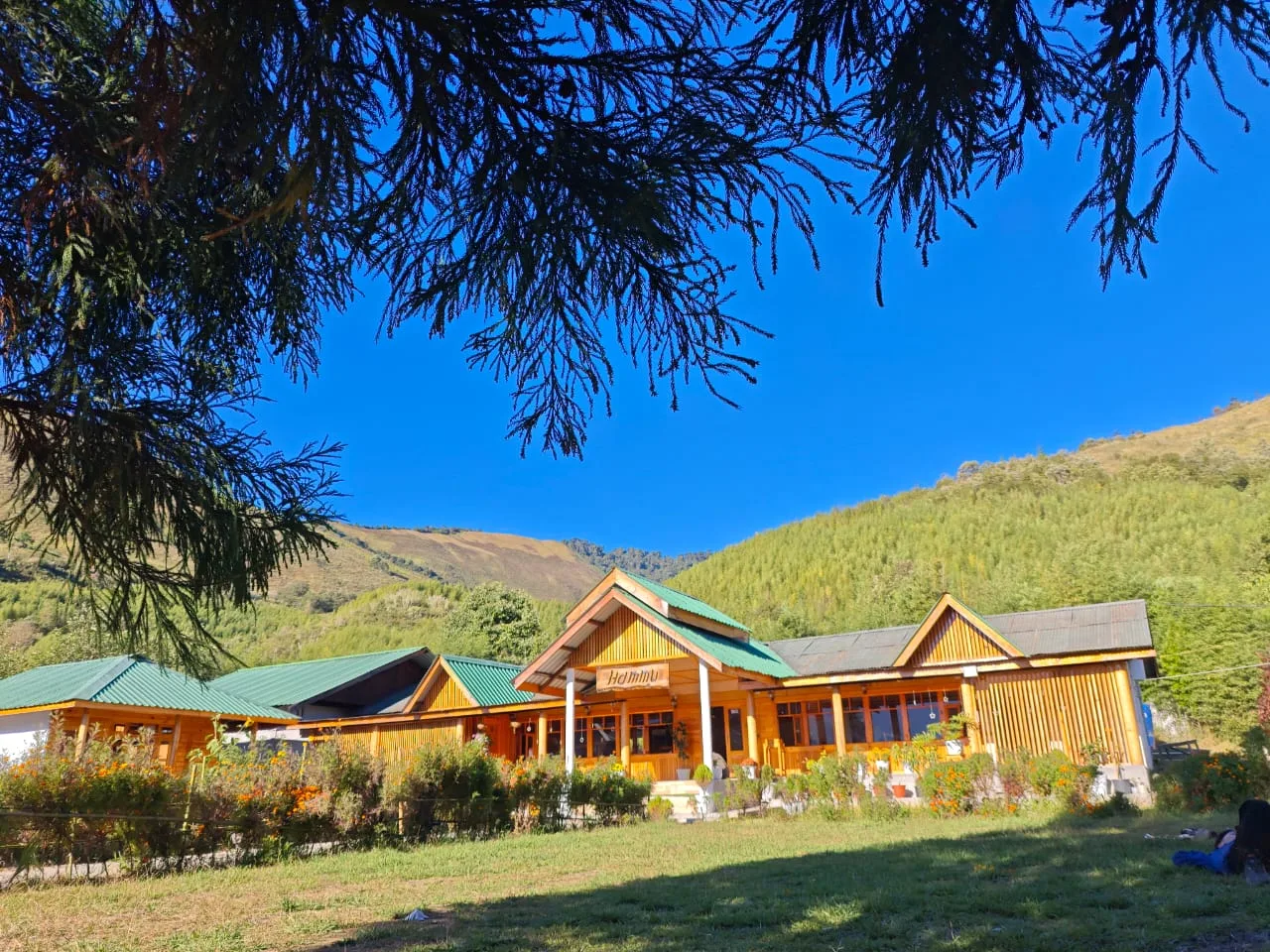
Why Tawang Belongs on Every Traveller's List
Most people who come to SafarPanda asking about Tawang have already seen a photograph — usually of the monastery at first light, or of a lake so still it doubles the mountains behind it — and they want to know if it's really like that in person. It is. Tawang sits at close to 10,000 feet in a district that was, for over a thousand years, part of the independent Monyul kingdom before Tibetan Buddhism took root here in the seventeenth century. What survives today is a living Himalayan culture, not a museum piece: monks still chant in the same prayer halls, Monpa families still celebrate Losar with the same rituals, and the mountains still close the roads on their own schedule.
Getting here takes commitment. There's no shortcut — the drive from Guwahati runs for roughly two full days through Bhalukpong, Bomdila, and Dirang before climbing over Sela Pass into the Tawang valley, and every traveller needs an Inner Line Permit before they even reach the first checkpost. That barrier to entry is precisely why Tawang has kept its character. It hasn't been smoothed into a weekend getaway. It still asks something of you before it gives something back.
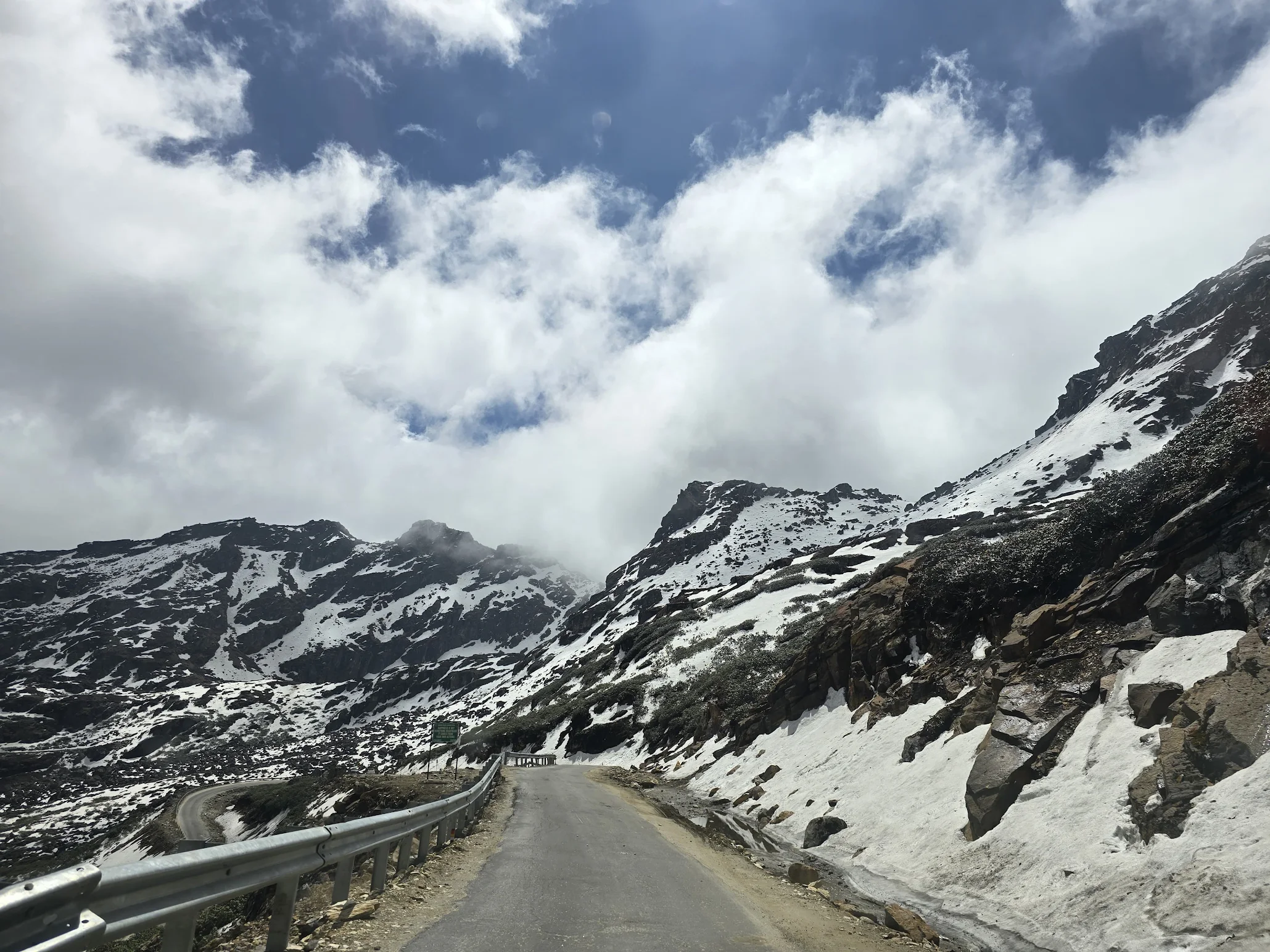
What it gives back is considerable. Tawang Monastery, the largest in India and one of the largest in the world outside Tibet, sits like a fortress on a ridge above the town. A short drive away, Sela Pass crosses 13,700 feet through some of the starkest, most beautiful high-altitude scenery in the country. Further still, Bumla Pass touches the actual Line of Actual Control with China — a place where Indian and Chinese soldiers have historically met for ceremonial talks, and where the silence has a weight you can feel. Between these landmarks lie waterfalls, war memorials, nunneries, and villages that most Indian travellers have never heard of.
In this guide, we'll walk through everything you need to plan a great Tawang tour package — whether you have 6 days or 9, whether you're travelling as a couple, a family, a group of friends, or solo. We'll cover the best itineraries, the essential permit process (this is not optional in Tawang, unlike most of India), the places that make the long drive worthwhile, the best time to go, and the practical details that separate a smooth trip from a stressful one.
Tawang Tour Package Options at a Glance
Before we get into day-by-day planning, it helps to understand what makes a Tawang itinerary different from most other Northeast India trips. The single biggest factor is distance: Tawang sits roughly 450–500 km from Guwahati, and because the road climbs through the Eastern Himalayas via Bhalukpong, Bomdila, Dirang, and Sela Pass, that distance takes 12–16 hours of actual driving — almost always split across two days.
That means every Tawang package, even the shortest one, needs to budget four full days just for the road journey (two out, two back). Everything else — the monastery, the mountain passes, the lakes — happens in whatever days remain. This is the opposite of a Meghalaya-style trip where you're exploring from Day 1; in Tawang, the journey itself is a meaningful part of the experience, but it does eat into your itinerary.
- Day 1: Guwahati to Dirang via Bhalukpong & Bomdila
- Day 2: Dirang to Tawang via Sela Pass, Nuranang Falls
- Day 3: Tawang Monastery, War Memorial, Old Market
- Day 4: Bumla Pass, Madhuri Lake, PT Tso circuit
- Day 5: Tawang back to Bomdila/Dirang
- Day 6: Return to Guwahati, departure
- Day 1: Guwahati to Bomdila
- Day 2: Bomdila to Dirang — Dzong, hot springs
- Day 3: Dirang to Tawang via Sela & Jaswant Garh
- Day 4: Tawang Monastery, Urgelling, Craft Centre
- Day 5: Bumla Pass, Madhuri Lake & PT Tso day trip
- Day 6: Tawang to Dirang/Bomdila via Sangti Valley
- Day 7: Return to Guwahati, departure
- Day 1–2: Guwahati to Bomdila to Dirang
- Day 3: Dirang to Tawang via Sela Pass
- Day 4: Tawang Monastery & town exploration
- Day 5: Bumla Pass, Madhuri Lake, PT Tso
- Day 6: Zemithang & Gorsam Chorten day trip
- Day 7: Tawang to Bomdila
- Day 8: Return to Guwahati, departure
- Day 1–2: Guwahati to Bomdila, monastery & museum
- Day 3: Bomdila to Dirang, Sangti Valley birding
- Day 4: Dirang to Tawang via Sela Pass
- Day 5: Tawang Monastery, Urgelling, nunneries
- Day 6: Bumla Pass, Madhuri Lake, PT Tso
- Day 7: Zemithang & Gorsam Chorten
- Day 8: Tawang to Dirang, Thembang village
- Day 9: Return to Guwahati, departure
- Day 1–8: Full Tawang circuit (as above)
- Day 9: Transfer via Tezpur to Kaziranga
- Day 10: Kaziranga safari, return from Guwahati
The two things people underestimate most about a Tawang trip are the Inner Line Permit lead time and altitude acclimatisation. Sort your ILP at least a week before travel, and resist the urge to drive straight to Bumla Pass (15,200 ft) on the same day you arrive in Tawang (10,000 ft). Give yourself one gentle day at Tawang's altitude before pushing higher — it makes a real difference to how much you enjoy the rest of the trip.
Detailed Itineraries: Day-by-Day Plans for Every Duration
The Classic: 5 Nights / 6 Days Tawang Tour Package
This is the shortest itinerary we'd genuinely recommend for Tawang — anything less and you spend more time in the car than at your destination. Here's how a well-planned 5N6D Tawang trip comes together:
The Comprehensive: 6 Nights / 7 Days Tawang Tour Package
This is the itinerary we recommend most often, because it adds one thing the 5N6D version sacrifices: a genuine buffer day. Tawang's weather and the Army's convoy schedule to Bumla can both change without warning, and a rigid 5-day plan leaves no room to adjust. The 6N7D version also gives Dirang its own full day instead of treating it as a highway stop.
For the Dedicated: 7N8D & Longer Tawang Tour Packages
With 8 days, you unlock Zemithang, a remote valley near the Bhutan border that most standard Tawang packages never reach. Its centrepiece is the Gorsam Chorten, a 15th-century stupa modelled on Kathmandu's Bodhnath, around which pilgrims from Arunachal, Bhutan, and Tibet gather every year for the Gorsam Kora festival. The drive there is rough and remote, which is exactly why it stays quiet even in peak season.
With 9 days, we usually suggest adding a night in Thembang, a stone-walled heritage village that was once the seat of a small Monpa-Buddhist kingdom, now home to a genuinely community-run homestay project. Alternatively, a 9–10 day Tawang package pairs beautifully with 2 days in Kaziranga National Park back in Assam — monasteries and mountain passes on one end of the trip, one-horned rhinos and elephant grass on the other.
Top Places to Visit on Your Tawang Tour Package
Tawang district is compact but everything in it sits at altitude, which means distances that look short on a map can take hours. Most tour packages focus on a core circuit running from Dirang through Sela Pass into Tawang town, then out to the Bumla border area. Here are the must-see places along that circuit:
Tawang Monastery
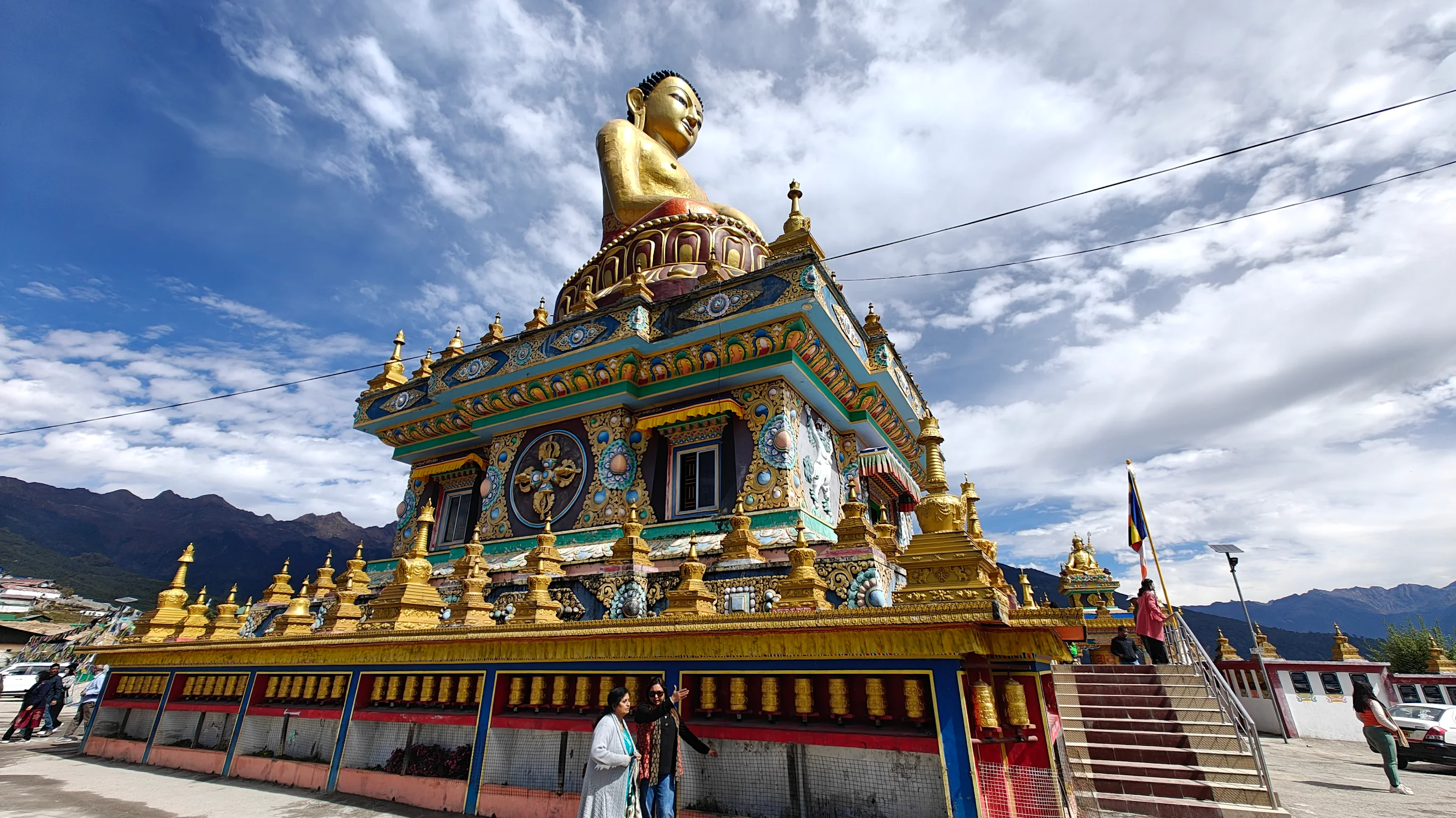
Galden Namgyal Lhatse, founded in 1680–81, is the largest monastery in India. Its fortress-like walls, 18-ft gilded Buddha, and centuries-old manuscript collection make it the spiritual heart of the entire Monpa community.
Spiritual HeartSela Pass & Sela Lake
At 13,700 ft, one of India's highest motorable passes and the dramatic threshold between Dirang and Tawang. A sacred glacial lake sits right beside the road, often frozen and always breathtaking.
Himalayan GatewayNuranang Falls
Also called Jang Falls, this curtain of water drops over 100 metres near Jang village, named after a local Monpa woman whose story is tied to the Jaswant Garh legend just down the road.
Roadside WonderJaswant Garh War Memorial
A memorial to Rifleman Jaswant Singh Rawat, who single-handedly held off the Chinese army for three days during the 1962 war. The Army still maintains it as a living post in his honour.
War MemorialBumla Pass
At roughly 15,200 ft on the India–China border, Bumla is one of the officially recognised Border Personnel Meeting points between the two armies. Requires a separate local permit and is subject to weather and army clearance.
Border FrontierMadhuri Lake (Sangetsar Tso)
A glacial lake around 12,000 ft on the way to Bumla, nicknamed after Bollywood actress Madhuri Dixit following a film shoot here. Upright dead tree trunks rising from the water give it a genuinely surreal look.
Most PhotographedPT Tso Lake
Pankang Teng Tso, a high-altitude lake near the Bumla circuit, ringed by snow-capped peaks for much of the year. A quieter, less-photographed counterpart to Madhuri Lake, and just as striking.
Hidden GemDirang
A gentler valley town with hot sulphur springs, apple and kiwi orchards, a hillside Dzong, and the Sangti Valley nearby — a wintering ground for migratory black-necked cranes from Tibet.
Valley HaltDon't Skip These — The Underrated Places Near Tawang
Most Tawang packages stick to the main Sela-to-Bumla corridor. These places sit slightly off that line but consistently stand out to travellers who make the detour:
- Zemithang & Gorsam Chorten — A remote valley near the Bhutan border with a 15th-century stupa modelled after Kathmandu's Bodhnath. Almost nobody stops here, and it's one of the most peaceful spots in the district.
- Urgelling Monastery — The birthplace of Tsangyang Gyatso, the 6th Dalai Lama, a small and quiet monastery just outside Tawang town that most day visitors miss entirely.
- Sangti Valley — A quiet farming valley near Dirang that hosts wintering black-necked cranes, one of the rarest crane species in the world.
- Thembang Heritage Village — A centuries-old stone-walled village on a ridge near Dirang, once the seat of a small Monpa kingdom, now home to a community-run homestay initiative.
- Bomdila Craft & Ethnographic Museum — A small but genuinely worthwhile museum on the way in or out of Tawang, covering the tribal cultures of West Kameng district.
Best Time to Visit Tawang for Your Tour Package
Tawang's weather is shaped entirely by altitude, and the "best" time depends on whether you're chasing clear mountain views, snow, or festival season — because you rarely get all three at once.
| Months | Season | Weather | Crowd Level | Verdict |
|---|---|---|---|---|
| Mar – Jun | Spring – Early Summer | Mild days, cold nights, rhododendrons blooming, clearest roads | Moderate–High | Best Time |
| Sep – Nov | Post-monsoon Autumn | Crisp, the clearest skies of the year for mountain views | Moderate | Best Time |
| Dec – Feb | Winter | Sub-zero at Sela/Bumla, heavy snow, Losar & Torgya festival season | Low–Moderate | Good — Festival Season |
| Jul – Aug | Peak Monsoon | Heavy rain, frequent landslides on the Bhalukpong–Bomdila stretch | Very Low | Avoid |
March to June and September to November are the two windows we recommend most. Roads are at their most reliable, visibility at the high passes is excellent, and Sela Pass is generally snow-free or only lightly dusted, which keeps the drive comfortable. The completion of the Sela Tunnel — which runs beneath the pass at a lower, less snow-prone elevation — has made the route considerably more reliable in shoulder-season months than it used to be.
Winter (December to February) is a different kind of trip entirely. Tawang under snow is genuinely spectacular, and this is when the Torgya Festival takes over the monastery courtyard with three days of masked Cham dances. But temperatures at Sela and Bumla drop well below freezing, roads can see temporary closures after heavy snowfall, and you'll need serious cold-weather gear. We recommend winter travel only if you're specifically chasing snow or the festival calendar, and only with a flexible itinerary.
How to Reach Tawang & Permit Rules (ILP/PAP)
By Air
The nearest major airport is Lokpriya Gopinath Bordoloi International Airport (LGBI), Guwahati in Assam, connected to all major Indian cities. Tezpur's Salonibari Airport is closer but has far fewer flights, so most Tawang packages still start and end in Guwahati. Some seasonal helicopter services connect Guwahati to Tawang directly, cutting the journey to a couple of hours when they're running — worth checking at the time of booking, since schedules change with demand and weather.
By Train
There is no railway into Arunachal Pradesh's Tawang district. The nearest major railhead is Guwahati, roughly 450–500 km away, connected to Delhi, Kolkata, and other major cities by long-distance trains.
By Road
The standard route is Guwahati → Tezpur → Bhalukpong → Bomdila → Dirang → Sela Pass → Tawang, covering roughly 450–500 km in 12–16 hours of actual driving, almost always broken into two days with an overnight halt at Bomdila or Dirang. The Sela Tunnel, opened on NH-13, now keeps this route reliably open through most of the year by running beneath the highest, most snow-prone stretch of the old pass road. Hiring a local driver who knows the route is strongly recommended — the roads are narrow, winding, and best not learned on the fly.
Unlike most of Northeast India, Tawang absolutely requires a permit. Do not book flights or hotels before this is sorted.
Indian citizens: Need an Inner Line Permit (ILP), applied for online at the official Arunachal Pradesh e-ILP portal. Select the Bhalukpong entry gate and West Kameng + Tawang districts. Fees are modest (roughly ₹100 for an individual, more for a group), and the permit is typically valid for around two weeks — apply at least 4–5 days before travel to leave room for corrections, and carry both printed and digital copies for checkposts.
Foreign nationals: Need a Protected Area Permit (PAP), which cannot be applied for individually — it must be arranged by a registered tour operator on your behalf, typically for a minimum group of two. A PAP covers Tawang town, the monastery, and Sela Pass, but not Bumla Pass or PT Tso, which remain restricted to Indian nationals with separate local clearance.
What to Pack for High-Altitude Tawang
Clothing
- A proper down or insulated jacket — even in "summer" months, nights in Tawang and mornings at Sela or Bumla can drop close to freezing.
- Thermal base layers, a woollen cap, and gloves — mandatory from October through March, genuinely useful year-round at the high passes.
- Layers you can add or remove through the day — the temperature swing between the Tawang valley and Bumla Pass can exceed 15°C.
Footwear & Gear
- Closed, sturdy shoes with good grip — expect snow, ice, and uneven ground at Sela, Bumla, and PT Tso, even outside peak winter.
- Sunglasses with real UV protection — snow glare at altitude is intense and easy to underestimate.
- Motion sickness tablets if you're prone to them — the roads from Bhalukpong onward are almost continuous switchbacks.
Essentials
- Multiple printed and digital copies of your ILP/PAP and photo ID — checkposts at Bhalukpong and beyond will ask for them repeatedly.
- Sunscreen and a good lip balm — high-altitude sun and cold, dry wind chap skin faster than most people expect.
- A power bank — electricity beyond Bomdila can be unpredictable, especially during winter storms.
- Cash — ATMs are limited to Bomdila and Tawang town and aren't always reliable even there. Carry enough for the whole trip, especially before heading toward Bumla or Zemithang.
- If you have any heart or respiratory condition, talk to your doctor before the trip about managing high-altitude travel above 13,000 ft.
Tawang Food, Monpa Culture & Festivals
Tawang's culture is shaped almost entirely by the Monpa community and the Gelugpa school of Tibetan Buddhism that arrived here in the 17th century. It looks and feels closer to the Tibetan plateau than to the rest of India, and understanding a little of that history changes how the monastery and its rituals land when you visit.
A Buddhist Society Built Around the Monastery
Before Buddhism took hold, this region was ruled for centuries by the independent Monyul kingdom. Tawang Monastery, established in the 1680s at the wish of the 5th Dalai Lama, became the institution around which Monpa social and religious life still organises itself. In many Monpa families, tradition holds that a second son joins the monastery — a practice that has kept monastic life deeply woven into ordinary households rather than separate from them. Prayer flags printed with the mantra "Om Mani Padme Hum" flutter over homes, roads, and mountain passes throughout the district, believed to purify the air in whichever direction they blow.
What to Eat in Tawang
- Zan — A buckwheat or millet-flour staple, often eaten as a thick porridge with vegetables or meat. The everyday backbone of Monpa cooking.
- Thukpa — A hearty noodle soup, usually with vegetables or meat, and exactly what you'll want after a cold morning at Sela Pass.
- Momos — Steamed or fried dumplings, sold everywhere from proper restaurants to roadside stalls near the monastery.
- Butter Tea (Po Cha) — Salty, buttery, and an acquired taste for many first-timers, but a genuine part of daily Monpa hospitality — you'll likely be offered a cup wherever you sit down.
- Khapse — Deep-fried, slightly sweet biscuits made specifically for Losar celebrations, shaped and stacked as festive offerings.
Losar, Torgya & the Monpa Festival Calendar
The two festivals that shape Tawang's calendar are Losar, the Tibetan-Monpa New Year usually falling in February or March, and Torgya, a three-day monastic festival held at Tawang Monastery in January, built around ritual masked Cham dances performed by monks to drive away the previous year's misfortune. Every third year, Torgya expands into the larger Dungyur festival. If your travel dates line up with either, book accommodation months in advance — Tawang's limited hotel capacity fills quickly, and the town takes on an entirely different energy during festival week.
Cultural Customs to Keep in Mind
The Monpa people are famously gentle and welcoming toward visitors, but a few customs are worth respecting: dress warmly and modestly inside the monastery, removing hats and speaking quietly during prayers. Ask before photographing monks or locals, particularly during rituals. Circumambulate stupas, mani walls, and prayer wheels clockwise, in keeping with Buddhist tradition. And near military installations, bridges, and checkposts — common throughout this border district — always follow posted photography restrictions; Army personnel take this seriously, and so should you.
Insider Travel Tips & Common Mistakes to Avoid
-
Apply for your ILP before booking anything else. Without it, you won't get past the Bhalukpong checkpost — no exceptions, regardless of hotel or flight bookings. Give yourself 4–5 days of buffer for processing.
-
Don't rush straight to Bumla Pass on arrival day. Spend your first day acclimatising around Tawang town (10,000 ft) before pushing up to Bumla or PT Tso, both well above 14,000 ft.
-
Arrange your Bumla Pass permit the evening before, not the morning of. Visit the Deputy Commissioner's office in Tawang by 4–5 pm with your original ILP and ID; clearance normally comes through by the next morning, but it isn't instant.
-
Build in a buffer day if Bumla Pass matters to you. The convoy runs on Army clearance and weather, both of which can change on short notice. A fixed itinerary with no slack risks missing it entirely.
-
Fuel up in Bomdila or Dirang. Petrol pumps become scarce beyond these towns, and running low on the Sela stretch is not where you want to discover that.
-
Carry enough cash for the whole trip. ATMs are limited to Bomdila and Tawang town, and connectivity issues mean even those aren't always dependable.
-
Avoid the peak monsoon (July–August). Landslides regularly close sections of the Bhalukpong–Bomdila road, and the payoff in scenery doesn't outweigh the risk of losing days to a blocked highway.
-
Network coverage is patchy beyond Tawang town. Download offline maps before you leave Guwahati, and let your hotel know your rough plan for each day, especially around Bumla and Zemithang.
Ready to Plan Your Tawang Tour Package?
Our Northeast India travel experts have personally driven every switchback on this route. Tell us your dates and we'll craft a custom Tawang itinerary — permits sorted, completely free, in 24 hours.
Frequently Asked Questions About Tawang Tour Packages
A Final Word on Tawang
Tawang is not a destination that meets you halfway. The roads are long, the permits take planning, and the altitude asks for patience. But almost nowhere else in India gives you a 340-year-old monastery, a living Buddhist culture, and a windswept pass on an international border, all within the same week of travel. The best Tawang tour package is the one that respects the journey instead of fighting it — that builds in the buffer days, the acclimatisation, and the early starts that this landscape quietly demands. We hope this guide helps you plan exactly that kind of trip.